video history project
home
contact
about Video History Project
site map
resources
contribute
search
people
the written word


Private Money and Personal Influence: Howard Klein and the Rockefeller Foundation's Funding of the Media Arts
   by Marita Sturken, January 1987, Afterimage, Vol. 14, No. 6
(part 1 of 3)

There are few names in the Western world that evoke as weighty an image as the name Rockefeller. Power, prestige, philanthropy, cultural imperialism, and the old-boy network all come to mind. This name sums up the raw power of capitalism before the days of government regulation, antitrust laws, and income tax. To most of the U.S. public, it represents an extended, family-based power structure of phenomenal influence. The Rockefeller Foundation, while no longer a family institution, symbolizes the power invested in those who choose to use their wealth to effect change in the world.

Like many private foundations, it was founded as a means of promoting change with and establishing a beneficent image for a newly amassed fortune; it was also an attempt to change the reputation of "tainted money" that had plagued the Rockefeller fortune. From its inception, it was a globally conceived organization, begun with $100 million from John D. Rockefeller Sr. in 1913 [1] and aimed at establishing a lasting role for the Rockefeller fortune. The foundation was the brainchild of Rockefeller's trusted manager Frederick T. Gates. Of the foundation, Gates wrote:

"I trembled as I witnessed the unreasoning popular resentment at Mr. Rockefeller's riches, to the mass of people, a national menace. It was not, however, the unreasoning public prejudice of his vast fortune that chiefly troubled me. Was it to be handed on to posterity as other great fortunes have been handed down by their possessors, with scandalous results to their descendants and powerful tendencies to social demoralization? I saw no other course but for Mr. Rockefeller and his son to form a series of great corporate philanthropies for forwarding civilization in all its elements in this land and in all lands: philanthropies, if possible, limitless in time and amount, broad in scope, and self-perpetuating."[2]

This fervor and sense of mission (Gates was a former Baptist minister) instigated what would soon become one of the most powerful philanthropies of this century, now with assets of over $1.3 billion.

The foundation was set up in part as an extension of the ideas behind the Rockefeller Institute of Medical Research (now Rockefeller University), where scientists were conducting research that would provide the expertise behind public health programs throughout the world. The foundation's reputation stems from its massive programs to combat malaria and yellow fever and to promote the "green revolution" of cultivating high-yield wheat, corn, and rice in the third world.

It was in this context--of an institution that could almost single-handedly eradicate diseases in certain areas and orchestrate huge agricultural programs--that an arts program was begun at the Rockefeller Foundation. The foundation had previously awarded grants in the arts to select institutions, but the formalization of an arts program did not take place until 1963.[3] Conceived as a program in "cultural development," it was also initiated as a response to a general expansion in the arts in the early 1960s, symbolized by the building of Lincoln Center in New York City (a project realized with the considerable involvement of and funds provided by John D. Rockefeller III).

While the sciences will always predominate at the foundation, funding of the arts has had a wide-ranging impact. The arts program gradually developed into a multidisciplinary program that supports both institutions and individual artists in music, dance, theater, literature, video, film, and the visual arts. Although it increasingly channels its funds through arts organizations and via panels, the arts program has been ideologically geared since its inception toward the funding of individual artists, a doctrine that evokes the philosophy of the two men who have directed the program, Norman Lloyd and Howard Klein, both avant-garde musicians themselves. In the world of arts funding, the Rockefeller name embodies prestige as well as a certain mythology. Money from the Rockefeller Foundation is a ticket to other funding possibilities and acts as a stamp of approval in the art world.

The Rockefeller Foundation began funding the media arts in the mid-1960s. In a field that receives little support from the art market, the role of this foundation has been incalculable. As in other fields, when a philanthropic organization of this magnitude graces a discipline with its dollars, people take notice and are more inclined to follow suit. In the relatively tiny world of video art, the interest and support of the Rockefeller Foundation has been instrumental in shaping and guiding many of the directions taken by the community as a whole.

The person responsible for that support and the directions it encouraged is Howard Klein, who worked at the foundation from 1967 to 1986, as director for arts from 1973 to 1983 and deputy director for arts and humanities from 1983 to 1986. The survey of the funding of video by the foundation since 1965, which accompanies this article, shows not only the progress of a field from its infancy to a more established community, but also the approach and philosophy of one man to the field as a whole. Klein left the foundation in October 1986, and his departure marks the end not only of a particular era at the Rockefeller Foundation, but also of an era of a specific kind of funding philosophy, in which a single individual dictates the direction and intent of the grants awarded, with a primary belief in providing for the needs of the individual artist.

The Rockefeller Foundation is structured into six programs: Agricultural Sciences, Arts and Humanities, Equal Opportunity, Health Sciences, International Relations, and Population Sciences, as well as a Special Interests and Explorations fund for proposals that are not covered precisely by these categories. In 1985, these programs dispensed close to $43 million in grants, of which $7.4 million (14.6%) was in the arts and humanities program. The foundation has a self-perpetuating board of trustees of some 20 members (until 1981 it had at least one Rockefeller family member), who elect the foundation's president, currently Richard Lyman.

The arts program, which was a separate program from 1973 to 1983 and is now combined with the humanities program, has dispensed an average of $3 million annually. It is not divided into specific disciplines, although it has been structured (with humanities) along certain vague, yet controlling guidelines: support for the creative person; strengthening secondary school education through the arts and humanities; enhancing the American public's understanding of international affairs through the arts and humanities; and forging connections between artists, humanists, and society. Until recently, the arts program has been a somewhat flexible one, with its director having a substantial amount of freedom in choosing what monies to give to what media. Grants of up to $50,000 (in the 1960s, the figure was $25,000, in the 1970s, $35,000) are made at the discretion of the director and do not require the approval of the board of trustees. While the arts and humanities program currently supports several fellowship programs in which grants are often made through nominations from the field and panels, most of the grants awarded in the arts since the late 1960s have been made by Klein himself. In the field of media arts, where no such fellowship program exists, Klein has been solely responsible for all but a few of the grants awarded.[4]

In tracing the history of the grants awarded in media and television through Klein's program, a mixture of strategy and eclecticism becomes apparent. Several trends can be traced: support for artists' projects under the aegis of public television, the funding of programs intended to foster a crosscultural exchange of ideas, individual grants to artists, and the funding of equipment resources (specifically postproduction facilities) for artists. There is also a smattering of small, somewhat unexpected grants, which indicates a desire to respond to the moment and a distinctly personal style. Howard Klein came to the Rockefeller Foundation with a background as a musician and critic. He was born in 1931 in Teaneck, NJ, received a B.S. and M.S. in music at the Juilliard School as a scholarship student, and worked as a music teacher and pianist for dancer Jose Limon. From 1962 to 1967, Klein was a music reporter and critic for the New York Times. He came to the foundation in 1967 as assistant director under Norman Lloyd and became the director of arts in 1973 when Lloyd left.

To understand the way in which Klein perceived his role as a funder and specifically as one of the primary and initial funders of video art and artists' television, it is necessary to understand how he saw his program and role within the larger foundation itself. He drew his models for approaching a new, unestablished field, the wide open territory of a new art form with no history or funders, from the overall history and philosophy of the Rockefeller Foundation:

"After the founding of Rockefeller Institute, the foundation began to examine medical education, and the Flexner Report, which came out of that, changed forever the way medicine was taught in this country. The Rockefeller Foundation has always stood for the green revolution. We talk about life sciences now, but that was an experimental term in the 1930s. Warren Weaver thought it would be very important for scientists from different disciplines to work together, so he offered grants for, say, a biologist to work with a mathematician, and the DNA molecule was discovered because of Warren Weaver's grant program. You come and you work at a place like this, and you think, 'Oh God, how am I going to measure up to those people?' Now that all has to do with changing perceptions and attitudes. You don't need a private foundation to support the status quo. It has money that should be used to take risks. If the foundation challenges itself at all to be pertinent, it has to think this way. What I did was come to the organization, get the feeling of it, the spirit and history, and say, 'Okay, how do you think that way in the arts?'"[5]

Klein saw his role as a funder within the fledgling field of media as one of both influence and response, and his role was in fact much more than simply that of a foundation officer. He was directly involved in the establishment of a number of influential media arts organizations and programs, and he worked closely advising many organizations. He is often described as an ideal funder by the fortunate who received funding from him and who formed, in many ways, a kind of club. "Howard was a wonderful sort of guiding influence," says David Loxton, former director of the Television Laboratory at WNET/Thirteen,

"In terms of keeping you focused in the right direction. At the same time he was so clever about never making you feel in any way that he was intruding or imposing what he felt you should do. Yet somehow or other he always seemed to be terribly pleased with whatever you ended up doing, as if to say, 'Well, that was exactly what we thought you could have done.' There are some people who simply write a check and then say, 'Call me at the end of the year and tell me what you did.' But not Howard. He was enormously involved and supportive, but at the same time it seemed to be a very hands-off thing."[6]

That delicate balance of quiet influence is a major ingredient in Klein's style. He exudes an enthusiasm for the arts and artists, at the same time displaying a capacity to play ball with the power brokers and assume the role of the guiding father figure. For Klein, each grant, in effect, posed a question, be it whether a public television station or a university system could foster artists' works for television or the ideal way to support a large number of artists with essentially limited funds. With hindsight, he is not reluctant to point out grants that were unsuccessful, but he stresses the initial questions posed and often answered by those grants.

There is a considerable mythology surrounding the role of Klein and the Rockefeller Foundation's funding of media, a mythology that in many ways attests to the image attached to the Rockefeller name within U.S. culture. While the funding of media by the foundation was substantial, particularly during the 1970s, when it was almost the sole source of private monies in the field of media, it should be noted that it was on the average half that of the New York State Council on the Arts (NYSCA) and significantly less than that of the National Endowment for the Arts (NEA). However, in influence it was exceptionally important, in part because of the timeliness of many of the grants and because of Klein's own style of grant making. Klein was an active political figure in the media field, offering advice, providing support, and often negotiating on behalf of the organizations he funded. He was well aware of the power of the Rockefeller Foundation and used it to benefit artists he felt were at the forefront of creativity.

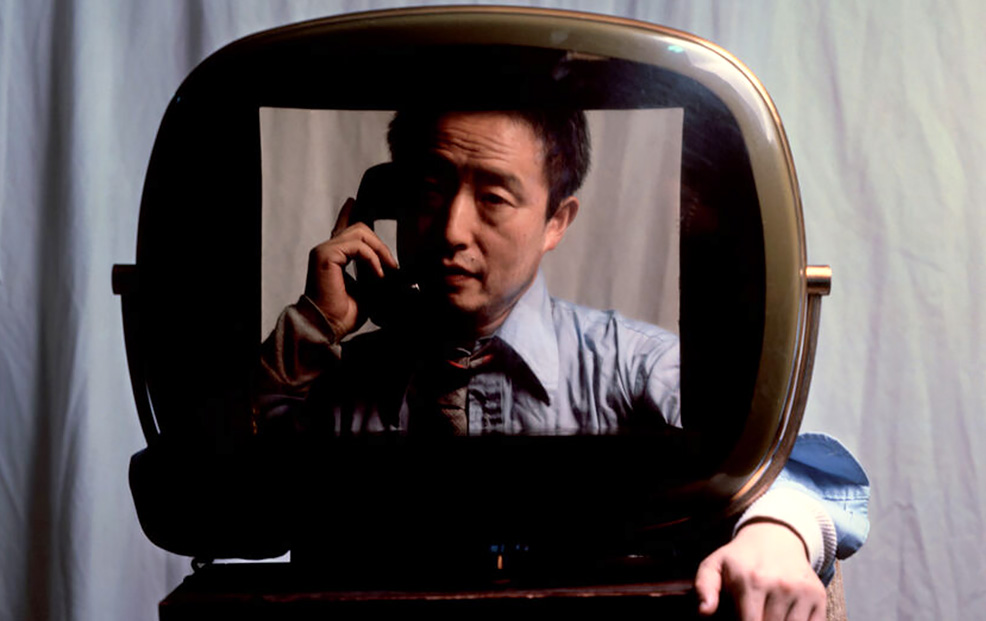
It is impossible to discuss the funding of media by Klein and the Rockefeller Foundation during the 1970s without elaborating on the role of Nam June Paik, who was Klein's official and unofficial advisor for many years. Coming to the foundation as he did from a background as a musician and music critic, Klein was not necessarily inclined to pay much attention to media. Also, while the foundation had made a few grants in the direction of media in the mid-1960s, for instance to WNET (New York), WGBH (Boston), and KQED (San Francisco) to produce some experimental programming, there was no previous history of serious funding of media. Klein's relationship with Paik was a key factor in his interest in the developing field of video art.

Paik's first encounter with Klein was far from auspicious. As a Times critic, Klein wrote a scathing review of one of Paik's "Fluxus" performances during the Avant-Garde Festival in New York in 1965.

"Mr. Paik is a rampant member of the the neo-Dada movement, whose head is John Cage. For this avant-garde segment, and it is a minor one, the 'happening' is the thing. You just get up and do whatever comes to your head. 'The thing to do is keep the head alert, but empty.' Mr. Paik seems to be succeeding. Fraught with pretensions of profundity, Mr. Palk's efforts lacked any spark of originality, sensitivity or talent."

When Paik actually met Klein in 1967, the situation was different. "Howard wasn't anti-video," recalled Paik. "He was anti-happening. It is nice that Howard did not take that as a bad example of my work. He is a good, straight guy. He is absolutely not a tricky guy. With Howard you always know where you stand."[8] That year, Paik had run out of money and owed Con Edison a large sum. He had become resigned to leaving the country until Klein (newly hired at the foundation) bailed him out by orchestrating a $13,750 grant to the State University of New York at Stony Brook for Paik to become a "consultant in communications research" (Allan Kaprow, who was teaching at Stony Brook, was also responsible for initiating the grant). During that time, Paik wrote the first of two reports he would write for the foundation, probably his most important essay, "Expanded Education for the Paper-Less Society."[9] Throughout the years, he received many other grants and artist-in-residencies from the foundation, including support for his two large collaborative satellite broadcast projects, "Good Morning, Mr. Orwell" (1984) and "Bye, Bye Kipling" (1986), and for his retrospective exhibition at the Whitney Museum of American Art in 1982. Paik officially served as Klein's advisor during 1973.

While he has received much publicity as an artist, Paik's role as an operator behind the scenes in the development of video art has remained largely unexamined. There is no question that Paik was a key figure in fostering video art in its infancy and assisting in its "museumization." He has been instrumental in encouraging younger artists, among them Bill Viola, Kit Fitzgerald, and John Sanborn, and in orchestrating the founding of several organizations and programs. He often acted as liaison between Klein and the video community, introducing him to curators John Hanhardt, Barbara London, and David Ross (meetings that resulted in grants to the Whitney Museum of American Art, the Museum of Modern Art, and the Everson Museum, respectively), and provided the creative force behind several grant trends. Klein defines Paik's role:

"Nam June has the most extraordinary combination of self-effacement, in terms of giving everybody else credit, and also self-promotion, because he has always been very aware of his position in history. In one sense, it is a manufactured position, but it isn't manufactured because it is in fact true. His thinking has always been 50 years ahead of everyone else's. I would have a meeting with Nam June and he would give me ideas, and I would say, 'Nam June, I need a whole foundation just to follow up on three of your ideas.'"

In the late 1960s, as assistant and then associate director for arts, Klein began to look at public television and the role it could play in the support of artists. Certainly, this move could be seen as a response to artists such as Paik who were clamoring to get on the air waves and who had had only limited opportunities to do so. It was in looking at the role played by other foundations and at the overall philosophy of the Rockefeller Foundation that Klein decided to concentrate on funding what could be seen essentially as research and development of television. During the 1960s, the Ford Foundation gave many millions each year for the support of public television. According to Klein,

"The Ford Foundation made the public television system, for all its weaknesses and strengths. I looked at it and, knowing Norman Lloyd's take on support, said, 'Well, we can never do that. If we are going to work in television, we really should support artists' research in television.' So that is what we started doing in 1967. The whole question was: Can these public television stations not develop research and development arms in their own field? What industry doesn't have a research and development department?"

Klein's initial intent was to convince the foundation to give a significant amount of support for public television, with "the notion that if the experiment wasn't carried out at a substantial level, with major public television stations that were most likely to welcome this sort of thing, that we would never know what was possible." Indeed, from 1967 through 1977, the foundation awarded more than $3.4 million for experimental works in public television. The three major projects initiated and funded by the foundation were the National Center for Experiments in Television (NCET) at KQED (San Francisco), the New Television Workshop at WGBH (Boston), and the Television Laboratory at WNET/Thirteen (New York City).

Of these three, NCET was the most experimental in concept and the most process oriented. The genesis for NCET was a $150,000 grant that Klein's immediate predecessor, assistant director Boyd Compton, initiated in 1967 to KQED for a television production of Paul Foster's play "!Heimskringla!", directed by Tom O'Horgan with Ellen Stewart's La Mama Experimental Theater. The Corporation for Public Broadcasting (CPB) soon provided funds also. In 1967, Brice Howard, who had been executive producer of cultural programs at WNET, came out to run the program (which was not officially NCET until 1969). Brice Howard has a very distinct philosophy, which was the guiding force at NCET through its years. He is a metaphysical thinker who maintained a strong rapport with younger artists in the radical environment of San Francisco in the late 1960s and was not interested in producing products for public television. Instead, he invited artists from different disciplines-poets, novelists, painters, sculptors, among them poets Robert Creeley and Charles Olson, and sculptor Willard Rosenquist-to experiment with imaging devices at the center. Brice Howard said, "I wanted people who didn't care much about television." When he initially took on the project, he told KQED that "if you can accept the idea that I might not give you one minute of recorded material, then I'll do it."[10]

This attitude, however heady it may appear from the perspective of the 1980s, dovetailed easily with the spirit in which the foundation, first through Compton and Lloyd and then Klein, conceived of the possibility of television research and development. The Rockefeller Foundation gave NCET $300,000 in 1971 to further this artists-in-residence program. Brice Howard invited Paul Kaufman, from the University of California at Berkeley, to be resident scholar and then executive director of the program. NCET also sponsored interns from public television stations and many artists-in-residence from foreign countries.

Artists like Don Hallock, William Gwin, William Roarty, and Robert Zagone created works at NCET. Others, like Stephen Beck who developed his video synthesizer there, matured as artists there. Brice Howard created a "laid-back" atmosphere where these artists could experiment with image-processing machines and audio synthesizers. Most of the works that came out of the NCET were processed, abstract explorations, often concerned with issues of surface and formal imagemaking. In fact, to many other videomakers in the San Francisco area, there was a specific NCET style, which was seen by some as elitist and heavily concerned with image and sound over content. Certainly central to the philosophy of the place was the concern that artists, in being given direct access to the tools for creating television, would create a new, humanistic kind of television.[11] Also key to this philosophy was the importance of allowing artists time and space in which to experiment without thinking of products, in an unpressured atmosphere. According. to Howard, "we tried very seriously not to make it too heavy and profound, so we invited people essentially to come play."

In 1971, the Rockefeller Foundation gave NCET $300,000 to develop a program working with students. Paul Kaufman noted:

"The time had come to try to see if you could do something about changing the moribund characteristics of teaching about television in the Universities.... We began a project that lasted for three years which initially had people from the Center going out and visiting a lot of campuses, bringing tapes along, going to art departments.... Well, out of this group of initial visits, about 5 or 6 places kind of surfaced as possible workshop sites and eventually these became more or less mini-centers in themselves." [12]

Eventually satellite programs were set up at three universities: Southern Illinois University at Edwardsville, Southern Methodist University in Dallas, and the Rhode Island School of Design, where Howard and others from NCET conducted workshops with students and encouraged similar kinds of facilities to develop. Howard left NCET in late 1974, and soon afterwards, under the guidance of the CPB, NCET moved out of the KQED offices to Berkeley. The organization began to fall apart in 1975. Klein recounts:

“I always regretted them moving the center, because it pulled it out of broadcasting. I always wanted it in broadcasting, just like I wanted playwrights in theaters.... When I first went there, here was the station and here was a little room, and Stephen Beck had incense burning and an Indian cloth hanging over a light bulb, and that to me was interesting. What wasn't interesting was to see them set up their own office in Berkeley.... In fact what happened was that KQED, in closing out the accounts, demanded the return of an encoder, which was the basis of Stephen Beck's inventions, and he had to return it to KQED. We ended up giving him a grant for $4,000 in 1976 to replace it. That just tells you how bad things were between them. It was a destructive situation. They weren't able to continue a relationship with the station as it went through changes and problems.”

Ultimately, the question raised by the demise of NCET is whether any institution would support that kind of processoriented milieu for very long. Brice Howard says that, of all of the experimental television centers, "we were the least likely to survive.... TV is a great sprawling institution outside of the commercial world. It is an abstraction in the non-profit world unless it is veiled as a product." The question of who NCET actually served and its relationship to the video community in San Francisco is also one to be considered, and one that would be raised again in the aftermath of its closing.

In comparison to NCET, the New Television Workshop at WGBH and the Television Laboratory at WNET/Thirteen were less overtly experimental and closer to the model of television production in which artists-in-residence produced works intended for broadcast TV. These programs were run by innovative television producers (most of whom are still wvo•king ir} public televisior today) instead of scholars and tl?eomsts. While t he NCET program could represent the freedom style of the 1960s, the WGBH and WNET projects were emblematic of the more practical 1970s.

WGBH was actually the first of all three stations to support experimentation, receiving funds from the Rockefeller Foundation in 1967 and, under the guidance of producer Fred Barzyk, producing several early experimental shows, including an innovative 1967 series, 'What's Happening Mr. Silver?' and the seminal 'The Medium is the Medium' (1969). The New Television Workshop was not formally established until 1974, but experimental activities under the general name 'the Workshop' were thriving throughout the 1960s. The early days at WGBH were marked by a truly innovative and unusual approach to producing and broadcasting. In 1972, the workshop produced a 1/2-in. video festival for broadcast, and in 1969 sponsored Nam June Paik and Shuya Abe in building their well-known Paik/Abe Video Synthesizer, which was initiated with a four-hour New Year's Eve broadcast set to Beatles' music. Over the years, WGBH sponsored a long list of artists, such as video artists Paik, Peter Campus, and Stan VanDerBeek, dancers Karole Armitage and Trisha Brown, and composer John Cage. Through the interests of individual producers such as Barzyk, Nancy Mason Hauser, Rick Hauser, Susan Dowling, Ron Hays, and others, the WGBH project was primarily concerned with meshing video with other media and producing hybrids with music, dance, and theater.

The workshop has undergone many changes and now exists as a much smaller entity, as a cosponsor with the Institute of Contemporary Art of the Contemporary Art Television (CAT) Fund. Barzyk saw the handwriting on the wall in terms of the direction of funding, as institutions like the NEA were leaning toward funding media arts centers, not public television workshops. In 1978, he convinced the management of WGBH not only to give the equipment from the workshop to the newly-founded Boston Film/Video Foundation, but also initially to underwrite its rent.

The overall intent of the Television Laboratory at WNET/ Thirteen had a great deal to do with the attitude of its director, David Loxton. Despite the stipulation by Klein and Lloyd that the lab was not required to produce broadcastable material, Loxton thought it was essential to the longevity of the program, as well as to its mandate of producing artists' programming for broadcast television, that it actually produce programs for broadcast and that they be aired. The Rockefeller Foundation had given money to WNET in 1966 for a series of programs on Shakespearian drama (in which Norman Lloyd had encouraged the producers to concentrate on the process of producing Shakespeare rather than the actual production). In 1970, the New York State Council on the Arts gave WNET funds to set up an experimental project, which artist Jackie Cassen headed. This project faltered when Cassen and the other artists had problems meshing with the TV people at WNET. A buffer system was needed, and, at that point, amid many discussions with artists and producers about the need for a center in New York, the foundation decided it was time to establish a TV lab at WNET. Klein recalls that

"WNET kept coming to us with more proposals for Shakespeare, and Norman Lloyd said, "It's much more important that artists have an environment where they can do creative work," and we talked about WGBH and KQED, because those grants had been made. So we said to them, "If you would think of making a place where artists can work, we would be interested...." Nam June, Russell Connor, Fred Barzyk, and others were very involved with the development of this project. Jay Iselin (president of WNET) wanted to put Bob Kotlowitz, who was just at WNET from out of the publishing world, in charge. The artists kicked up their heels and said, "What is this? This man in all his years has never done one thing for video artists in publishing. Why should he be given this now?" I heard that and I said to Jay, "I'm sorry, but this man has created such probiems with the artists who would be working there, that I think it would be a mistake. We need to find somebody the artists would welcome." So, Nam June asked Barzyk if he knew anyone, and Barzyk suggested David Loxton.... The NYSCA money softened the ground, but WGBH and NCET were much more important in paving the way. That made it possible for us to make a $150,000 grant, and then larger amounts after that.”
 

In many ways, the Television Laboratory at WNET/Thirteen was the flagship project of the Rockefeller Foundation’s forays into funding artists’ television. The lab ran from 1972 to 1984 and, under the direction of Loxton and codirector Carol Brandenburg, administered a wide-ranging artists-in-residence program as well as the Independent Documentary Fund of the Ford Foundation and the NEA, and put together several series for broadcast. There was a stable of artists--Nam June Paik, TVTV, Ed Emshwiller, John Sanborn and Kit Fitzgerald, Bill Viola, Mitchell Kriegman, Skip Blumberg--who produced works at the lab and who came back many times as artists-in-residence. The Rockefeller Foundation gave the lab $150,000 to get established in 1971 and provided core support from 1972 to 1976 to a total of $1.1 million, in addition to smaller artist-in-residence grants.

The central philosophy behind providing those kinds of funds to support artists producing television is one that reflects Klein's desire to have arts program funding produce the equivalent impact of the other program funding at the Rockefeller Foundation. The intent, therefore, was not simply to fund artists but to attempt to change the institution of television and hence have a broad cultural impact. Nam June Paik emphasizes that had Klein not been at the Rockefeller Foundation in the early 1970s and not been daring and convincing enough to ask for unprecedented amounts of money for the experimental public television facilities, they would never have happened on this scope. "Howard is a mover, a social enterpriser with much of a gambler's sense," said Paik. "He far outstripped his predecessors at the foundation." This belief in the power of private monies to help change institutions is an important component of the way Klein approached the funding of the arts.

The TV lab was, of course, not without its problems. As the video community expanded and opportunities for artists grew more numerous, they were less willing to accept the terms offered by the lab (which in the early years meant complete rights over tapes, and in later years a high percentage of rights for many projects for which it provided only partial funding). Access to the facility became an issue, and there were charges that the lab artists formed an elite and closed club. (Loxton characterizes the selection process at the TV lab as one that developed from a "totally autocratic to a totally democratic" one, adding that in the earliest days, with Rockefeller providing the bulk of the funds, he alone chose the artists.) However, many of these charges came to the fore after the foundation pulled out of the lab, when they were raised by NYSCA's access-conscious media panel (which stipulated certain conditions more favorable to the artists within its grants). To the non-panel-dictated Rockefeller Foundation (and, it should be noted, to many artists in the early 1970s), these issues were not as important as artists getting access to equipment and broadcast.

It is an unwritten rule of the Rockefeller Foundation that it cannot fund any one program with core support for more than several years, in order to prevent stagnation in programs and to allow for a broad spectrum of recipients. When the time came to pull out of the TV lab (after six years of core support), John Knowles, then president of the Rockefeller Foundation and a prime supporter of the funding of video, called a meeting designed to help facilitate new funding for the lab. "It involved PBS, CPB, WGBH, and WNET," says Klein, "and John Knowles said 'We cannot continue to fund this forever. We think it is a very important thing to do, but as we make the announcement that our grants are going to diminish, we want to tell you people so that you will be able to do something."' Even when put on the spot, CPB offered only a few grants to the lab and then refused to take up the role the Rockefeller Foundation had relinquished. The lab officially closed in 1984. The demise of the TV lab and scaling down of the New Television Workshop were also the result of policy decisions, broadcast structures, and changing times. As the community diversified and artists gained other opportunities to produce work, the central importance these programs had held in the early years simply diminished. And public television itself was becoming increasingly tight and stodgy. Loxton states,

"Probably one of the most important statements to make about the role of the Rockefeller Foundation is that public television has largely become, in its absence, the perfect example of what happens when committees make decisions. The decision-making process in public television is now a committee process, which means that by definition, the more people you get involved in a decision the less innovative the result is going to be. You get four or five different funders, with all of their vested interests, coming together to fund a program, and you also end up with the lowest common denominator of programming. You don't have a Rockefeller or a Howard Klein saying, ‘Here's a chunk of money, you don't have to go and find anyone else to support this. Give Nam June $30,000 and tell him to make something wonderful with it. Don't worry what CPB or some corporation wants.’ It was a glorious luxury.”

The fostering of artists' television by the Rockefeller Foundation was not limited to public television workshops; it also included several projects under the auspices of other kinds of cultural organizations. In 1976, the foundation gave a grant to the State University of New York (SUNY) to undertake a study of the possibility of the university system producing arts programming for television. Through the Albany-based office of Programs in Arts, which produces arts events and programs for the SUNY university system, the Rockefeller Foundation initiated the SUNY/The Arts on Television project. Produced by Patricia Kerr Ross, director of Programs in the Arts, this project received over $600,000 from the foundation from 1979 to 1983 to produce a broad range of programs for public television.

The initiation of the SUNY program is a good example of Klein's quiet influence on the direction of a program. When Ross came to see Klein about her program, he suggested that she explore the media arts. The question posed by Klein was, Since SUNY, like many universities, has both artists and television studios, would it be possible for the university to think of itself as a producer of television programming for the arts? After initially funding a study of the equipment situation at SUNY, the foundation supported the production of a large number of works, including a film of a new Samuel Beckett play, Rockaby (1981) by D.A. Pennebaker and Chris Hegedus, Re: Soundings (1981) by Kit Fitzgerald and John Sanborn, The West (1984) by Steina Vasulka, and other films and tapes on artists who were involved with SUNY, many of which were shown on public television in New York State and several on national broadcast. The SUNY program produced a group of interesting artistic works for television. Ultimately, however, it did not utilize the base of the university in the way Klein had hoped. He explains:

"A number of the programs that they produced were university performances, for example a wonderful documentary on Elliot Carter with a musical group in Buffalo, which was the kind of project that I was wondering if it would be possible for them to do.... They went outside for the technical people and ultimately they went outside for the artists as well. They had a lot of trouble developing a series and getting on the air. The question that I was asking was, ‘Can a university be a major programming center for public television? If not, why not?’ And we learned. You see, there is no intrinsic reason why not, but there are political reasons."

Klein was also involved in supporting an extensive university-based program of visiting artists, which was engineered by Douglas Davis initially as the Video Curriculum Development Project through the Kansas City Art Institute and then through Davis's own International Network for the Arts. The project began as a response to the fact that no video courses were being offered in art schools. While the foundation had funded NCET to go into schools and do workshops, their approach was primarily image-processing oriented. The Video Curriculum Development Project was designed to teach video as an art form, and it arranged workshops with visiting artists in a broad range of schools in the U.S. and (later, as the International Network for the Arts) in foreign countries. Much emphasis was placed on getting tapes broadcast and cablecast in these programs, which beyond university contributions were solely funded by Rockefeller for a total of $274,000 between 1976 and 1981. By the early 1980s, according to Davis, it was clear that many more schools were beginning to set up video courses, and the program ended when the foundation ceased providing funds.

Throughout the 1970s, Klein functioned in many ways as a spokesperson for and supporter of artists in the face of the obstacles of public and commercial television systems, often getting involved in fierce letter exchanges with PBS when it rejected Rockefeller-supported independent projects. In 1976, he was one of the funders for the Ten Cities Project of Global Village, a five-year project consisting of meetings around the country designed to inform independent producers about the opportunities and problems of public television. John Reilly, director of Global Village, notes that while Klein was not one of the primary funders of this and other projects dealing with public television, he was one of the most influential and supportive participants, going to several meetings and talking to many people. In 1979, Klein organized with Reilly a conference of independent producers and public television representatives to address the issues of independents and public television, entitled "Independent Television Makers and Public Communications Policy." Klein had also orchestrated an earlier meeting at the foundation with representatives from commercial television and independents, giving independents unprecedented access to TV executives, because he knew, according to Reilly, that they would not refuse an invitation to the Rockefeller Foundation. "Howard was deeply involved and concerned about the relationship with public television and in lobbying these people," says Reilly. "He understood the influence of the Rockefeller Foundation, and he tried to make a difference. It is his political involvement that distinguishes him from other funders."[13]

In the 1970s, public television evoked a promise that today seems no longer possible. In the early days of video art, it was the one mainstream manifestation of video that could be approached with the aim of changing institutions. While criticism about the limited access to many of these programs and facilities bears attention, these simply were not central issues in the early 1970s. Since that time, the media community has become increasingly geared toward peer panels of artists evaluating grants and more conscious of what access means. The issue of whether panels or individuals should award grants is raised in any evaluation of an individual like Klein, and indeed it did become a larger issue toward the end of his tenure at the Rockefeller Foundation.

Klein not only saw television as a monolithic institution in need of change, he also saw the role of the artist as one with the potential to effect cultural change. The first project to address this issue was the Visa series, which the foundation funded through the TV lab and Cable Arts Foundation, an organization set up by Russell Connor in 1973 to get work about art on cable television in New York.[14?]

Cable Arts Foundation produced a series for several years on a New York City-owned cable channel (Channel A, hence the series title "A For Art") of work about art, much of which was older programming dug up from the archives of WNET. In 1975, the Rockefeller Foundation gave a grant to fund a 10-city project (not related to the Global Village Ten-Cities Project), in which Cable Arts staff member Curtis Davis toured the country exploring the potential of arts programming on cable in 10 model cities. From 1976 through 1978, Cable Arts received substantial support from the foundation to coproduce the Visa series and to set up an editing facility (installed by artists Bill Viola and John Sanborn).

The impetus behind the Visa series came from Nam June Paik, who had conceived of producing a series by artists about other cultures that could counter the crisis-oriented approach of television news. The notion was to fund artists to take the porta-pak approach of documentation to produce non-crisis-oriented works. "Nam June wanted to call it'Peace Correspondent,"' Klein recalls. "Now isn't that a better title? You don't tamper with originality. I hated it when the marketing people at WNET said 'Well, we really can't do anything with Peace Correspondent.' What is Visa? It's a credit card!" Klein called a meeting to try out the idea on potential participants and then put together a group of grants to fund the series jointly through the TV lab and the International Television Workshop, a subdivision of Cable Arts Foundation. Ultimately about $200,000 went into the project, divided into smaller grants. Thus, fellowships to Viola and Connor in 1977 actually went into Cable Arts to fund Visa projects. The intent was also to build up a smaller institution like Cable Arts as a kind of international center for cross-cultural projects (it ceased functioning not long after this project). Other grants included $3,000 to the Ministry of Education and Cultural Affairs in the Solomon Islands and $850 for Bill Viola in 1976, which were grants arranged through Nam June Paik. Paik had been taping in the Solomons for his piece Guadacanal Requiem (1977). He needed more material after his return, so he sent Bill Viola (who could fly for free since his father worked for Pan Am) to collect material for him and arranged for the ministry to get a porta-pak. Viola produced two tapes on the Solomons, one with the islanders documenting themselves and one of his impressions there for Visa.

The tapes produced for this series are diverse and eclectic: “Vietnam: Picking Up the Pieces” (1978) by Downtown Community Television Center (Jon Alpert and Keiko Tsuno), “You Can't Lick Stamps in China” (1978) by Nam June Paik and Gregory Battcock, “To Siena With Love” (1978) by Connor and Viola, “Running with the Bulls” (1977) by Bill and Esti Galili Marpet, “Paris a la Carte” (1978) by Don Foresta, Kit Fitzgerald, and John Sanborn, and a tape on India by Ingrid and Bob Wiegand, among others. Despite Paik's initial intention, this was not a coherent group of tapes; they were stylistically quite different, with variable degrees of success. This series also arrived at a time when the rules of the game in getting artists' work on public television were beginning to change, and it represents Klein et al.'s last attempt to claim a niche for artists on public television (in the year following the end of Rockefeller's core support of the TV lab). David Loxton recalls that

"Visa was the series that finished me at PBS for quite some time. I had gone out on a limb, screaming for a decent weekly slot, but we lost that battle, and they only wanted to take the Vietnam tape. The reality is that they were a very mixed bag. I think that PBS was furious that I had convinced them that they should run it as a series, and the tapes were so different in their quality, everything from this hard-hitting Vietnam documentary to some slight works. It was an idea that was too abstract. There was an ambiguity in the purpose of Visa, between being simply a way to continue to get money to artists to make tapes and increasing the broadcast presence of video artists on public television via a series. The endless problem with independent work and video art is how you provide a regular broadcast presence for works whose strength lies not in their similarity but in their diversity."

The Visa series also marks the end of the period when Klein was looking to public television as the direction for the funding of video artists. However, the intention behind the series was a major part of Klein's, as well as Paik's, philosophy, both of whom conceive of artists as cultural emissaries. When the idea of Visa petered out, Klein was already involved in the formation of an organization that would foster an exchange of ideas between producers from around the world. It became the International Public Television Screening Conference (INPUT).


Parts
<< 1  2  3 >>


back to people -texts list


contribute search resources home contact about VHP site map