Access
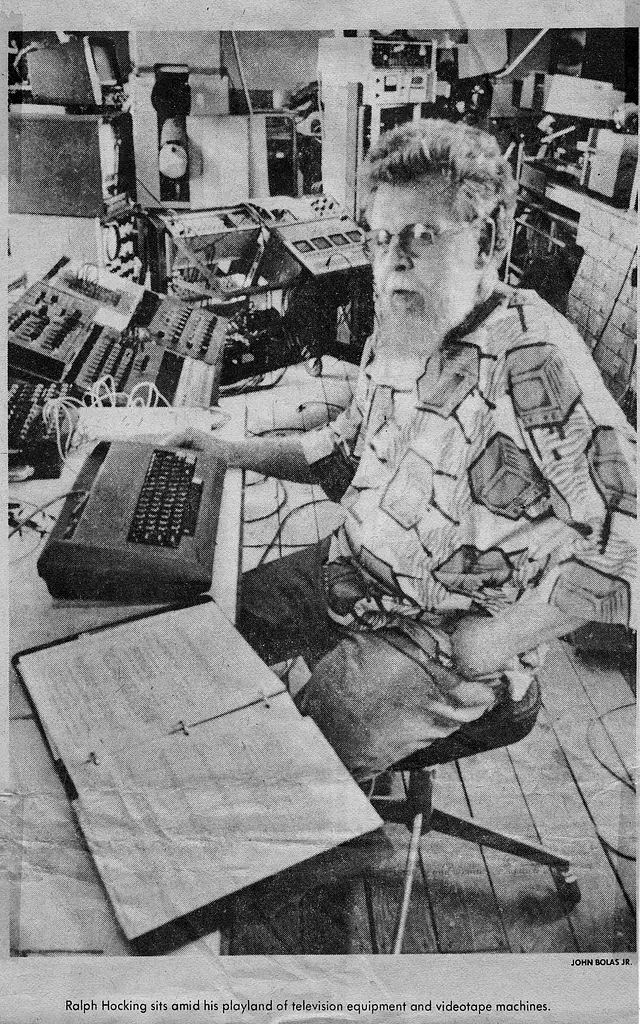
Ralph Hocking1 founds Student Experiments in Television2 at Binghamton University3 to provide access to portable video equipment to students and the wider University as well as the regional community, which had previously not been able to use television gear.
Angel St. Nunez tapes Bedford Stuyvesant Kids, young men arrested after a factory break-in. WNET4 and WGBH5 air sections of it in 1971, and the tapes help seed a Fresh Air Fund for inner-city youth.
- NYSCA funds the Community Center for Television Production, the precursor to ETC
- ETC begins operating in Binghamton with Ralph Hocking as Director and Ken Dominick as the Program Coordinator, joined within a few years by Bob Diamond and Sherry Miller Hocking. In the following years, ETC added Dave Jones, Peer Bode and Hank Rudolph to the staff. Walter Wright was Artist in Residence for several years in the 1970s, while Dr. Don McArthur served as Researcher during that time. Later, Paul Davis continued to serve in that role.
sources ›
- [1] Ralph Hocking
- [2] Student Experiments in Television
- [3] Binghamton University
- [4] WNET
- [5] WGBH
- [6] ETC History 1968-1971
The nonprofit
The Community Center for TV Production1 focuses its mission on “community as studio.” Programs include equipment loans, workshops and exhibitions of artists’ works, and are open to community groups, educational and civic organizations and individuals.
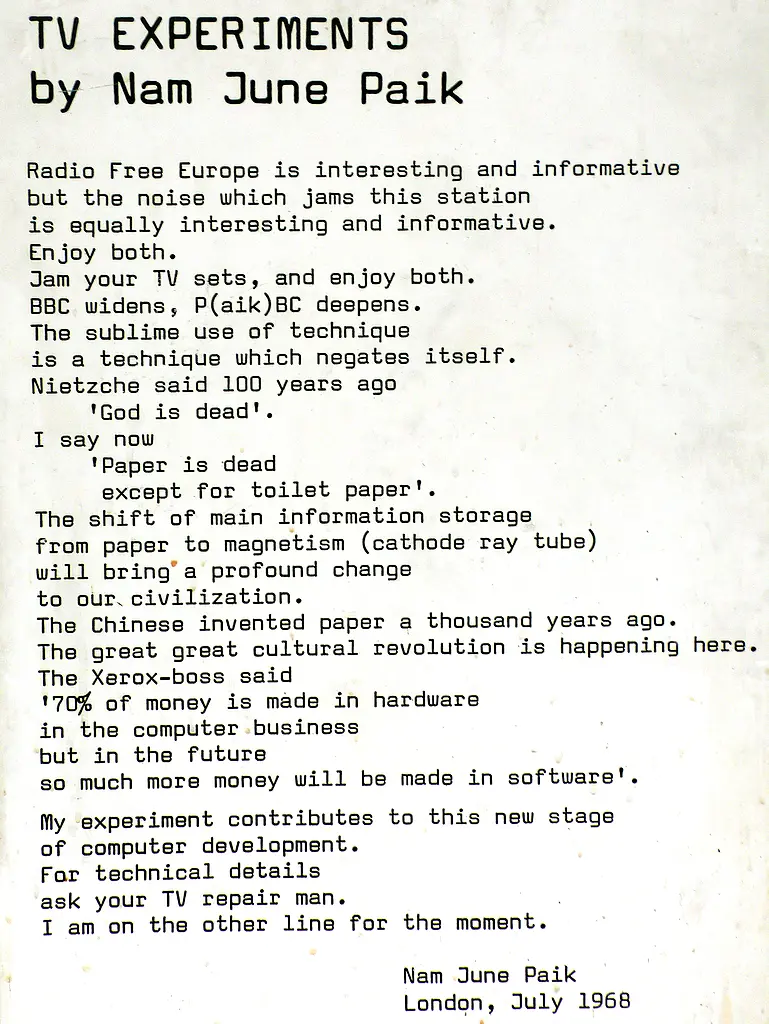
Ralph Hocking2 meets with Nam June Paik3 about how artists might use video, and begins a research program to design and build the imaging tools that did not yet exist.
- A Challenge for Change conference at NYU, with Ralph Hocking, Beryl Korot, Skip Blumberg and Bart Friedman of the Videofreex, and Michael Shamberg among the participants
- Charlotte Moorman's 8th Avant Garde Festival at the Armory, with ETC's The Living Room, premieres of the Paik/Abe and Siegel synthesizers, Shirley Clarke's Video Ferris Wheel, a Vasulka environment and tapes by Douglas Davis and the Videofreex
- NYSCA funds WNET and Nam June Paik's residency for the Carousel series, part of which Paik makes at ETC on the Paik/Abe synthesizer
- Nam June Paik and Shuya Abe's Electronic Art III with Charlotte Moorman at Galeria Bonino, using the Paik-Abe synthesizer with ETC's help
- Woody and Steina Vasulka's Transmitted Environment at ETC
sources ›
Paik and Abe
NYSCA1 funds the Paik/Abe Video Synthesizer2. Shuya Abe and Nam June Paik3 build one at the Center in 1972, and it runs on site long enough to make part of Paik’s The Selling of New York before heading to WNET’s TV Lab. A second machine stays for residents, with showings at the Bonino Gallery in New York and the Everson Museum4 in Syracuse.
At the Everson5 from January 18 to 23, 1972, Paik and Charlotte Moorman6 exhibit TV Bed and TV Cello, both designed and built by Ralph Hocking7. The Center takes its name: Experimental Television Center.
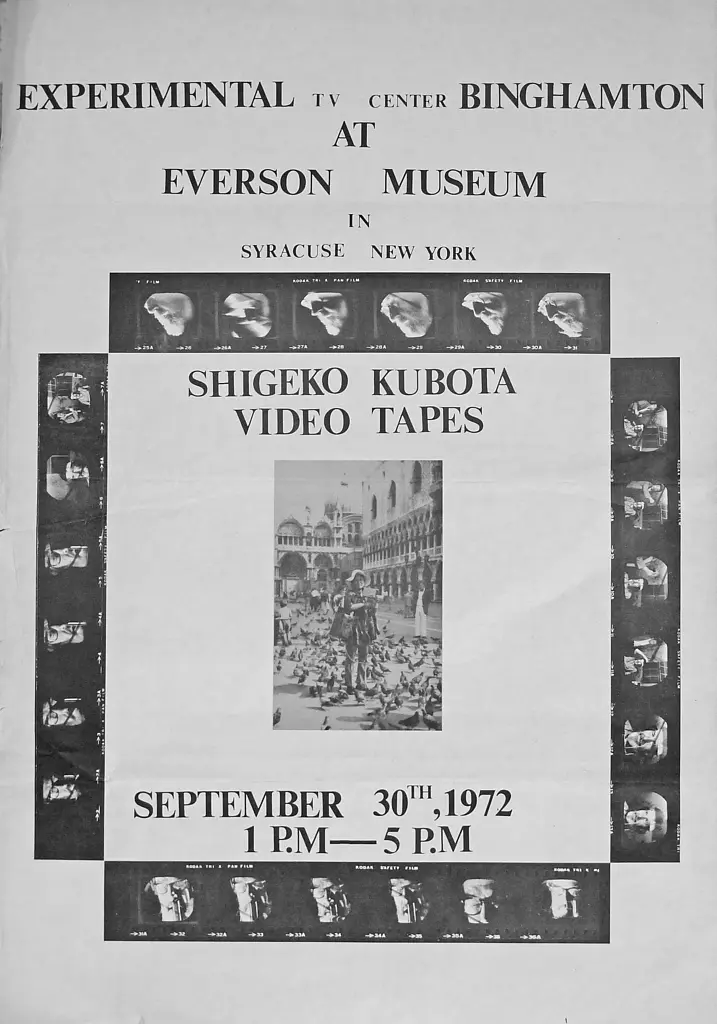
- A Shigeko Kubota exhibition at the Everson Museum, with ETC assistance
- Charlotte Moorman's 9th Avant Garde Festival aboard a riverboat, with Juan Downey, Frank Gillette, Andy Mann, Shigeko Kubota, Nam June Paik's TV Bed and ETC
- Director Nicholas Ray works at ETC with Ralph Hocking, using the synthesizer to fracture footage for the film that becomes We Can't Go Home Again
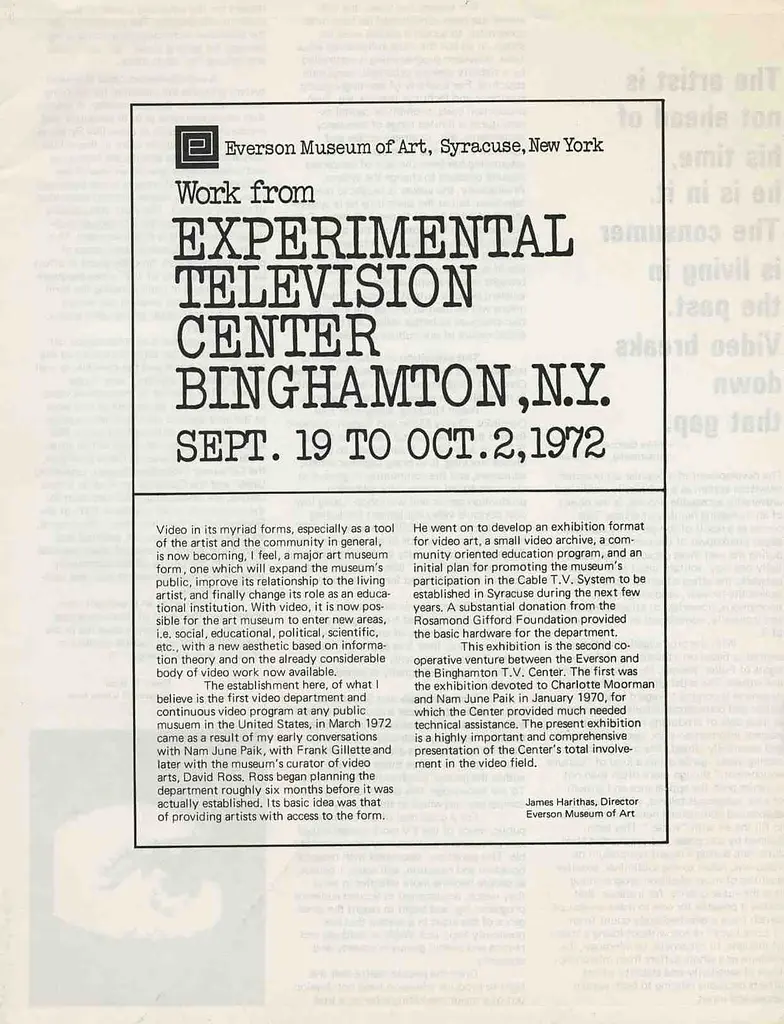
- James Harithas's account of founding the Everson's video department, the first at a US public museum, seeded by talks with Nam June Paik and Frank Gillette and run by curator David Ross
- NYSCA funds ETC to build the Paik-Abe synthesizer, one system going to WNET's TV Lab and one staying for the residency
- Nam June Paik and Charlotte Moorman at the Everson, showing TV Cello, TV Glasses and the Paik-Abe synthesizer, with technical help from Ralph Hocking and ETC
- Nam June Paik and Charlotte Moorman perform live at The Kitchen, with technical help from Ralph Hocking and ETC
- The Everson's Work from Experimental Television Center catalog, introduced by director James Harithas
sources ›
Works from ETC
Walter Wright1 takes electronic-imaging workshops across New York and Canada, including the Everson2 and The Kitchen3.
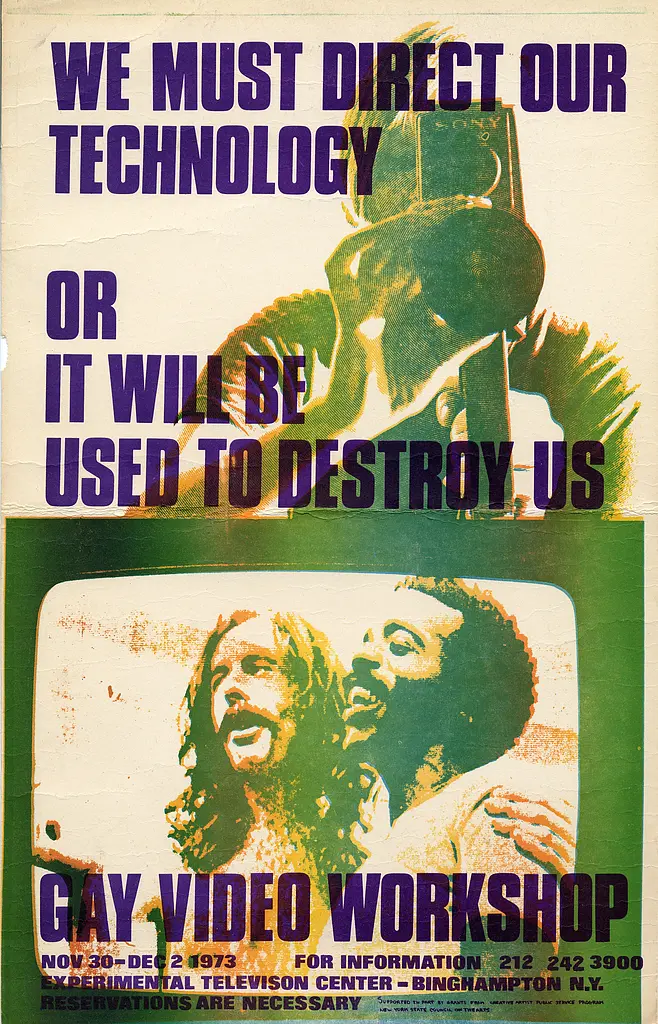
Works from the Experimental Television Center4, a large show built for the Everson, gathers installations, tapes and performances. Community and artist tapes air weekly on the Center’s own Access series.
sources ›
Dave Jones arrives
David Jones1 becomes the Center’s technician, the hire that shapes the next forty years. Walter Wright2 demonstrates the system at Global Village and York University3 in Toronto.
Jones starts the gray level keyer and modifies an SEG to sync with the Paik/Abe4. The reasoning is blunt: the tools artists want are either unavailable or priced out of reach, so the Center builds them.
- A Fredonia arts festival with films by Larry Gottheim, Paul Sharits, Hollis Frampton and Ken Jacobs, video by Ralph Hocking and the Vasulkas, and a Paik/Abe demo
- A SUNY-Wide Albany conference on the video arts, with Steina and Woody Vasulka, Ed Emshwiller and a Walter Wright demo of the Paik/Abe synthesizer for ETC
- A three-day Everson Museum video seminar, with William Wegman, Phil Niblock, Frank Gillette, Juan Downey, Peter Campus, Nam June Paik and a Walter Wright Paik/Abe demo for ETC
- Belgium's Exprmntl 5 film competition, with video environments by Walter Wright for ETC and by the Vasulkas, alongside David Cort, Tom DeWitt and Tony Conrad
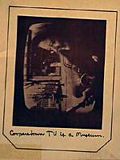
- David Jones's Four Channel Colorizer, made available through ETC's residency
 disk3_pic007.jpg
sources ›
The Jones Colorizer
NYSCA funds the Jones Colorizer1, a four-channel voltage-controlled colorizer with gray level keyers, and the oscillator bank is installed. Don McArthur2 builds the SAID digitizer3 out of time-base-corrector research, and Jones, McArthur and Wright4 begin computer imaging on an LSI-11.
Image-processing workshops and performances run at The Kitchen5, Anthology Film Archives6 and the Contemporary Art Museum in Montreal7, with Wright touring for NYSCA through more than ten organizations.
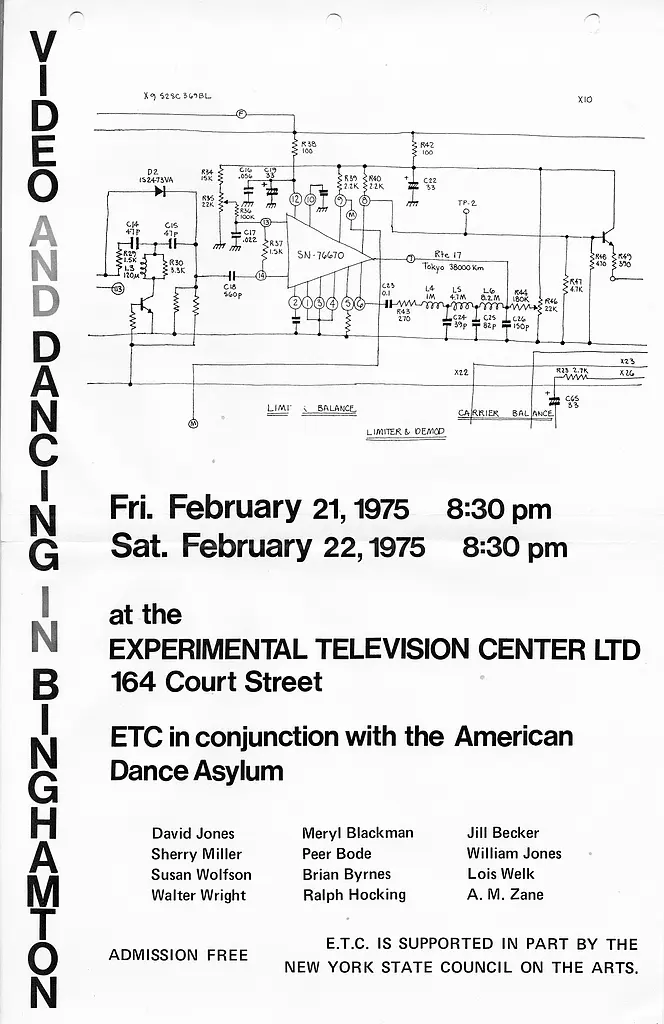
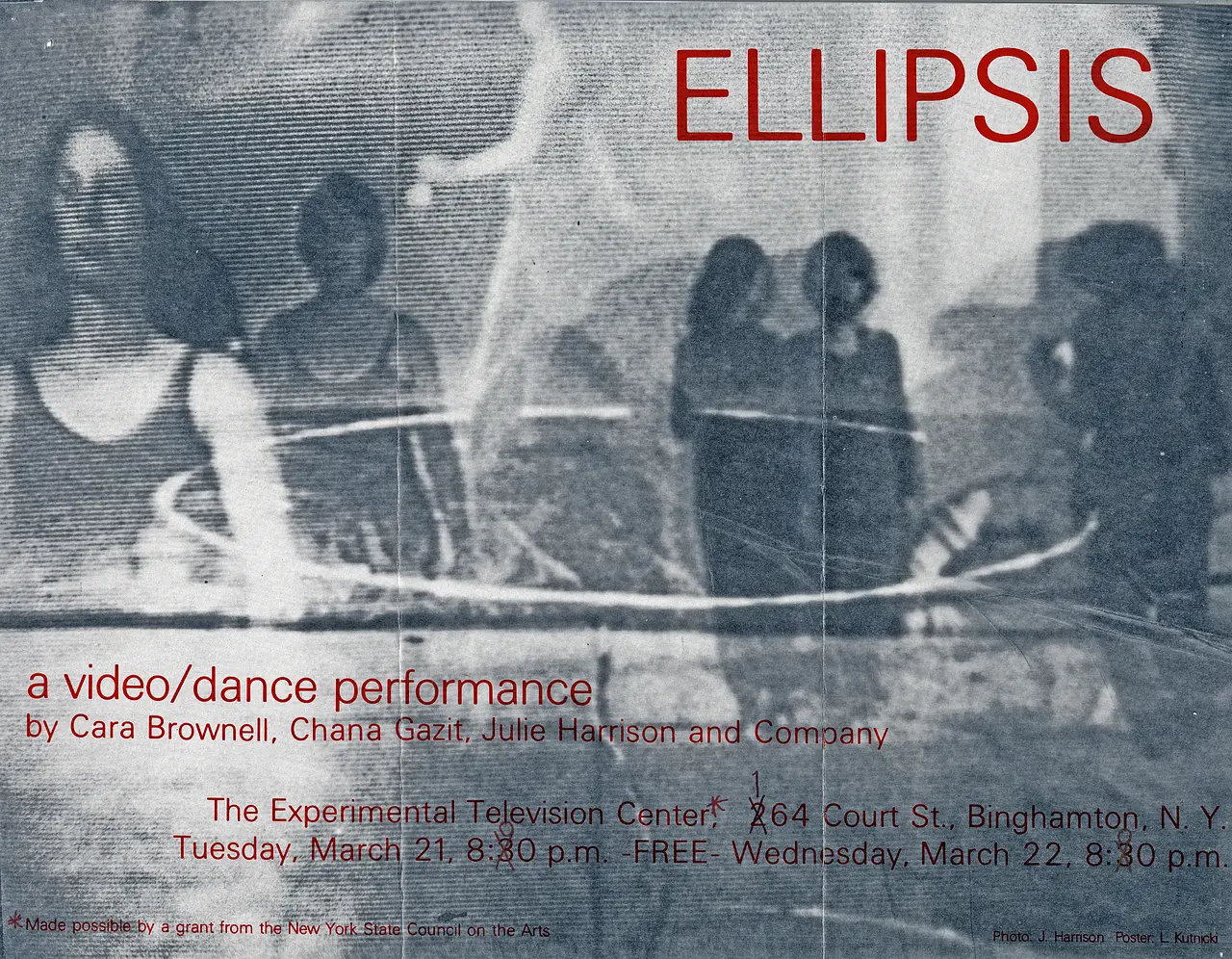
- A Pipe Dream notice on a video and dance performance in Binghamton
- A recurring phone conference run from Lanesville TV on repairing and modifying half-inch video gear, with ETC's McArthur and Jones
- A technical conference at Lanesville TV, with ETC's Don McArthur and Dave Jones talking microprocessors and circuits
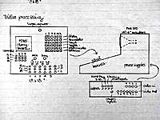
- David Jones's Grey Level Keyers, Oscillator Bank and Multi Input Sequencer, available through ETC's residency and documented by Rich Brewster
 disk3_pic008.jpg
sources ›
Cloud Music
An NEA1 grant opens the computer-video work; Jones2, McArthur3, Wright4 and Brewster fold in parallel research by Woody and Steina Vasulka5 and Jeffrey Schier, and the LSI-11 becomes the standard.
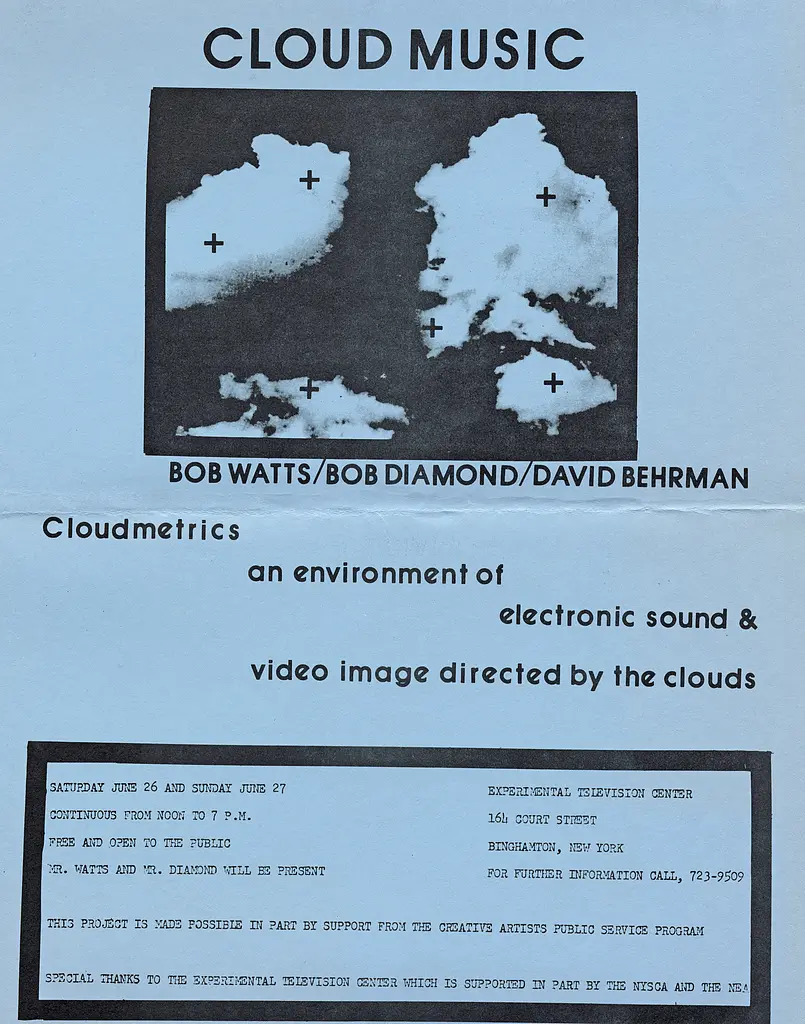
Jones builds hard and soft keyers and a sequential switcher, and a 64-point switching matrix goes in. The Center starts writing the manual that will grow from a portapak guide into signal theory and step-by-step builds. Cloud Music6 by Robert Watts, David Behrman and Bob Diamond is presented at the Center.
- A large ETC show at the Everson Museum, with installations by Peer Bode, Ralph Hocking, David Jones, Don McArthur, Meryl Blackman, Walter Wright, Sherry Miller and Neil Zusman, plus tapes touching Bill T. Jones, Arnie Zane, Charlotte Moorman and Nam June Paik. Curated by Peer Bode and Sherry Miller
- A separate Cloud Music record drawn from the Ars Electronica Video Pioneers catalog, crediting Bob Diamond and ETC equipment notes by Sherry Miller Hocking and Rich Brewster
- An Ed Melnik catalog with a photo of the ETC studio where he works
- CAPS video fellowships for 1975-76, to Elaine Baley, Skip Blumberg, Peer Bode, Bart Friedman, Julia Heyward, Philip Mallory Jones, Beryl Korot, Shigeko Kubota, Michael Marton and Ira Schneider
- Couple 513, a live video and dance piece at the Everson with Lois Welk and Arnie Zane of the American Dance Asylum, video by Meryl Blackman and Peer Bode
- Movements for Video Dance and Music at Cornell's Johnson Museum, with Peer Bode, Meryl Blackman, Bill T. Jones and Arnie Zane
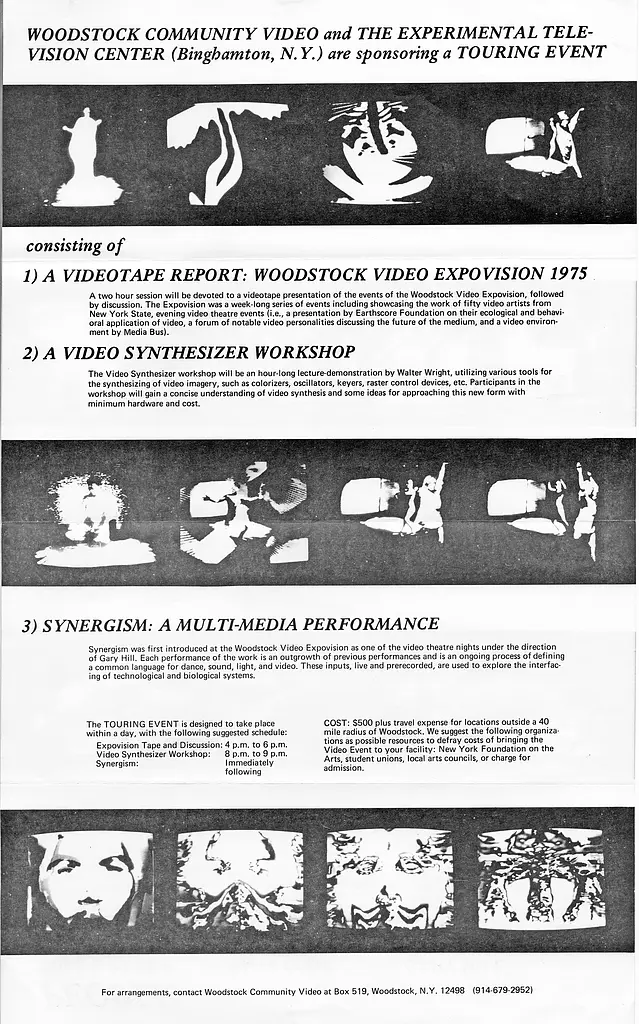
- Synergism, a traveling collaboration between Woodstock Community Video and ETC, with Tobe Carey, Gary Hill, Sara Cook, Ken Marsh and Walter Wright, performed at ETC on 3/23/76 using the Paik/Abe synthesizer and Jones devices
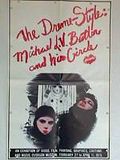
- The Dreme Style of Michael L.V. Butler and his circle at the Everson Museum, with ETC-produced video, costumes, photographs and drawings
sources ›
Video by Videomakers
The Center starts Video by Videomakers1, the only video exhibition series in the region, bringing Beryl Korot2, Barbara Buckner3 and others to present and talk.
The computer is installed in the system and opened to artists, and software research begins. For a second year, workshops run in regional school districts with Binghamton’s Roberson Center4.
- A Videography profile and history of The Kitchen
- An Arnie Zane photography show at ETC
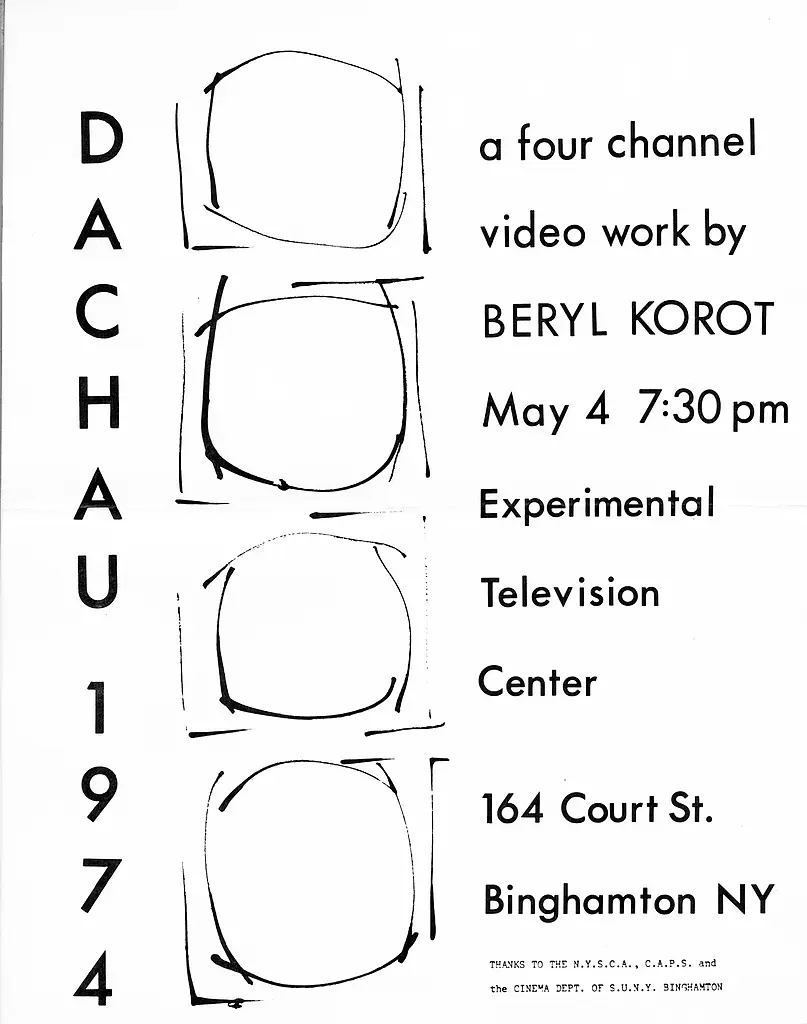
- Beryl Korot presents Dachau 1974 at ETC
- ETC artists Ralph Hocking, Don McArthur, Peer Bode, Meryl Blackman and Walter Wright present at Media Study/Buffalo, curated by John Minkowsky
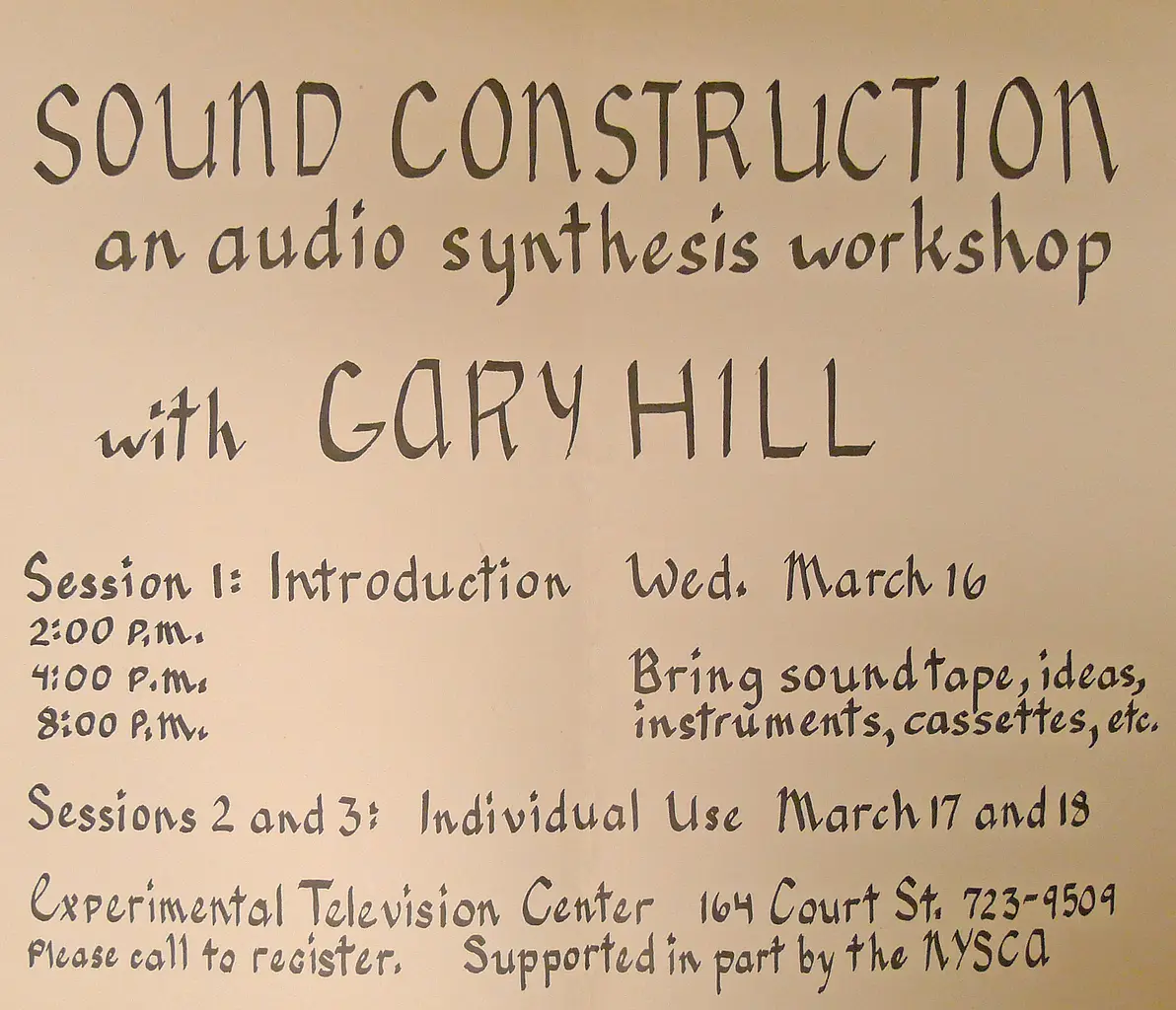
- Gary Hill leads a sound construction workshop at ETC
 disk4_pic001.jpg
 disk1_pic013.jpg
sources ›
Steering the image
Jones1 and Richard Brewster build the Analog Control Box, producing electronic sound and signals that move the picture by hand. The computer project advances with Paul Davis of SUNY-Binghamton2.
The Center runs workshops for the City of Binghamton3, Headstart, Tri-Cities Opera4 and 4-H5, on the principle that the tools mean nothing if no one outside the studio can reach them.
 disk3_pic002.jpg.webp
 disk3_pic003.jpg.webp
 disk2_pic006.jpg
 disk2_pic008.jpg.webp
 disk2_pic010.jpg.webp
sources ›
- [1] David Jones
- [2] Binghamton University
- [3] City of Binghamton
- [4] Tri-Cities Opera
- [5] 4-H
- [6] ETC History 1977-79
Owego
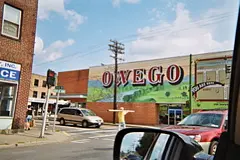
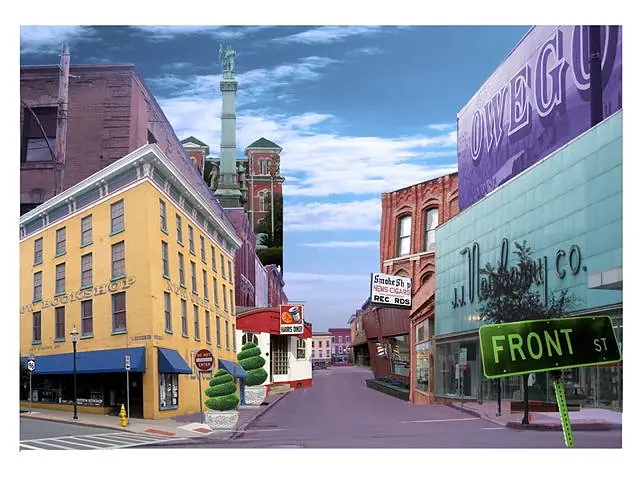
The Center moves to Owego, with Peer Bode1 running the residency program. The processing computer becomes a Z-2 with a CAT digital frame buffer, one of the few low-cost digital video devices, interfaced with the analog box, and software is written for specific video uses.
The Electronic Workshop, a lecture-and-demonstration series on image processing, runs for 17 organizations across the state.
- An upstate media gathering at Synapse that evolves into Media Alliance, with Ralph Hocking, Sherry Miller and the Vasulkas among the attendees
- CAPS video fellowships for 1978-79, to Dena Crane, Louie Grenier, Gary Hill, Ralph Hocking, Steven Kolpan, Mitchell Kriegman, Mary Lucier, Michael Marton, William Wegman and Elizabeth Wiener. The show tours ETC and venues from PS 1 to the Everson
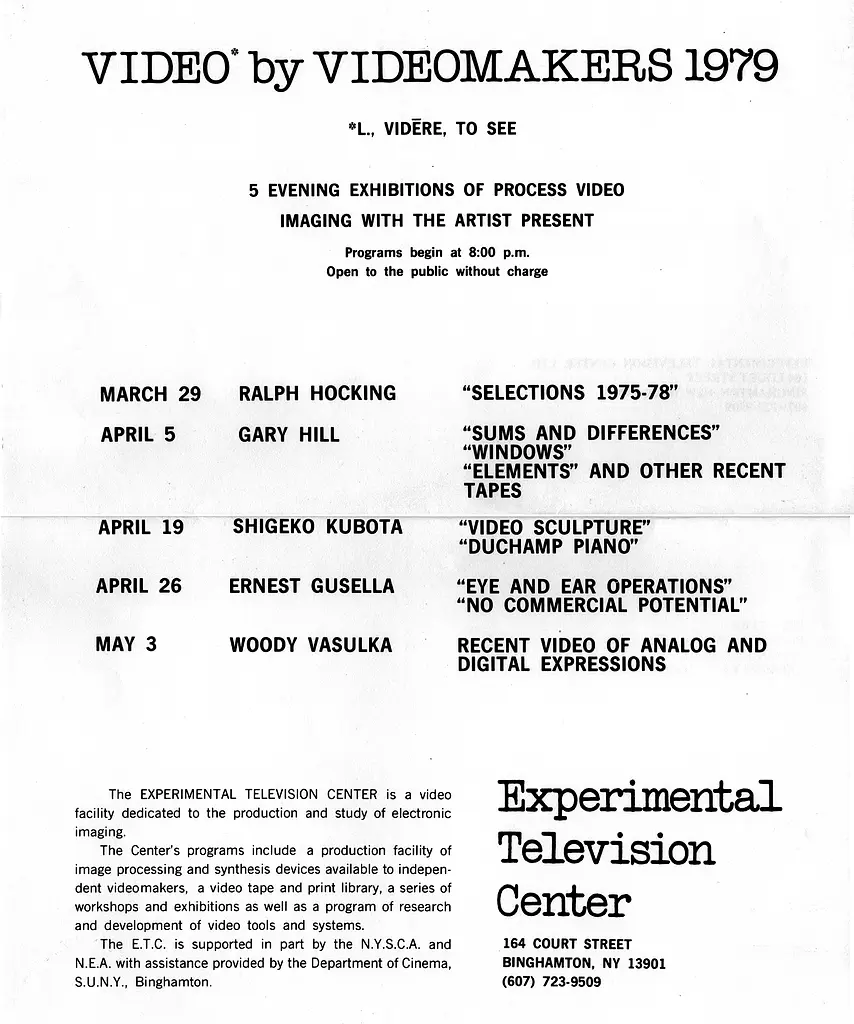
- ETC's Video by Videomakers series, curated by Peer Bode, with Ralph Hocking, Gary Hill, Shigeko Kubota and Ernie Gusella
- Ralph Hocking and Sherry Miller Hocking's traveling image-processing workshop across twenty New York campuses
- The meeting that formalizes Media Alliance at Media Study/Buffalo, with ETC among the founding organizations
- A Carl Geiger photography show at ETC
sources ›
- [1] Peer Bode
- [2] ETC History 1979-81
The electronic darkroom
Jones1 writes the Print Program, which captures videographic stills to disk and prints them with fine gray-level control. It is the electronic darkroom artists here had wanted since the early seventies. Graduate interns add software under Paul Davis and Ralph Hocking2.
sources ›
- [1] David Jones
- [2] Ralph Hocking
- [3] ETC History 1979-81
At Siggraph
Residency work shows widely: Siggraph1, the Donnell Library, Global Village, the 7th Annual Ithaca Video Projects Festival and the San Francisco International Video Festival.
- A festival of ETC works curated by Maureen Turim at American Center in Paris, with Peer Bode, Barbara Buckner, Gary Hill, Henry Linhart, Shalom Gorewitz and Ralph Hocking
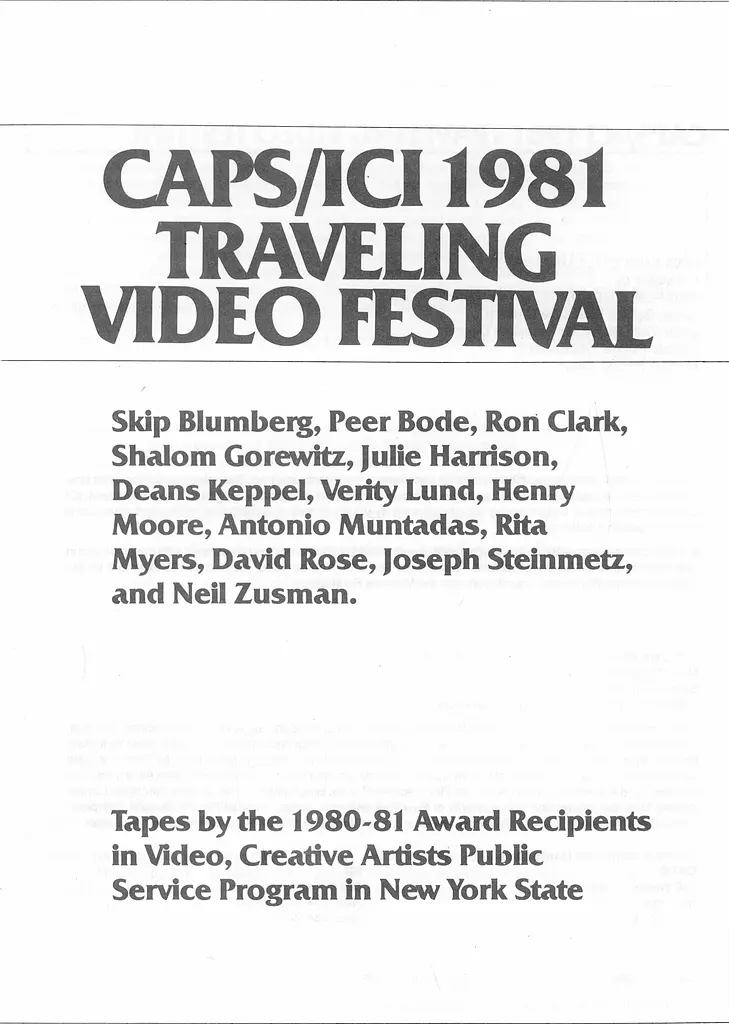
- A traveling CAPS video festival curated by Steven Kolpan, stopping at ETC, with Dan Reeves, Joan Logue, Ardele Lister and Jaime Davidovich
- Siggraph's Boston art show, with Gary Hill, the Vasulkas, Walter Wright, and ETC-made work by Connie Coleman and Alan Powell
sources ›
- [1] Siggraph '82
- [2] ETC History 1981-83
Settings remembered
NYSCA1 funds the General Purpose Interface Board, which lets a computer “remember” and replay an artist’s exact knob settings. A piece can now be rebuilt the same way twice. Jones2 and Peer Bode3 start a real-time frame buffer at 256x256 and 16 grays, and the Pattern Program is built as a SUNY intern project.
- A Binghamton catalog on Barbara Buckner, listing Pictures of the Lost, Hearts, The Golden Pictures and Millenia
- A Binghamton catalog on Peer Bode, listing his early video work from Picture Changes to Comp Book
- A Binghamton catalog on Shalom Gorewitz, listing his Travels series and tapes from Measures of Volatility to U.S. Sweat
- A Binghamton group show of ETC tapes by Ralph Hocking, Sherry Miller, Henry Linhart, Shalom Gorewitz, Peer Bode, Barbara Buckner and Gary Hill, curated by Maureen Turim
- A Media Alliance membership meeting in Rochester, with panels featuring Jaime Davidovich, Ralph Hocking, Tony Conrad and Kit Fitzgerald
- The 6th Tokyo Video Festival, where Reynold Weidenaar takes the Grand Prize
sources ›
- [1] NYSCA
- [2] David Jones
- [3] Peer Bode
- [4] ETC History 1981-83
The Four Board
Jones1 and Matthew Schlanger2 design the Four Board project, a four-channel colorizer, keyers, a programmable sequencer and oscillators. The point is a complete low-cost system an artist could leave able to build for themselves. The Center begins studying the new Amiga.
 disk4_pic003.jpg
sources ›
- [1] David Jones
- [2] Matthew Schlanger
- [3] ETC History 1983-85
Tools to take home
The Four Board project is finished and installed. Jones1 and Schlanger2 write the documentation with Connie Coleman and Alan Powell3, and the manual is revised to explain keying, colorization and switching, so the methods outlast the machines.
sources ›
Premiere at The Kitchen
The Four Board project premieres at the Media Alliance Annual Conference1 at The Kitchen2, the downtown space central to video art since the early seventies. NYSCA3 funds a black-and-white frame buffer by Jones4 and Peer Bode5 for the Amiga.
 disk3_pic016.jpg
sources ›
- [1] Media Alliance 1985 Annual Conference
- [2] The Kitchen
- [3] NYSCA
- [4] David Jones
- [5] Peer Bode
- [6] ETC History 1985-87
Onto the Amiga
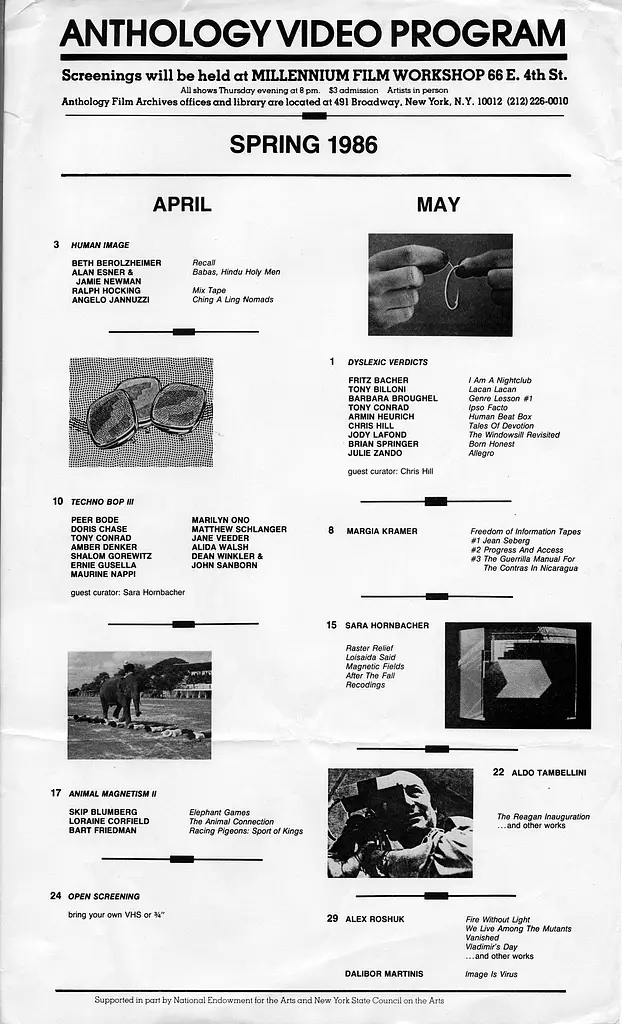
The Print Program is rebuilt for the Amiga, and custom software lets the computer drive the frame buffer; NYSCA1 support adds gen-lock and memory. The work is going digital without giving up the analog instruments that gave it its look.
sources ›
- [1] NYSCA
- [2] ETC History 1985-87
Two Amigas
The Center works on getting artists fluent on the computer fast. A second Amiga is added, one dedicated to buffer control and one to videographics and audio.
- ETC prepares to launch its Electronic Arts Grants Program with NYSCA support, split into Presentation Funds for venues and Finishing Funds for individual artists
- Untamed Video at Binghamton's University Art Gallery, curated by Sherry Miller Hocking, with Peer Bode, Barbara Buckner, David Blair, Connie Coleman, Alan Powell, Alex Hahn, Shalom Gorewitz, Megan Roberts, Raymond Ghirardo, Sara Hornbacher, Matthew Schlanger and Reynold Weidenaar
Funding the work
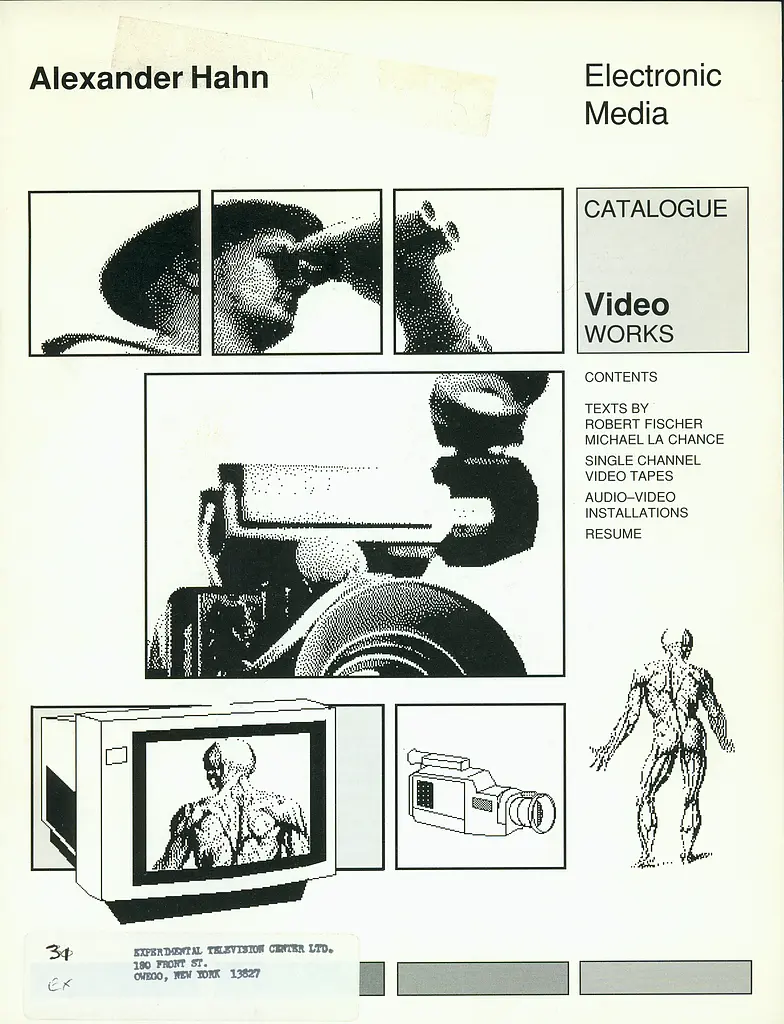
The Center starts the Electronic Arts Grants Program1 with NYSCA2: Presentation Funds for venues showing electronic art, Finishing Funds for artists completing work. It is now paying for other people’s work across the state, not only making its own. The audio side adds a Mirage and mixing, and MIDI and control-voltage boxes begin.
sources ›
Sound and image, arrayed
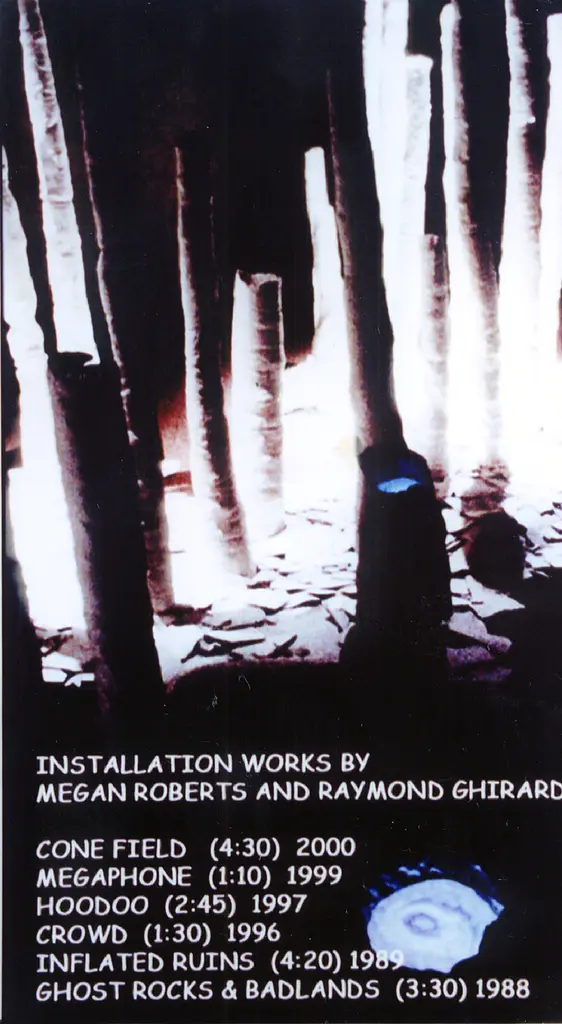
Megan Roberts1 and Ray Ghirardo2 design a digital interface that drives several audio and video sources at once, arranged in three-dimensional space for installation.
Finishing Funds support Maria Beatty, Barbara Hammer3 and John Knecht4, chosen by Raymond Ghirardo and Arthur Tsuchiya. Presentation Funds reach Hallwalls5, Downtown Community TV Center6, the Brooklyn Museum7 and the Asian American Video Festival.
sources ›
- [1] Megan Roberts
- [2] Raymond Ghirardo
- [3] Barbara Hammer
- [4] John Knecht
- [5] Hallwalls
- [6] Downtown Community TV Center
- [7] Brooklyn Museum
- [8] ETC History 1989-90
Grand Prix at Locarno
A third Amiga and the Toaster expand the system.
Tapes show at the Museum of Modern Art1 (Exchange of Information), Visual Studies Workshop2, the Bronx Museum’s3 Emerging Expressions Biennial, and festivals in Rome, Bonn, Osnabruck, Stockholm and Turkey, and air on The Learning Channel and Deep Dish TV4. Artists take the Grand Prix at Locarno and first prize for short experimental work at Athens. The Center sponsors Alex Hahn’s5 The Kirchner Itinerary and Shalom Gorewitz’s6 Roots and Branches.
sources ›
- [1] Museum of Modern Art
- [2] Visual Studies Workshop
- [3] Bronx Museum
- [4] Deep Dish TV
- [5] Alex Hahn
- [6] Shalom Gorewitz
- [7] ETC History 1990-91
Wax wins
David Blair’s Wax takes the Grand Prize at the 6th Montbeliard Video Festival. Works by Irit Batsry1, David Blair, Nancy Buchanan and Shalom Gorewitz2 screen at the Museum of Modern Art3, with more at the Wexner Center4, CEPA5, the Brooklyn Museum, the Dallas and Black Maria festivals and the London Film Festival.
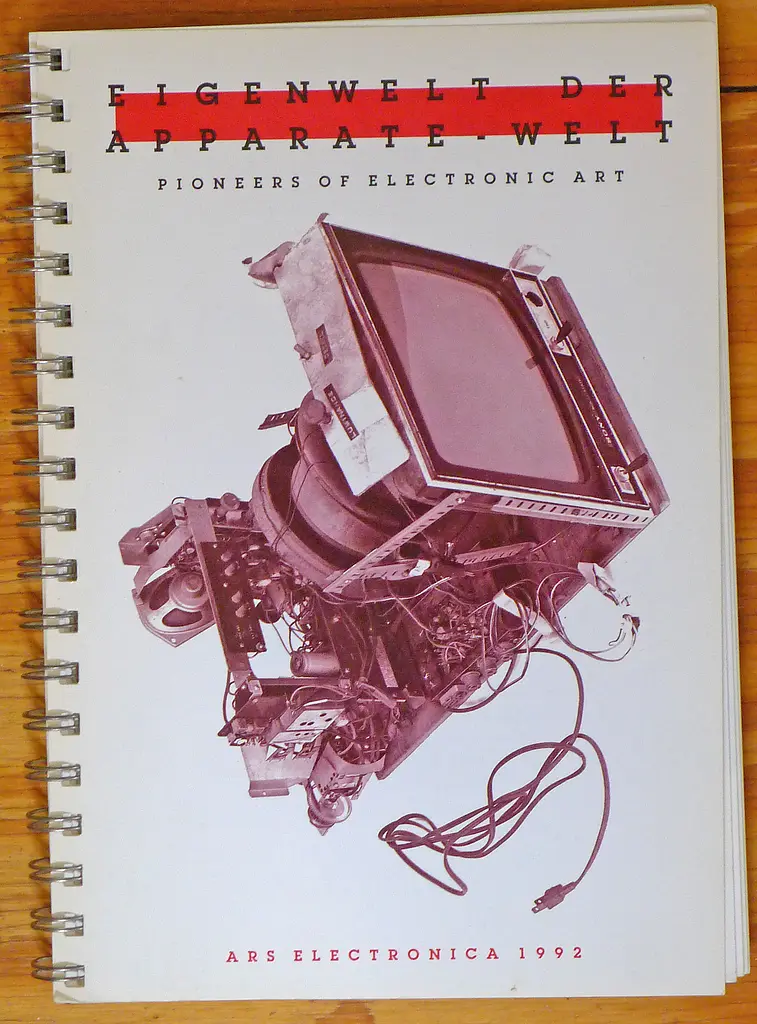
Prompted by Ars Electronica’s6 Pioneers of Electronic Art7 exhibition at Linz, the Center starts cataloging its tapes, tools and papers in a relational database, an early sign it sees itself as a history worth keeping.
- Ars Electronica's Pioneers of Electronic Art (Linz), curated by Woody and Steina Vasulka. ETC lends many early devices, and Sherry Miller Hocking co-writes the equipment manual reprinted in the catalog
- Finishing Funds grants for 1992, to Karim Ainouz, Basha Alperin, Robert Attanasio, Ellen Braune and Nina Alverez, Abigail Child, Yau Ching, Maxy Domingo and July Melo, Ron Ehmke and Richard Wicka, Vincent Grenier, Denise Iris, Lisa Jones, Jody Lafond, Heather MacDonald, Lynn Masterson and Jim Supanick, Kevin O'Shaughnessy, Carlos Ortiz, Kevin Pearson, Trish Rosen and Kate Farrell, Angel Shaw, Brian Springer (Spin), Ray St. Denis, Mary Ellen Strom, Helen Thorington, Richard Wicka, Steve Zehentner and Ellen Zweig
sources ›
- [1] Irit Batsry
- [2] Shalom Gorewitz
- [3] Museum of Modern Art
- [4] Wexner Center
- [5] CEPA
- [6] Ars Electronica
- [7] Pioneers of Electronic Art
- [8] ETC History 1991-92
Two Decades
The Museum of Modern Art1 mounts three shows with Center work: Two Decades, Video Fest Berlin and Between Word and Image. More screens at the MIT Media Lab2, the Franklin Institute3 and the DAAD Galerie4 in Berlin, and in the Bonn, Atlanta, Vancouver and Worldwide (Netherlands) festivals.
Finishing Funds back Maria Beatty, Kit Fitzgerald, Jeffrey Lerer5, Ned Sublette6 and Ann-Sargent Wooster7.
sources ›
Into the museums
Center work shows at the Venice Biennale1 and the Osnabruck Media Art Festival2, in Iterations: The New Image at the International Center of Photography3, at Film/Video Arts and at Montage 93 in Rochester. The Center joins Media Alliance’s Preservation Working Group and the AFI’s4 national database.
Finishing Funds back David Blair, Vivek Renjen Bald, Larry Brose5, Pamela Susan Hawkins, Michael Schell6 with 77 Hz, and Branda Miller7 with Stephen Vitiello8.
- Finishing Funds grants for 1994, to Pat Abt, Vivek Renjen Bald, Don Bernier, David Blair (Wax), Steve Bradley, Lawrence Brose, Yau Ching, Ron Ehmke and Richard Wicka, John Ewing, Chuck Furoyu, Marc Gordon, Vincent Grenier, Pamela Hawkins, Denise Iris, Carol Kalil, Grace Lee, Jeffrey Lerer, Branda Miller, Dean Moss, Betsy Newman, Producciones Homovision, Michael Schell and 77 Hz, Mary Ellen Strom and Stephen Vitiello
- Media Alliance, under Mona Jimenez, pitches a cataloging partnership to the NEH. Never funded, but it lays groundwork for shared cataloging across ETC, Anthology Film Archives and others
- Upstate archives including ETC adopt a NAMID-compatible cataloging template that can convert to USMARC
Exit Art to Helsinki
Work shows at Exit Art, the New Museum1, Hallwalls2, Colgate3, the Black Maria4 festival, the New York Video Festival, the Copenhagen Film Festival and the 5th International Symposium of Electronic Art5 in Helsinki.
Finishing Funds panelists Bob Harris6 and Steina Vasulka7 support Tom DeWitt, Carl Geiger and Amy Hufnagel, Jody Lafond, Rohesia Hamilton Metcalfe, Kristin Tripp and Cathy Weis.
sources ›
- [1] New Museum
- [2] Hallwalls
- [3] Colgate University
- [4] Black Maria Film Festival
- [5] ISEA94, Helsinki
- [6] Bob Harris
- [7] Steina Vasulka
- [8] ETC History 1993-95
ISEA Montreal
Work shows at the Whitney1, Threadwaxing Space, the Donnell Media Center, the Knitting Factory2 and Momenta Art3, and travels to the 6th International Symposium on Electronic Art4 in Montreal and to Video Data Bank’s5 Surveying the First Decade.
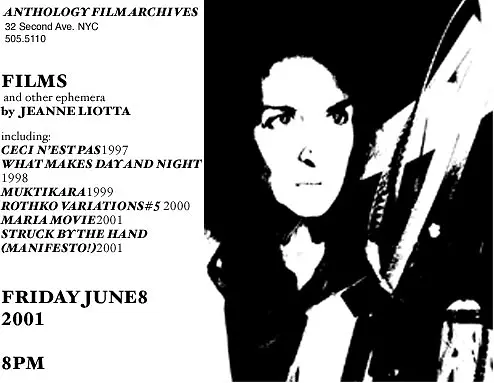
Finishing Funds, picked by Peer Bode6 and Ken Jacobs7, back Alan Berliner8, Diane Bertolo, Bill and Mary Buchen, Jane Greenberg, John Knecht, Richard Kostelanetz and Jeanne Liotta.
- ETC's 25-year survey at Art in General, curated by Ann-Sargent Wooster, with Shigeko Kubota, Doris Chase, Barbara Hammer, Irit Batsry, Dan Reeves, Peer Bode and Sara Hornbacher
- Finishing Funds grants for 1996, to Shawn Atkins, Lisa Barnstone, Zoe Beloff, Alan Berliner, Diane Bertolo, Bill and Mary Buchen, Veena Cabreros-Sud, Tirtza Even, Emmanuel Fuentebella, Neil Goldberg, Jane Greenberg, Bob Harris, Shelley Hirsch (for the late Jerry Hunt), John Knecht, Richard Kostelanetz, Jeffrey Lerer, Jeanne Liotta, Tatiana Loureiro, Hsian-Fu Lu, Frederick Rendina, Elizabeth Rodgers, Sasha Sumner and Robin Perl, and Neil Zusman
 disk3_pic017.jpg
sources ›
- [1] Whitney Museum of American Art
- [2] Knitting Factory
- [3] Momenta Art
- [4] ISEA95, Montreal
- [5] Video Data Bank
- [6] Peer Bode
- [7] Ken Jacobs
- [8] Alan Berliner
- [9] ETC History 1995-1997
Lucas at the Whitney
Kristin Lucas’s1 Host is selected for the Whitney Biennial2 and shows at the Museum of Modern Art3 and the New York Film and Video Festival at Lincoln Center. Mary Ann Petit takes first prize at Thaw 96. Resident work shows at the AFI Video Festival, LACMA4, the Boston MFA and the MIX Festival5.
Presentation Funds put independent video in front of nearly forty thousand people across twenty counties. Sponsored documentaries include Slawomir Grunberg6 and Ben Crane’s School Prayer: A Community Divided and Barbara Hammer’s7 The Female Closet.
- A Leonardo article by Mary Ann Petit on her multimedia performance The Grim Tale, made partly at ETC
- Barbara Hammer's The Female Closet, sponsored by ETC with NYSCA support
- Finishing Funds grants for 1997, to Diane Brown, Luca Buvoli, Ethan Crenson, Genevieve Boutet de Monvel, Roz Dimon, Elvira Garcia-Moran and Dolores Zorreguieta, Amy Hufnagel, Amy Jenkins, Sue Johnson, Jinhan Ko, Jody Lafond, Rik Little, Abby Luby, Jonathan Mednick, Casandra Stark Mele, Uzi Parnes, Daniel Peddle, Esther Podemski, John Roach, Christine Russo, Lynn Sachs, Keith Sanborn, Huy Troung and Gail Vachon
 disk3_pic019.jpg
sources ›
Landscape: Mediated Views
Residents represent seven states, Finland and Canada. Peer Bode’s1 untitled pieces are selected for the Osnabruck Video Festival, and Leah Gilliam2 and Janet Grau complete new tapes.
Tapes show at the AFI Video Festival, the MIX Festival, the Museum of Modern Art3 and the ICA Boston4, and the Center is invited to curate Landscape: Mediated Views5 for Visual Studies Workshop6. Susan Muska’s The Brandon Teena Story wins two Astraea awards.
- A notation-free group performance by Peer Bode, Tony Conrad, Andrew Deutsch, Kevin McCoy and Steina Vasulka at the Syracuse Video History Conference
- Finishing Funds grants for 1998, to Alan Berliner, Anita Cheng, Abigail Child (The Russian Chronicles, after Vertov), Cathy Cook, Ann Curran, Lisa DiLillo, the collective Doorika, Tirtza Even, Taryn FitzGerald, Neil Goldberg, Amy Jenkins, Les Leveque and Diane Nerwen, Michelle Lippitt, Jillian McDonald, Ioannis Mookas, Greg Pak and Brent Renaud
- The annual student residency, directed by Pamela Hawkins with Hank Rudolph, drawing students from Buffalo to Oslo
sources ›
Making Connections
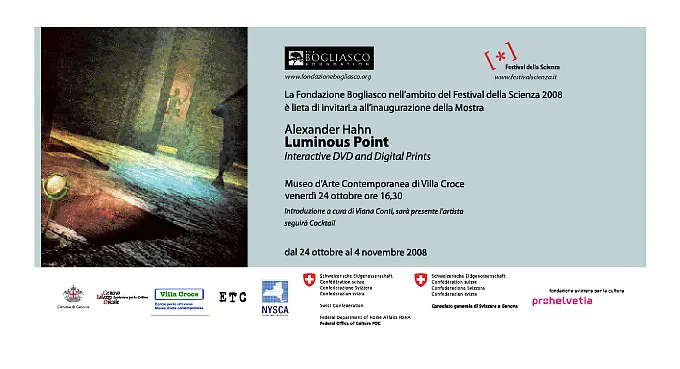
The Center runs Video History: Making Connections1 at Syracuse in October 1998, drawing over 250 people and tying the seventies pioneers to a younger generation in new media. Forty-eight residents work in the studio; Alex Hahn’s2 Theater of Memory tours Zurich, Oberhausen and Berlin.
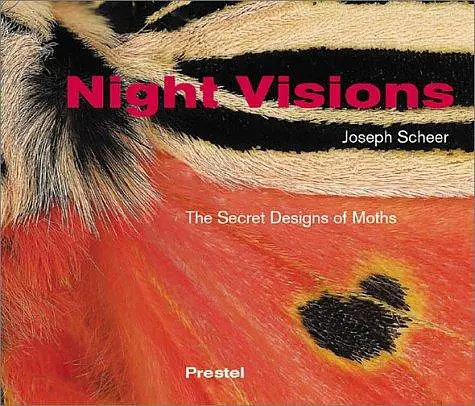
Tapes show at the Museum of Modern Art, the Whitney3, the New Museum4 and the Black Maria and MIX festivals. Sponsored projects include Alan Berliner’s5 The Language of Names, David Blair’s The Telepathic Motion Picture of the Lost Tribe, Barbara Hammer’s6 Culture Doctor, and a Peer Bode7, Joseph Scheer and Jessie Shefrin installation.
- An essentialist film and video show at Munson Williams Proctor with ETC tapes by Peer Bode, Matthew Schlanger and Connie Coleman, plus installations by Ken Jacobs and Ralph Hocking
- Finishing Funds grants for 1999, to Irit Batsry, Ericka Beckman, Rosateresa Castro-Vargas, David Crawford, Terry Cuddy, Pat Doyen, Elif Savas Felsen, Rebecca Herman, Hey-Yeun Jang, Ken Kobland, Megan Michalak, Jamie Mirabella, Prema Murthy, Sarah Pierce, John Roach and James Rouvelle, Mark Shepard, and Michael Smith with Joshua White
- Slawomir Grunberg and Ben Crane's School Prayer, ETC-sponsored, which wins a 2000 Emmy and tours festivals worldwide
sources ›
Batsry at Rotterdam
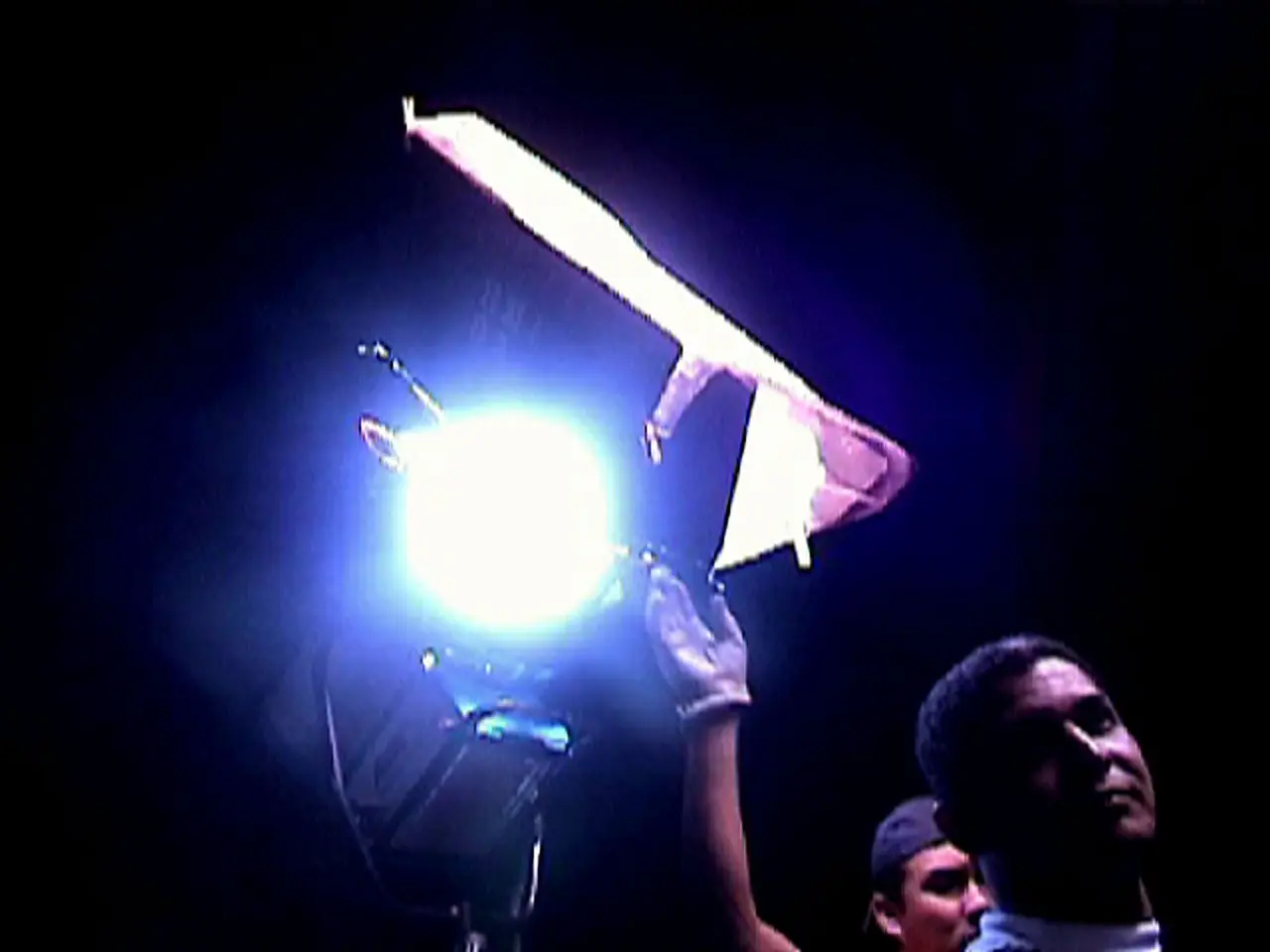
Irit Batsry’s1 These Are Not My Images premieres at the Rotterdam festival2. John Knecht3 curates Motion4 at the Munson-Williams-Proctor Institute5, a tape survey honoring 25 years of residents. Work shows at the Whitney Biennial6, the Museum of Modern Art and the New Museum, and in the Black Maria and MIX festivals.
The Center launches the Video History Web and passes $600,000 in grants awarded since 1989. Sponsored work includes Slawomir Grunberg’s Emmy-winning School Prayer, Alan Berliner’s The Sweetest Sound, David Blair’s Lost Tribe and Barbara Hammer’s The Female Closet. Finishing Funds back Zoe Beloff, Brian Frye, Neil Goldberg, Barbara Hammer, Jody LaFond, Ken Montgomery and Diane Nerwen.
- Amy Jenkins premieres the two-channel installation Shelter for Daydreaming at the John Michael Kohler Art Center, with ETC as fiscal sponsor
- An early video art show at the College of New Jersey drawing on ETC's ephemera collection, with Douglas Davis, Amos Poe and Penny Arcade, plus a Walter Wright performance
- Barbara Hammer's History Lessons, a film reassembly of lesbian history back to the dawn of cinema, backed by a NYSCA award through ETC
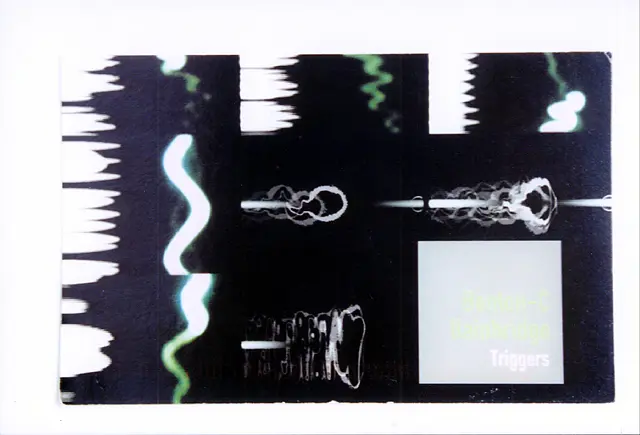
- Benton C Bainbridge shows Triggers at The Kitchen, an interactive jukebox stocked with analog-synthesized video
- Finishing Funds grants for 2000, to Zoe Beloff, Richard Bloes, Lawrence Brose, Anita Cheng, David Crawford, Brian Frye, Neil Goldberg, Shalom Gorewitz, Barbara Hammer, Janene Higgins and Zeena Parkins, Amy Jenkins, Jodi Kaplan, Jody Lafond, Jeanne Liotta, Michelle Lippitt, Rik Little, Dena Mermelstein, Ken Montgomery, Diane Nerwen, Megan Roberts and Raymond Ghirardo, Jason Rosette, Caspar Stracke (with Mike Hoolboom), Maria Venuto and Jennifer Whitburn
- Irit Batsry's These Are Not My Images, an 80-minute work with a Stuart Jones soundtrack, made with ETC and international support
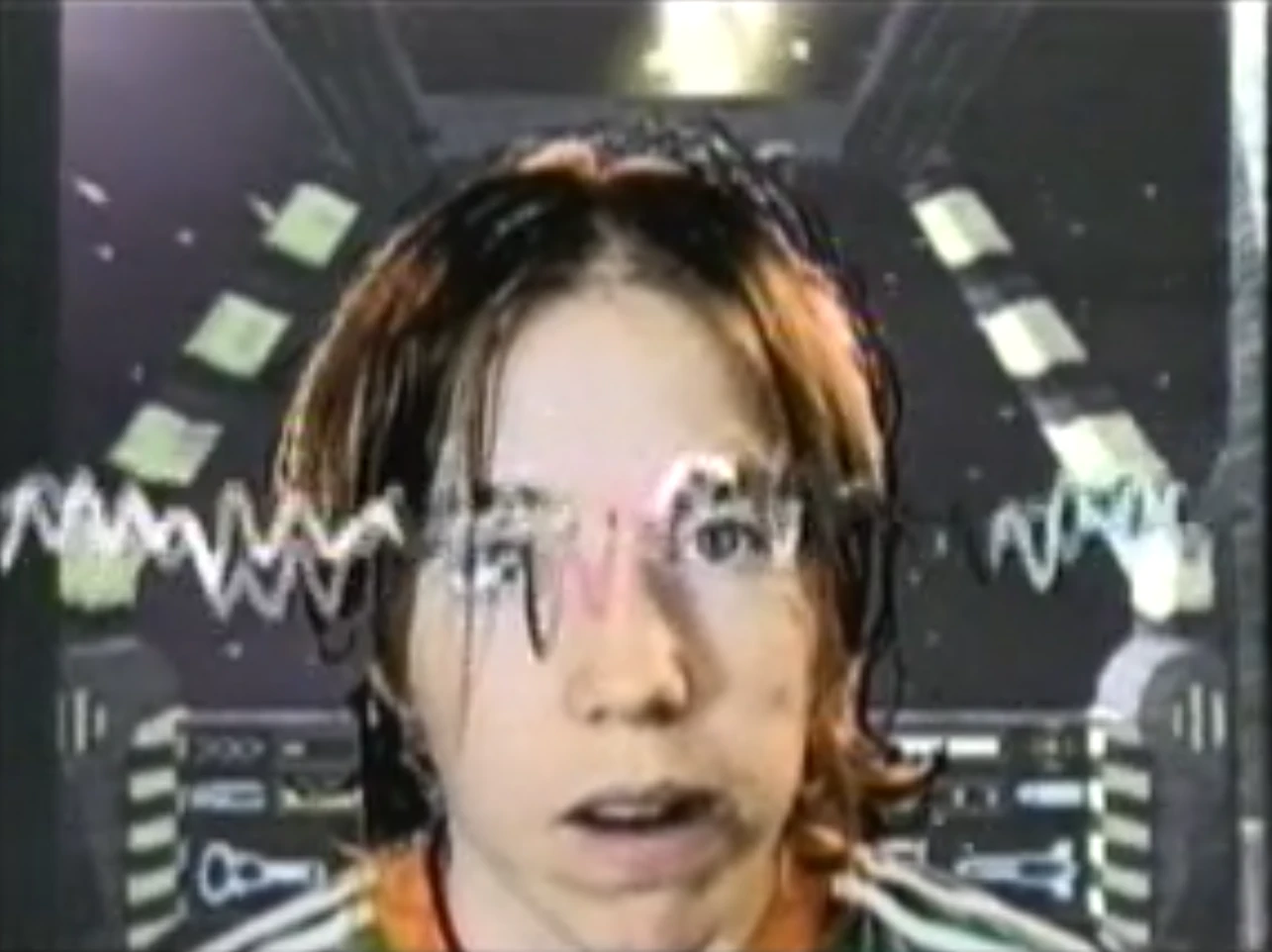
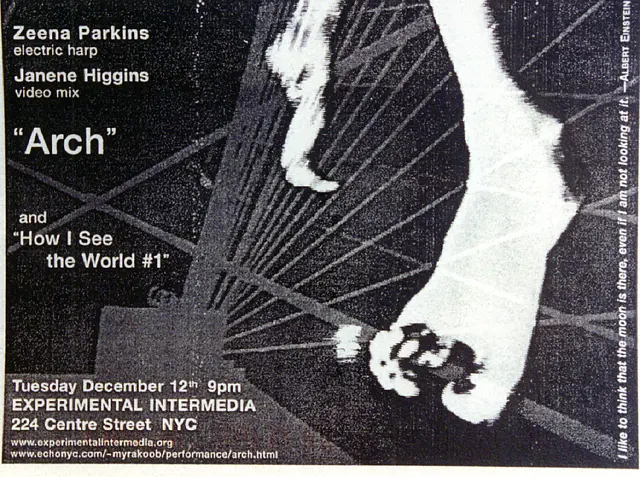
- Janene Higgins and Zeena Parkins perform Arch and How I See the World at Experimental Intermedia, built through ETC programs
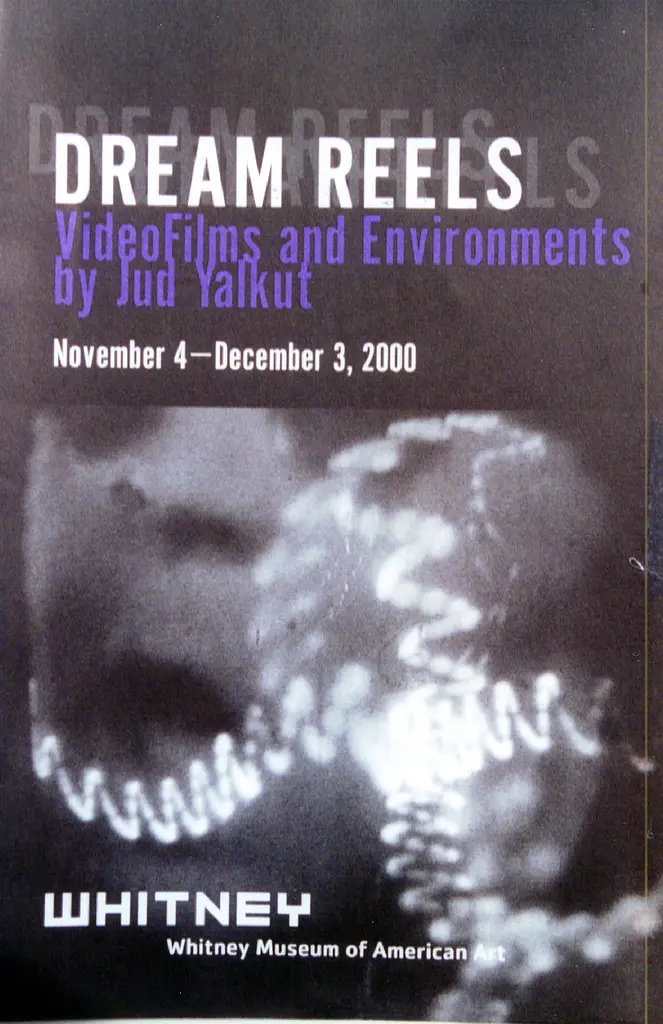
- Jud Yalkut's Dream Reels at the Whitney, including Vision Cantos, made at ETC
- Mantic Ecstasy, an Alfred University catalog of works by Peer Bode, Pamela Susan Hawkins, Andrew Deutsch, Jessie Shefrin and Darrin Martin, made partly through ETC's residency
To the Whitney
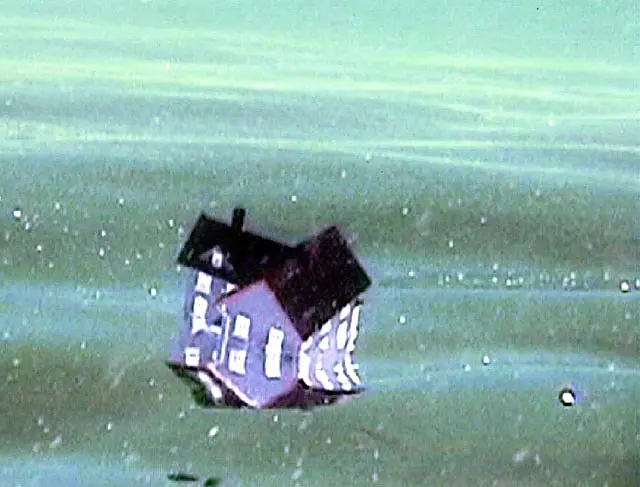
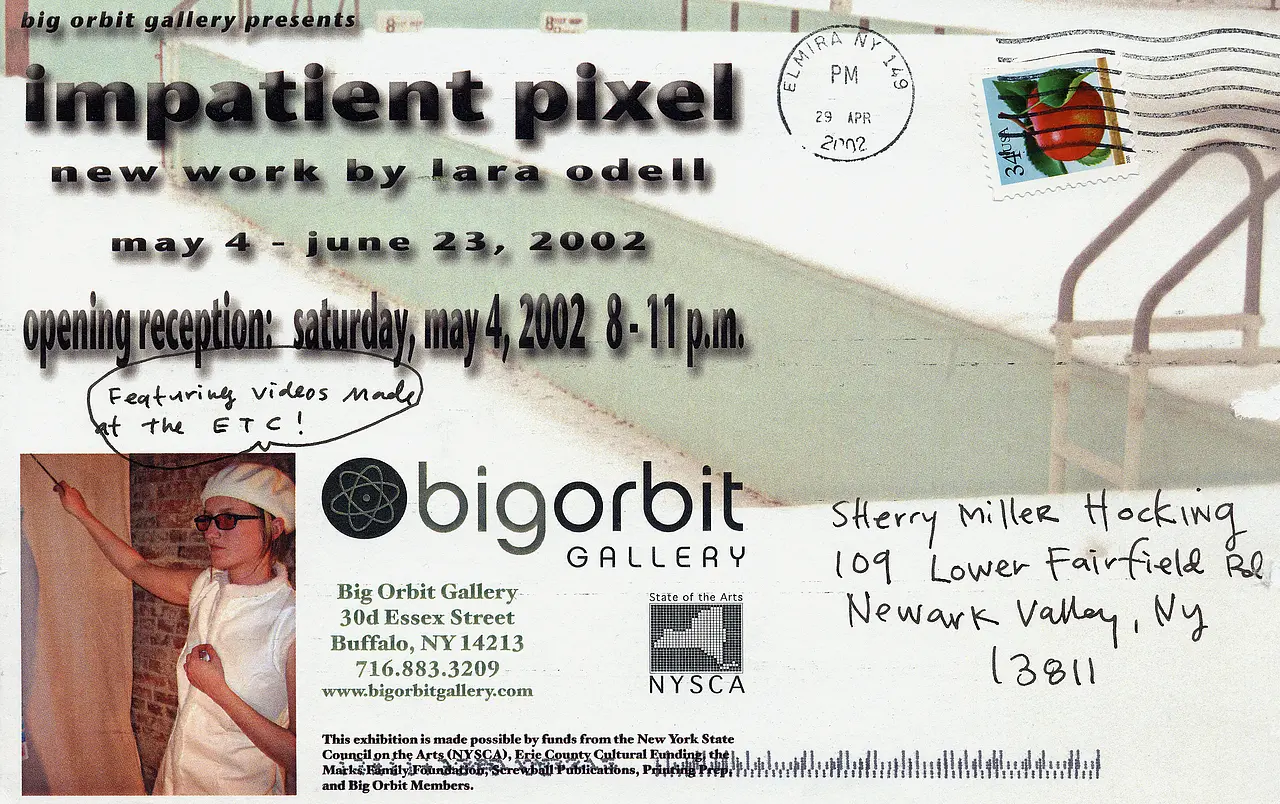
The Center supports Ken Jacobs’s1 NY Ghetto Fishmarket, 1903, Amy Jenkins’s2 Shelter for Daydreaming at the John Michael Kohler Art Center3, and Branda Miller’s4 Kids in Formation.
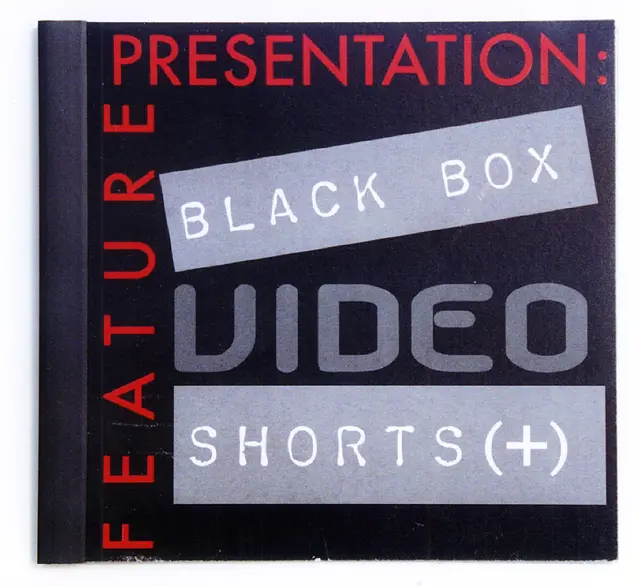
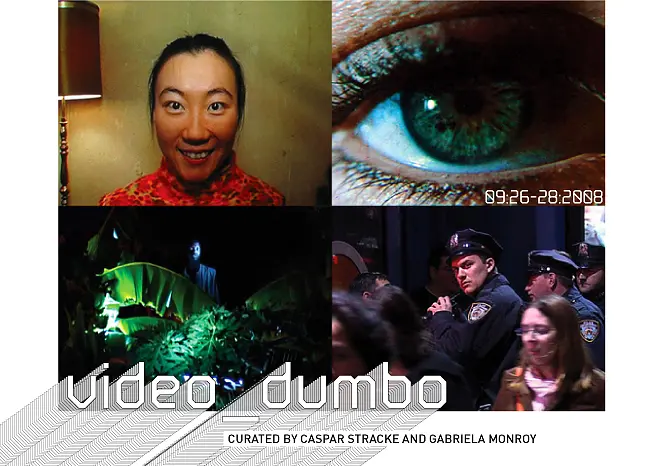
Fifty residents from eleven states show at the Museum of Modern Art, the Whitney, Anthology Film Archives5, The Kitchen and Art in General, and in the NY Video Festival and the Dumbo festival. For Black Box at New Jersey City University, the Center curates 30 years of work made on its machines. Finishing Funds back Luca Buvoli, Jeanne Liotta, Mary Magsamen, Jennifer and Kevin McCoy, Eric Rosenzveig and others.
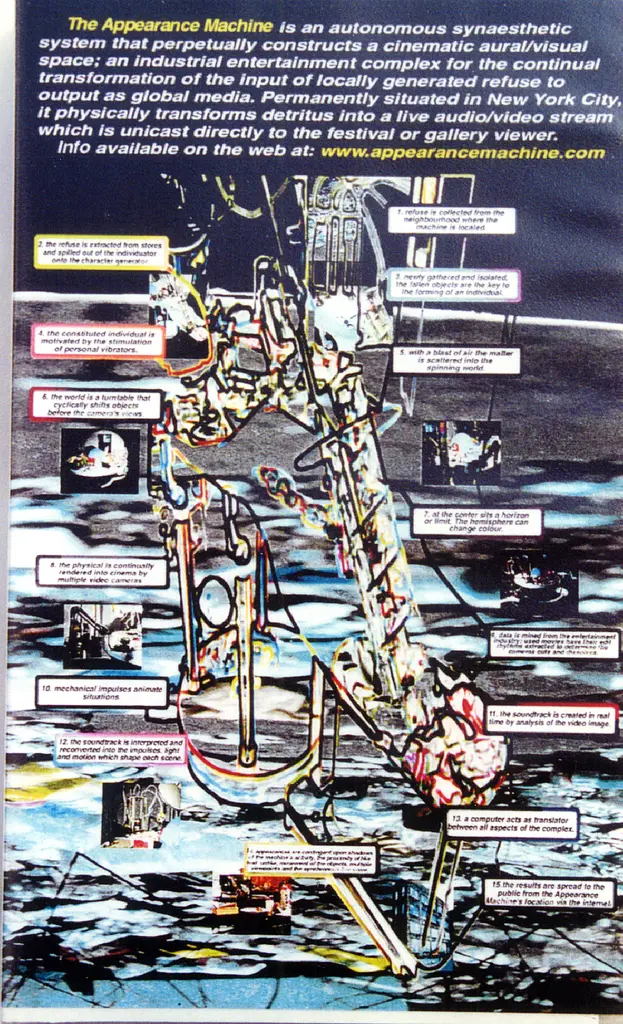
- Eric Rosenzweig's The Appearance Machine, a self-running system that perpetually builds cinematic space, backed by Finishing Funds
- Finishing Funds grants for 2001, to Robert Attanasio, Luca Buvoli, Nancy Goldenberg, Stephanie Gray, Thomas Allen Harris, Denise Iris, Jeffrey Lerer, Mary Magsamen, Darrin Martin, Jennifer and Kevin McCoy, Vince Mistretta, Ken Montgomery, Yasuaki Nakajima, Jenny Perlin, Eric Rosenzveig and Koji Tambata
- Joe McKay and Kristin Lucas show an evening of work in Owego alongside the student residency
- The annual student residency, run with Alfred University's Institute for Electronic Arts. Taught by Pamela Hawkins and Hank Rudolph, with guest lectures by Kristin Lucas and Joe McKay
 robertsghirardoconefield.jpg.webp
 liottaanthology.jpg.webp
 blackboxvideoshorts.jpg.webp
 076yalkutdreamreels.jpg.webp
 amyjenkinsshelter.jpg.webp
 appearancemachine.jpg.webp
 finishingfunds01liotta.jpg.webp
 finishingfunds01borkowski.jpg.webp
 bainbridgetriggers.jpg.webp
 isr2001group.jpg.webp
 isr2001laradavis.jpg.webp
 ericaeatonlucaspresent.jpg.webp
 lucasmckay.jpg.webp
sources ›
At the Pompidou
Center work reaches the Centre Pompidou1 in Paris and MoMA’s2 Video Viewpoints. Irit Batsry3 wins the Bucksbaum Award and a place in the 2002 Whitney Biennial4 for Neither There Nor Here, one of the largest prizes in American art. After the towers fell, the studio turned outward, from the From The Ashes benefit of over 100 artists to a run of funded projects.
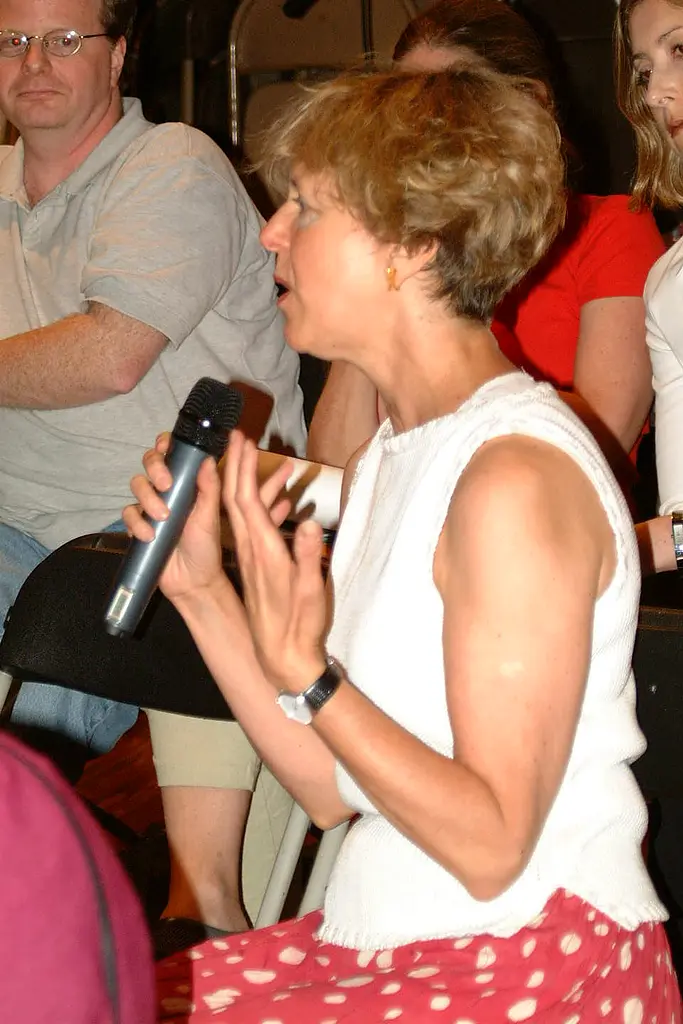
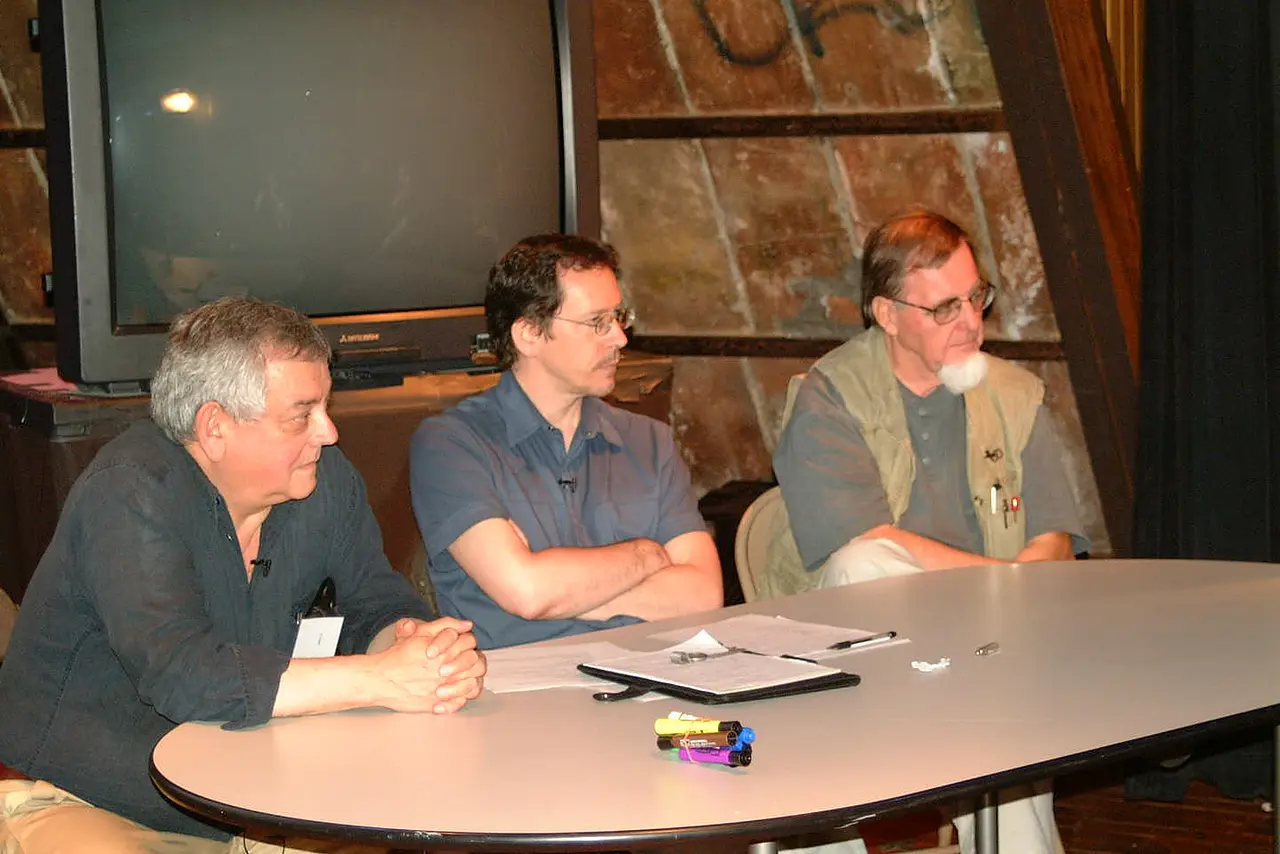
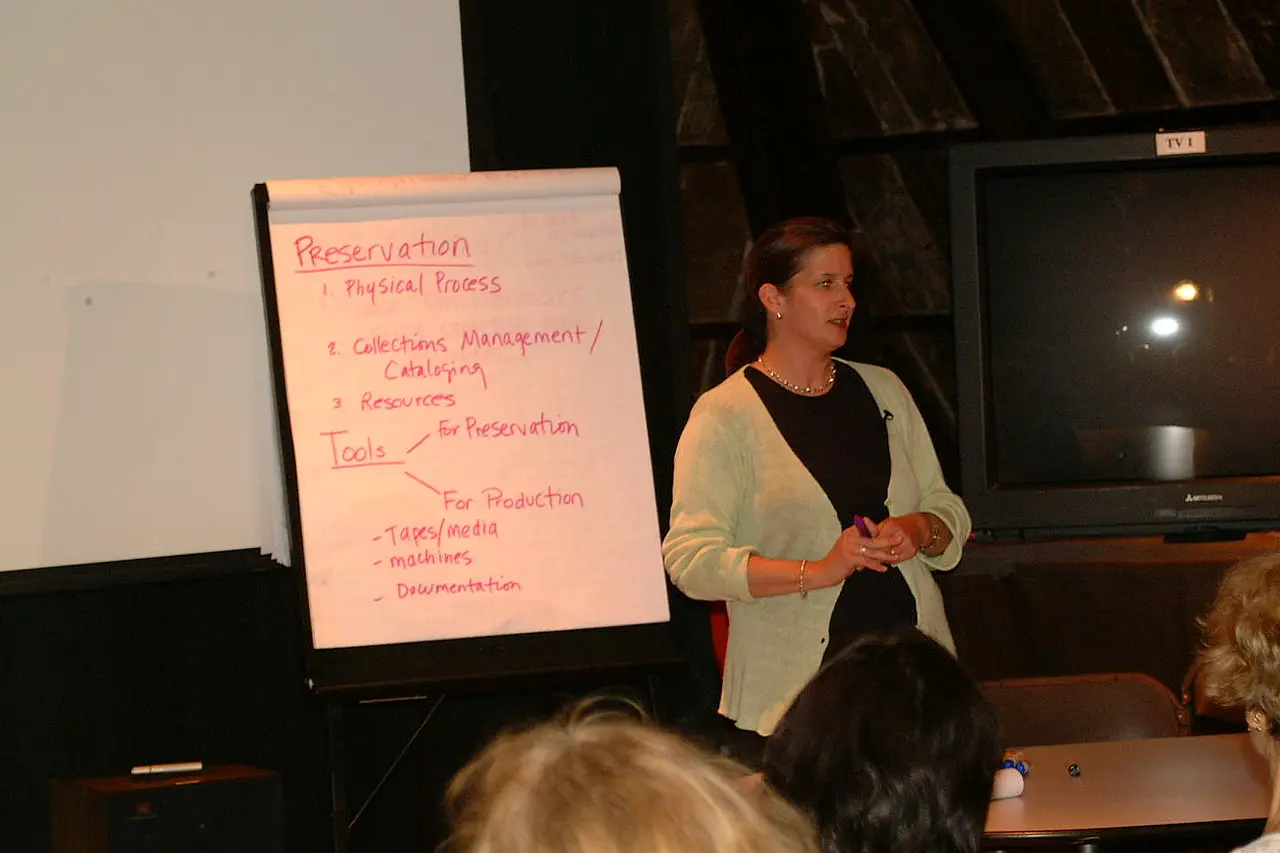
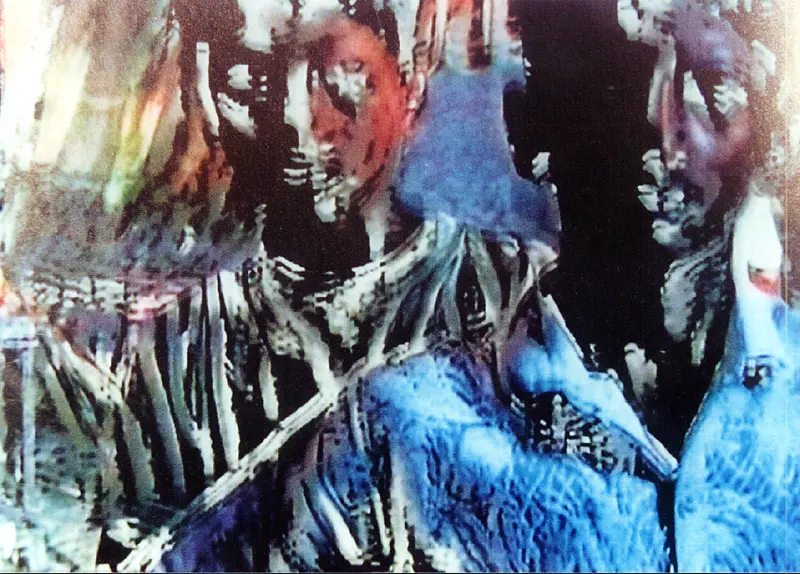
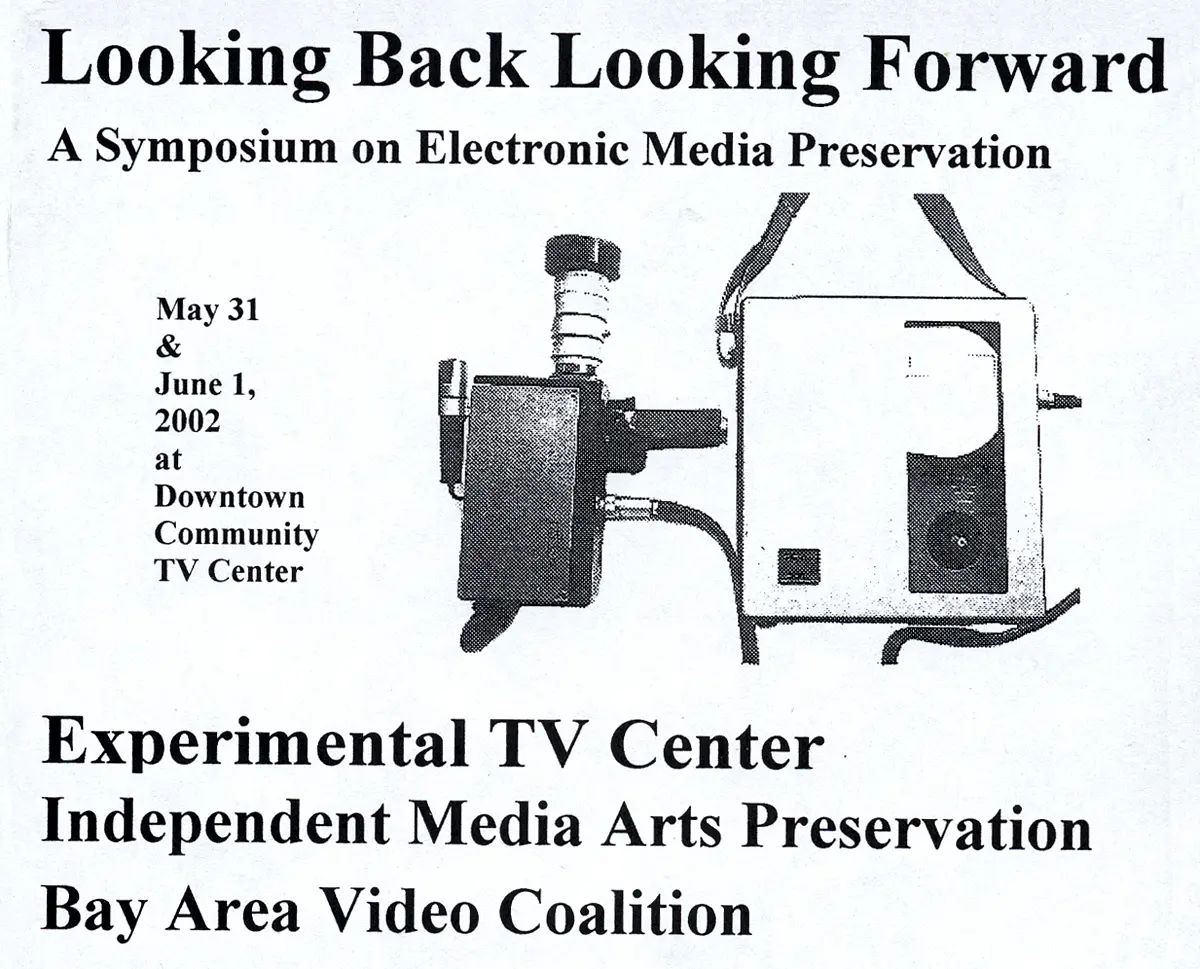
NYSCA5 awards go to Barbara Hammer6 for Resisting Paradise, Ken Jacobs for N.Y. Ghetto Fishmarket 1903, Kristin Lucas7 for Supervision, Jeffrey Lerer and Joseph Scheer. Finishing Funds back Zoe Beloff, Abigail Child and Benton Bainbridge, Julia Loktev, Kathleen Ruiz, Mary Ellen Strom and the Yes Men. In June the Center convenes Looking Back/Looking Forward8 at Downtown Community TV9, gathering 60 conservators and artists on moving-image preservation.
- A NAMAC preservation panel featuring Sherry Miller Hocking and Stephen Vitiello
- A media preservation symposium ETC organizes with IMAP and BAVC, run by Sherry Miller Hocking and Mona Jimenez
- Finishing Funds grants for 2002, to Leesa and Nicole Abahuni, Zoe Beloff, Torsten Burns, Abigail Child and Benton Bainbridge, Norman Cowie, Raul Vincent Enriquez, Stacey Lancaster, Julia Loktev (co-starring Vito Acconci), Craig Renaud, Kathleen Ruiz, Taketo Shimada, Scott Smallwood, Mark Street, Mary Ellen Strom, Ray Sweeten and the Yes Men
- Irit Batsry wins the Whitney's second Bucksbaum Award, $100,000, for work including These Are Not My Images, made with ETC support
 jonetcstudio402.TIF.webp
 stefantaping2web.jpg.webp
 jonetcstudio02web.jpg.webp
 finishfundtapes.tif.webp
 ffmaya3.tif.webp
 finishfundspanel1.tif.webp
 kathyhighweb.jpg.webp
 barbaralondon.tif.webp
 relatedhistoriespanel2_2.tif.webp
 daraclosesession.tif.webp
sources ›
The hybrid studio
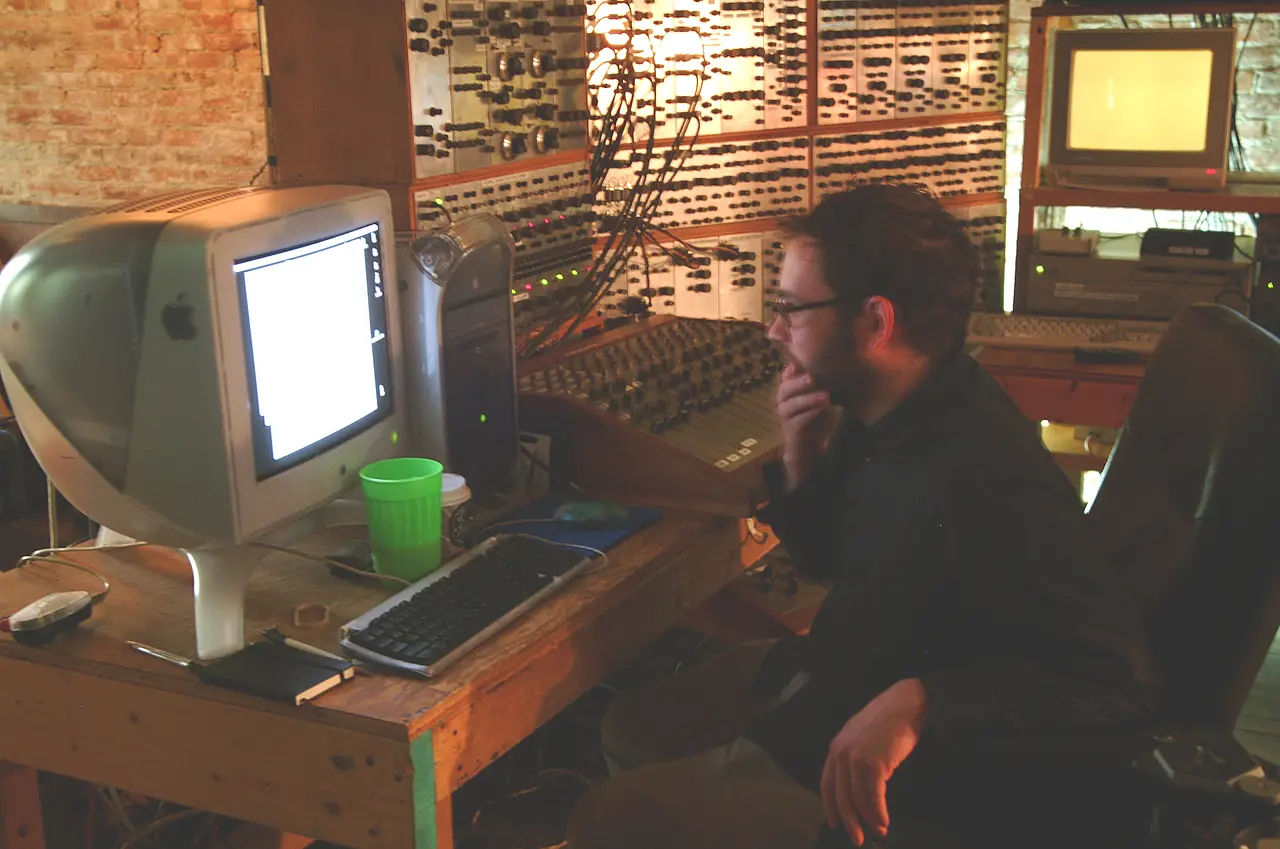
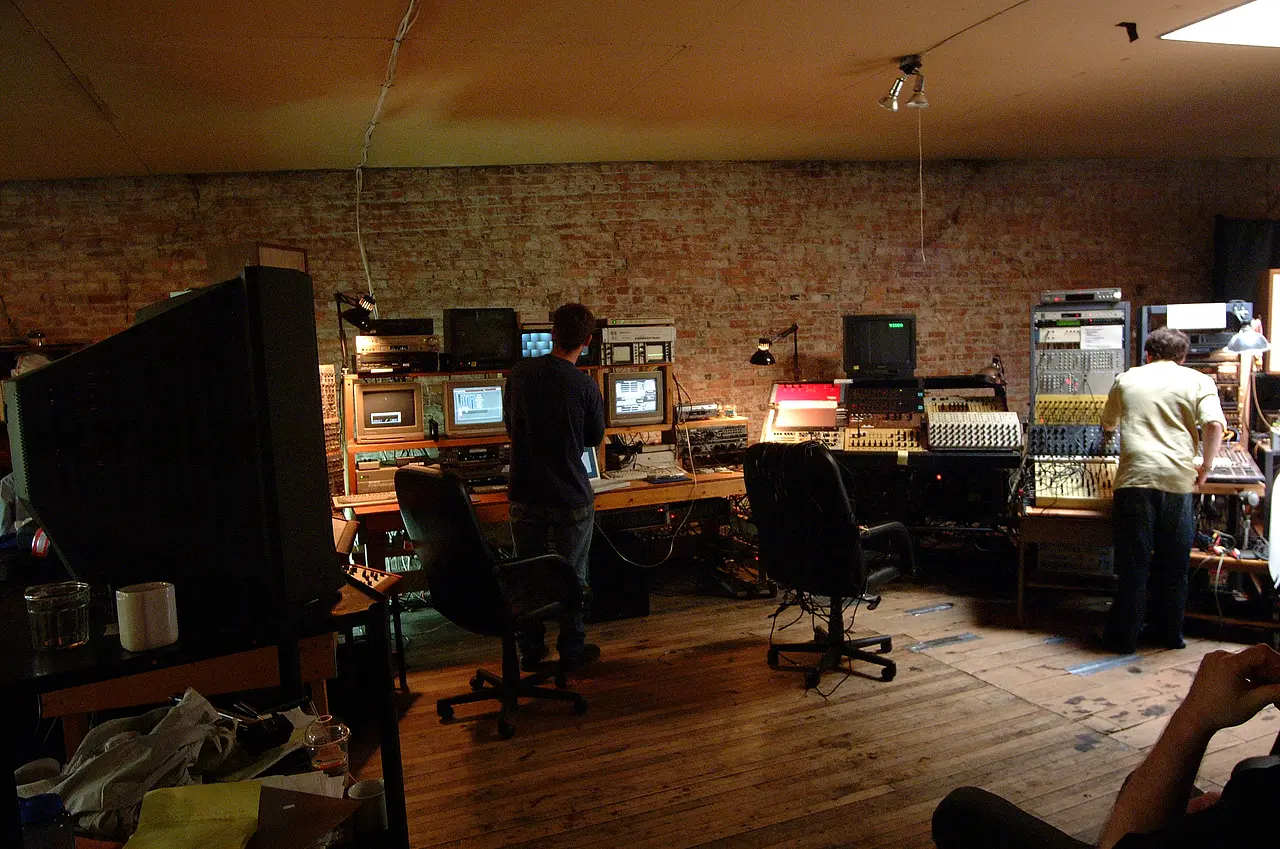
The studio becomes a single instrument: old analog synthesizers wired to Max/MSP1 and Jitter so an artist moves between them without leaving the patch bay. Fifty-eight residents work in it.
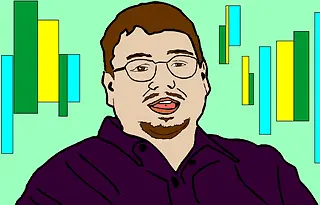
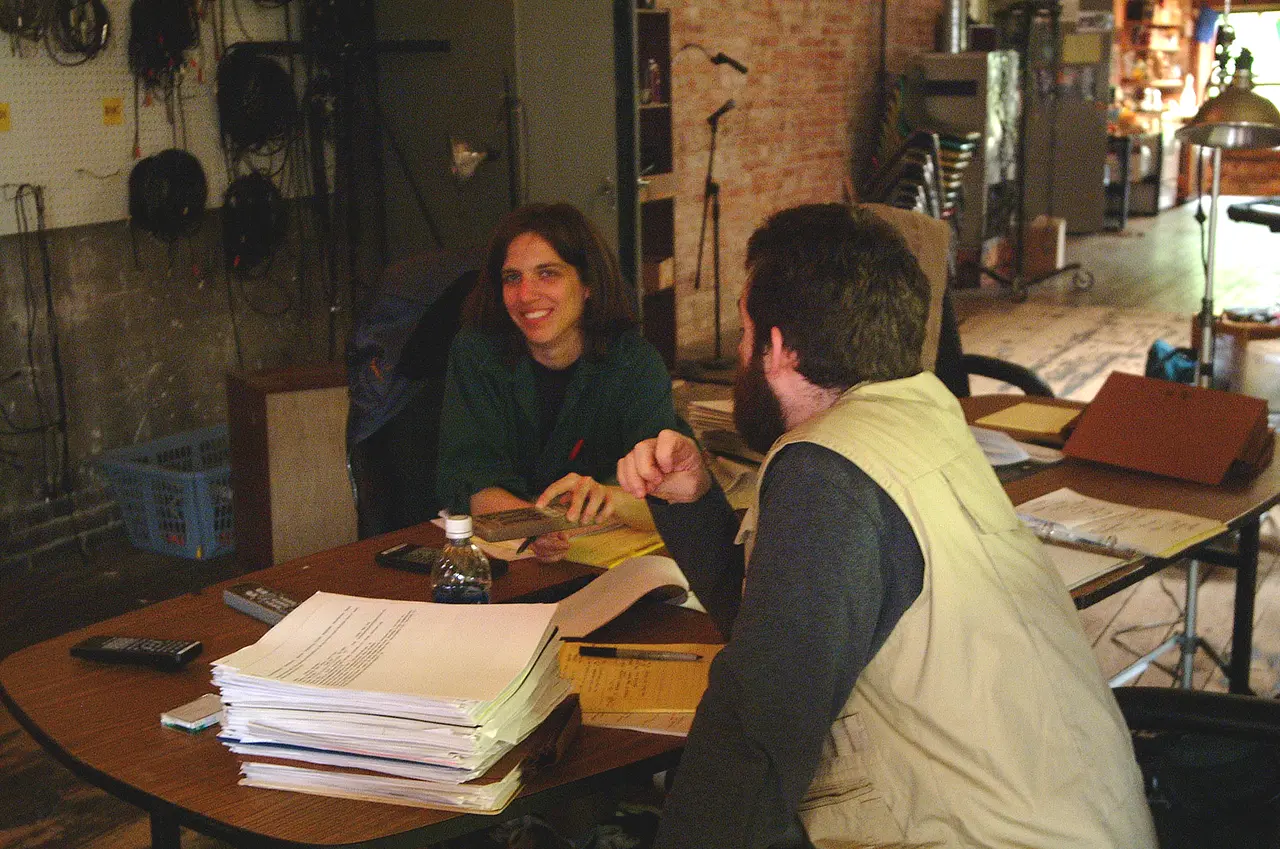
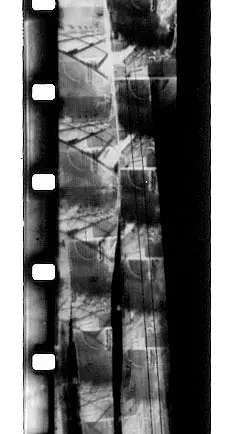
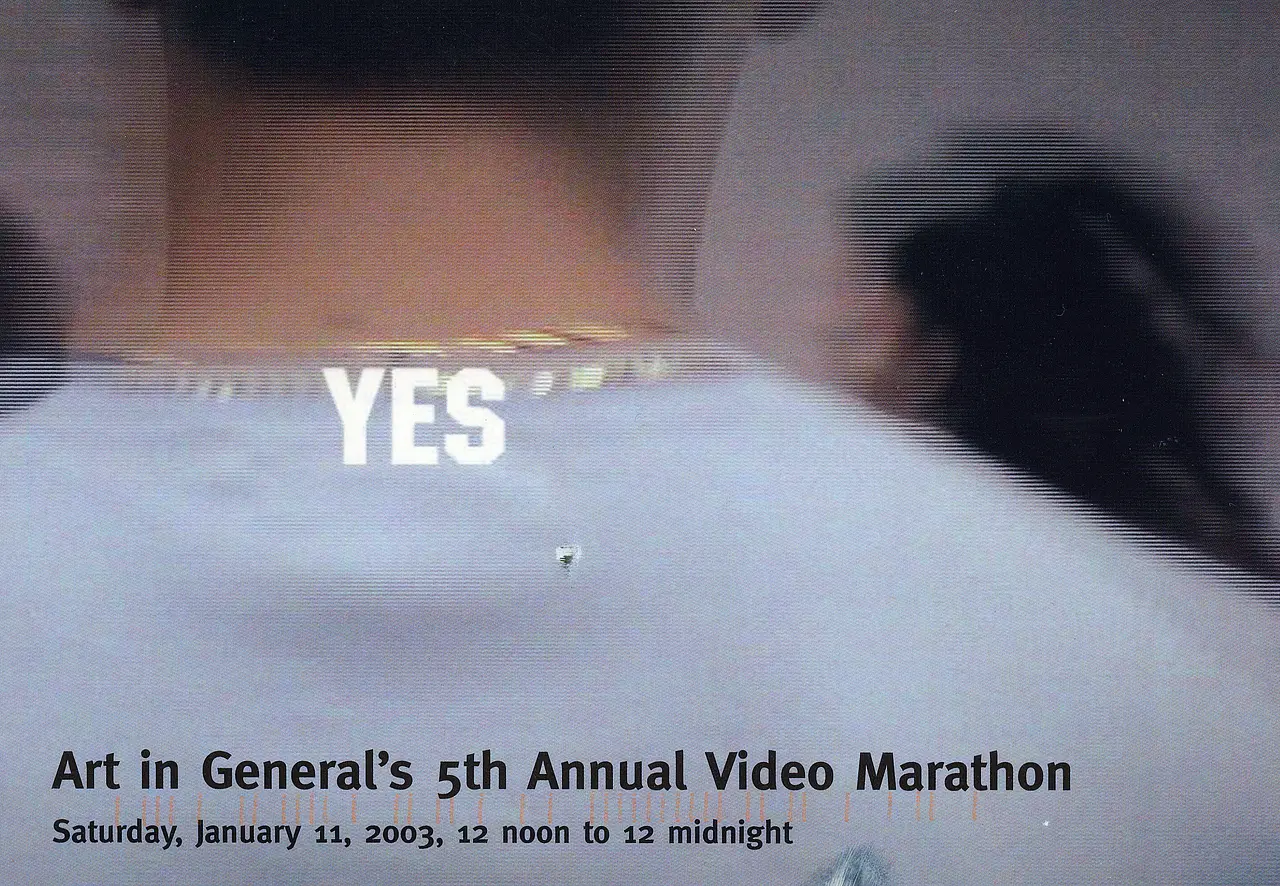
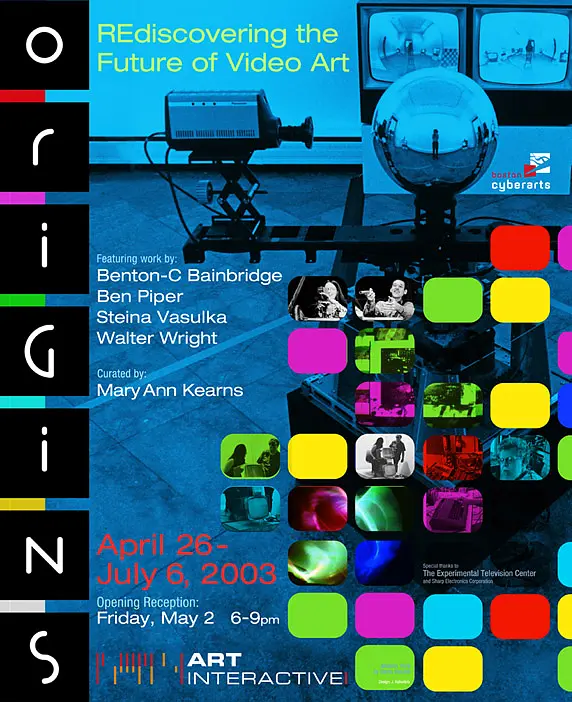
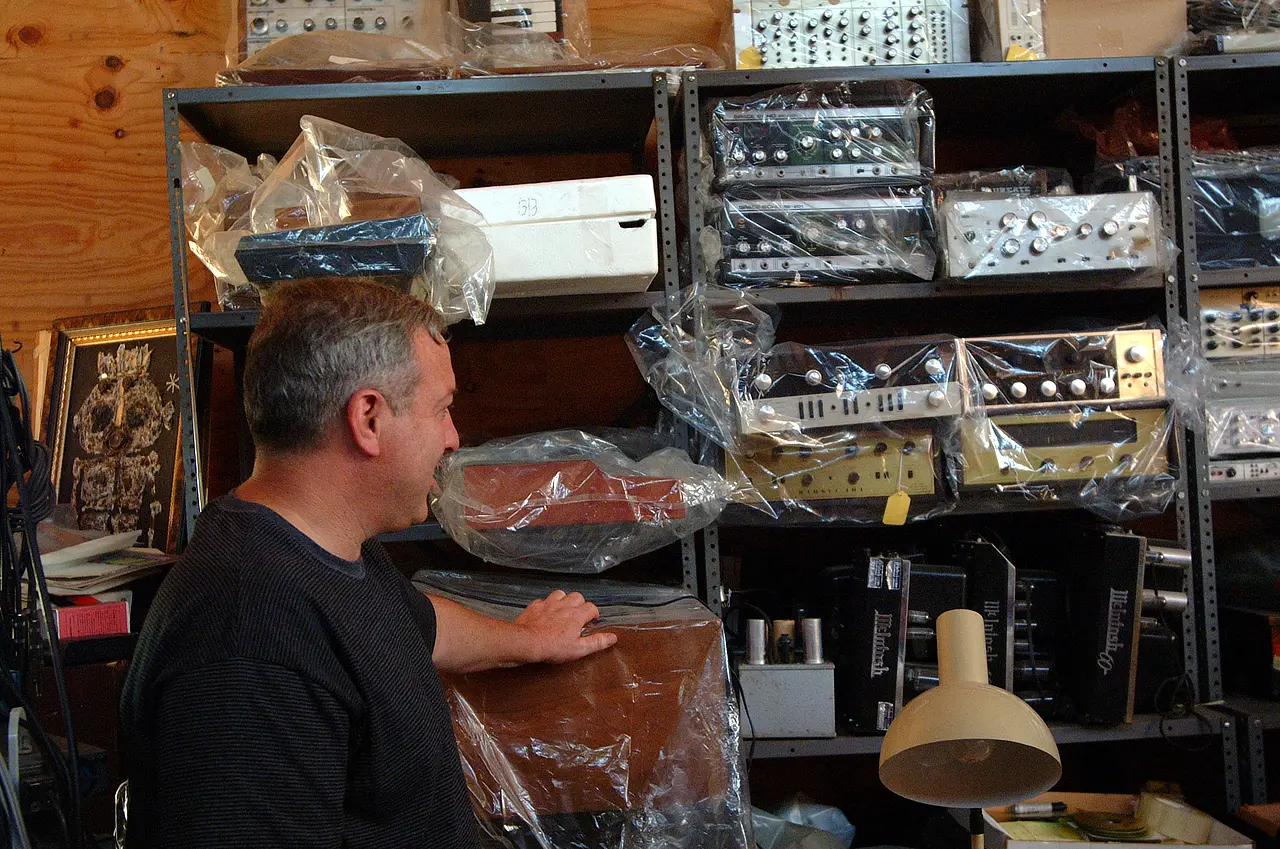
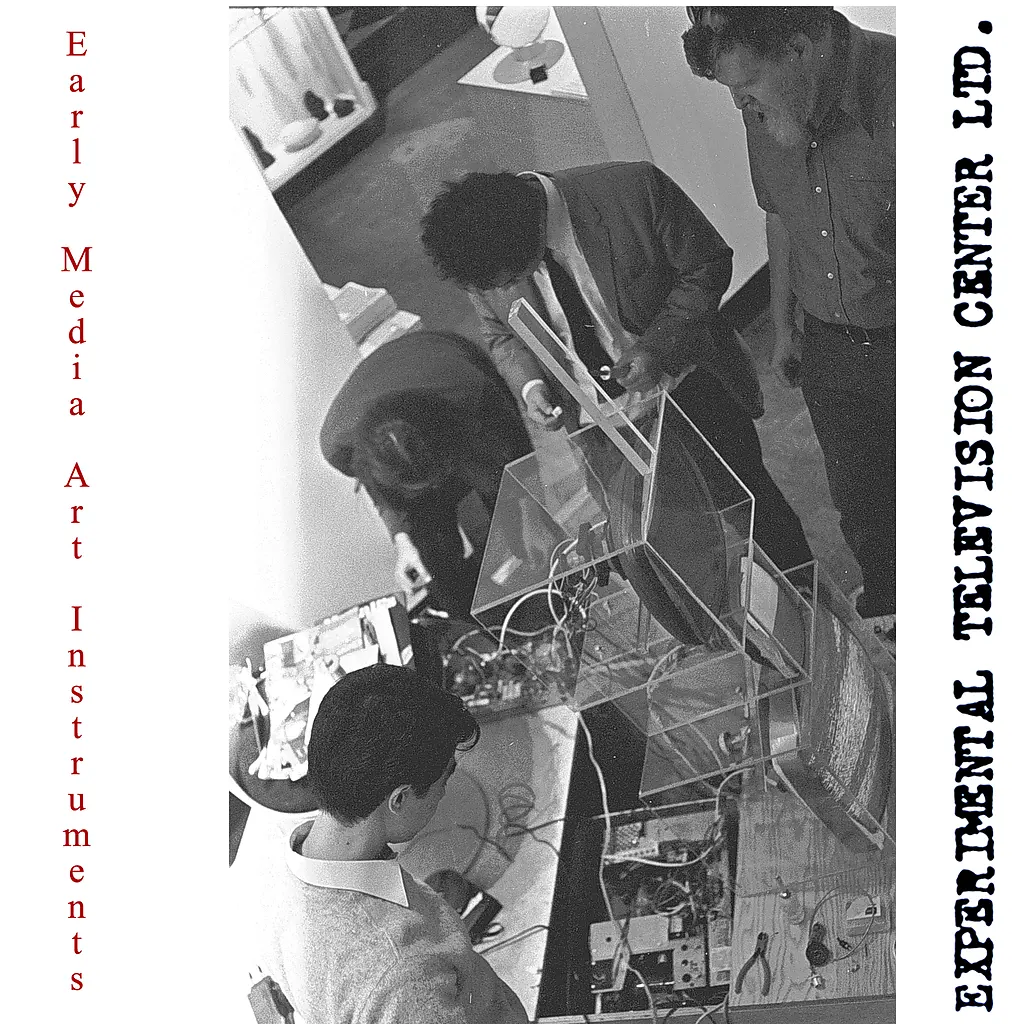
NYSCA awards go to Ariana Gerstein2 for Milk, Jacqueline Goss3 for Kishlak Dwellers (premiered at Eyebeam4), Jeanne Liotta5 for Observando el Cielo, and Jenny Perlin6 for Perseverance and How to Develop It (Rotterdam, Ann Arbor jury award). Work shows at MoMA, the New Museum, Art in General, PS 1 and the Barcelona CCCB. The Center issues the CD Early Media Instruments and shows it in Origins at the Cyberfest in Boston.
- A BAVC preservation DVD that ETC contributes research and ephemera to. It centers on Ant Farm and T.R. Uthco's 1976 piece The Eternal Frame
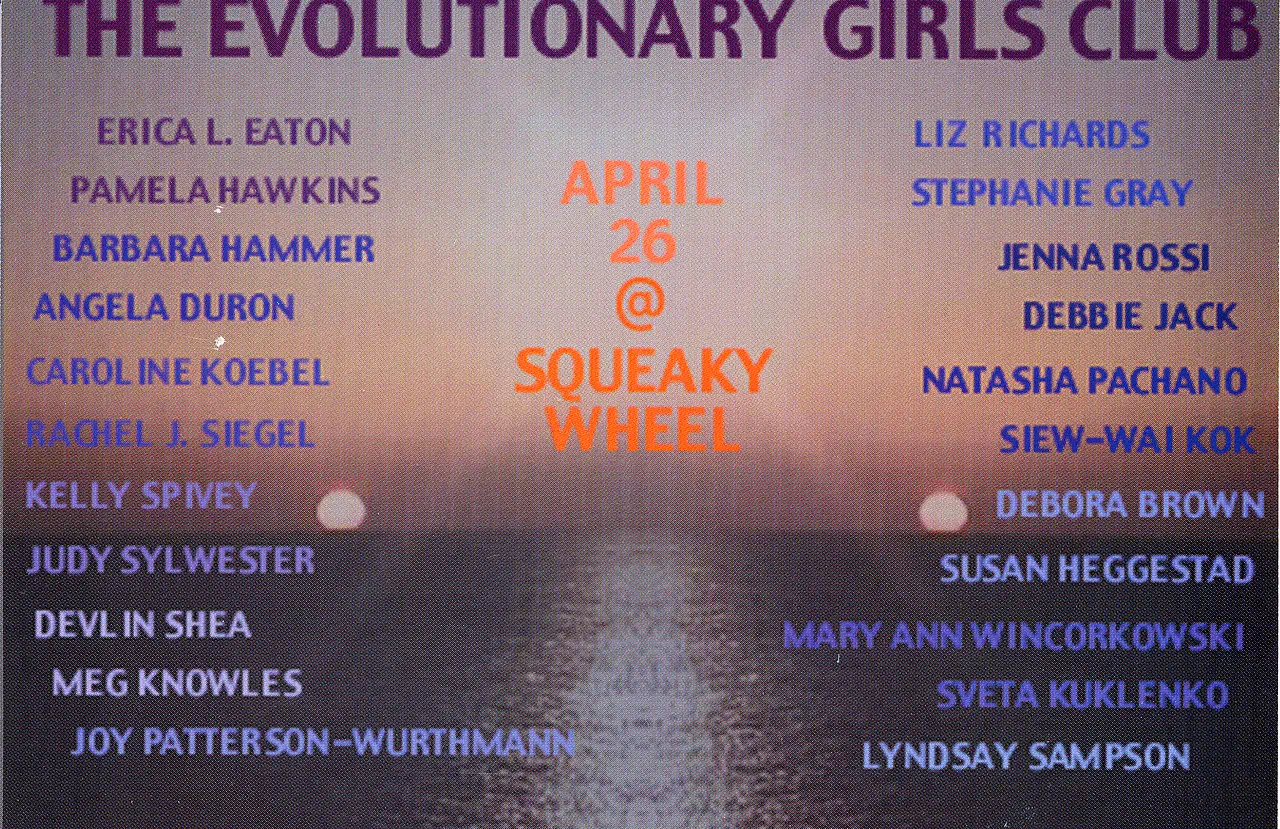
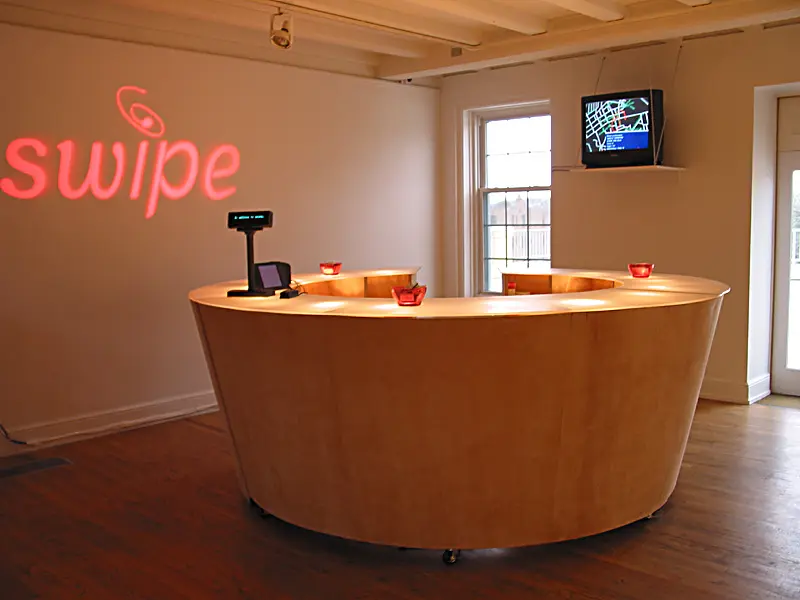
- Finishing Funds grants for 2003, to Peter Bianco, Roddy Bogawa, Abigail Child, Carrie Dashow, Tirtza Even, Jennifer Fieber, David Gatten, Gretchen Hogue, G.H. Hovagimyan, Shelley Jackson, Amy Jenkins, Diane Ludin, Megan Michalak, Prema Murthy, Bernard Roddy, Kathy Rose, Marina Rosenfeld, Brooke Singer and Beatriz da Costa, Kelly Spivey and Roxanne Wolanczyk. Five are new media and intermedia performance awards
 alperlostvoicessaratoga.jpg.webp
 gorewitz2w.jpg.webp
 hahnRabbit_jit_01.jpg.webp
 bigorbit.jpg.webp
 torstenanddarrin.jpg.webp
 evogirlsw.jpg.webp
 isr52003.jpg.webp
 isr162003w.jpg.webp
 isr132003w.jpg.webp
 batsrythesearenotmyimages.jpg.webp
 scheerbook.jpg.webp
 jacobsw.jpg.webp
 gersteinmillk.jpg
 gosskishlak.gif.webp
 ff03steftorsten.tif.webp
 fieberFF03split2.jpg.webp
 FF03SingerSwipe1.jpg.webp
 artingeneral.jpg.webp
 originsrediscovering_bib2447backcover.jpg.webp
 cyberfestposter.jpg.webp
 powell32003.jpg.webp
 lookbacklookforward.jpg.webp
 oldtoolsCDInsert2.tif.webp
 waltermaryannw.jpg.webp
sources ›
- [1] Max (Cycling '74)
- [2] Ariana Gerstein
- [3] Jacqueline Goss
- [4] Eyebeam
- [5] Jeanne Liotta
- [6] Jenny Perlin
- [7] ETC History 2002-2003
At the Venice Biennale
Center work shows at the Venice Biennale1, the New York Film Festival2 and Viper in Basel, about as far into the international art world as electronic video had reached. Since 1971 more than fourteen hundred artists have worked in the studio.
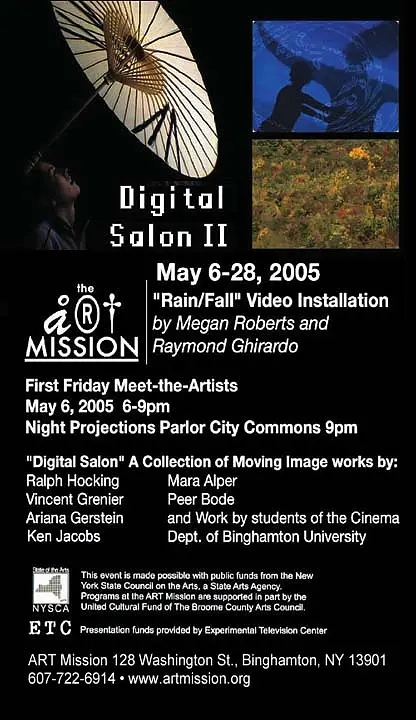
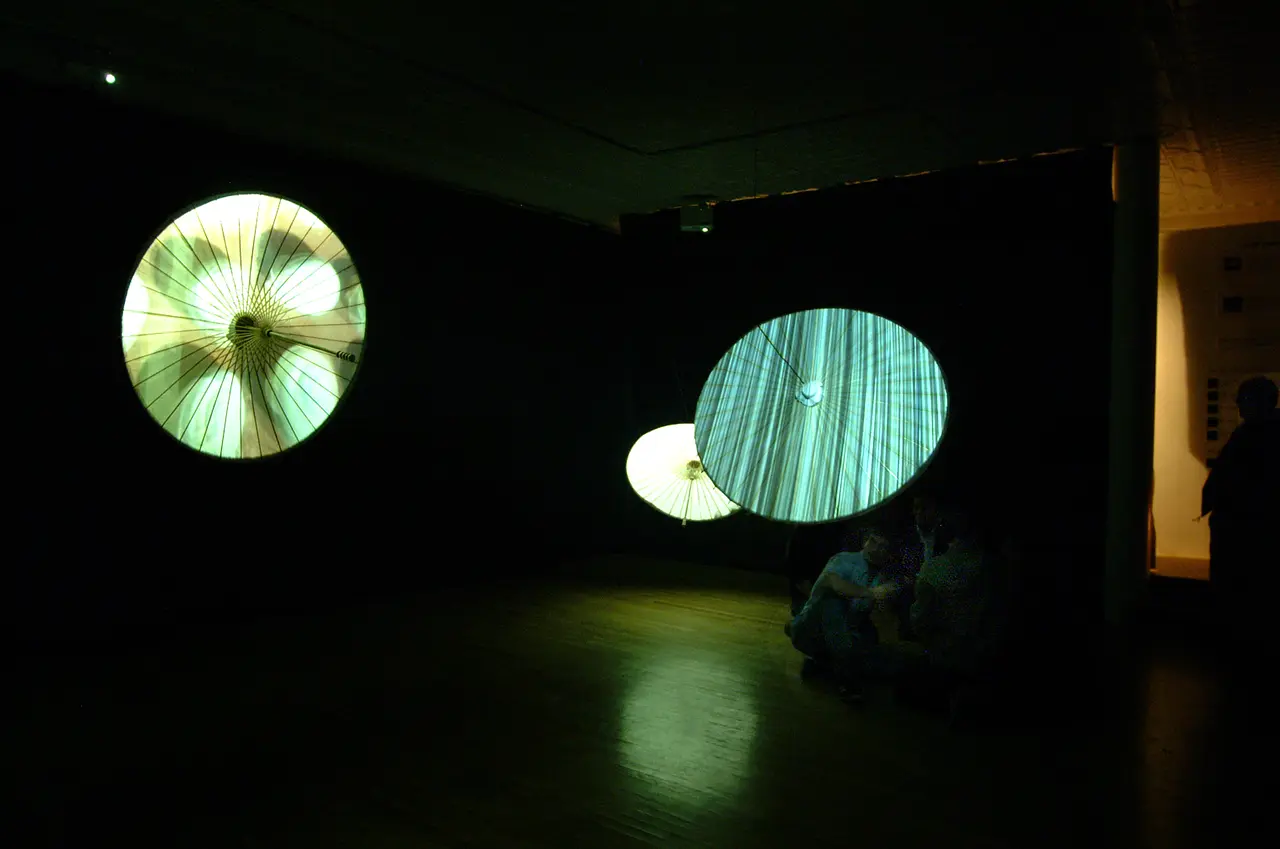
NYSCA awards go to Alan Berliner3 for Wide Awake, Leah Gilliam4 for Agenda, Barbara Hammer5 for Sisters/Resisters, Amy Jenkins6 for We, Precarious, Megan Roberts and Raymond Ghirardo for Rain/Fall, Nick Economos for Book Tick and Shawn Onsgard for Ghost in the Oat Bin. The Center applies to Cornell to place digitized 1969-1980 materials into the Rose Goldsen Archive7, and the National Television and Video Preservation Foundation backs remastering ten hours of its 1970s tapes.
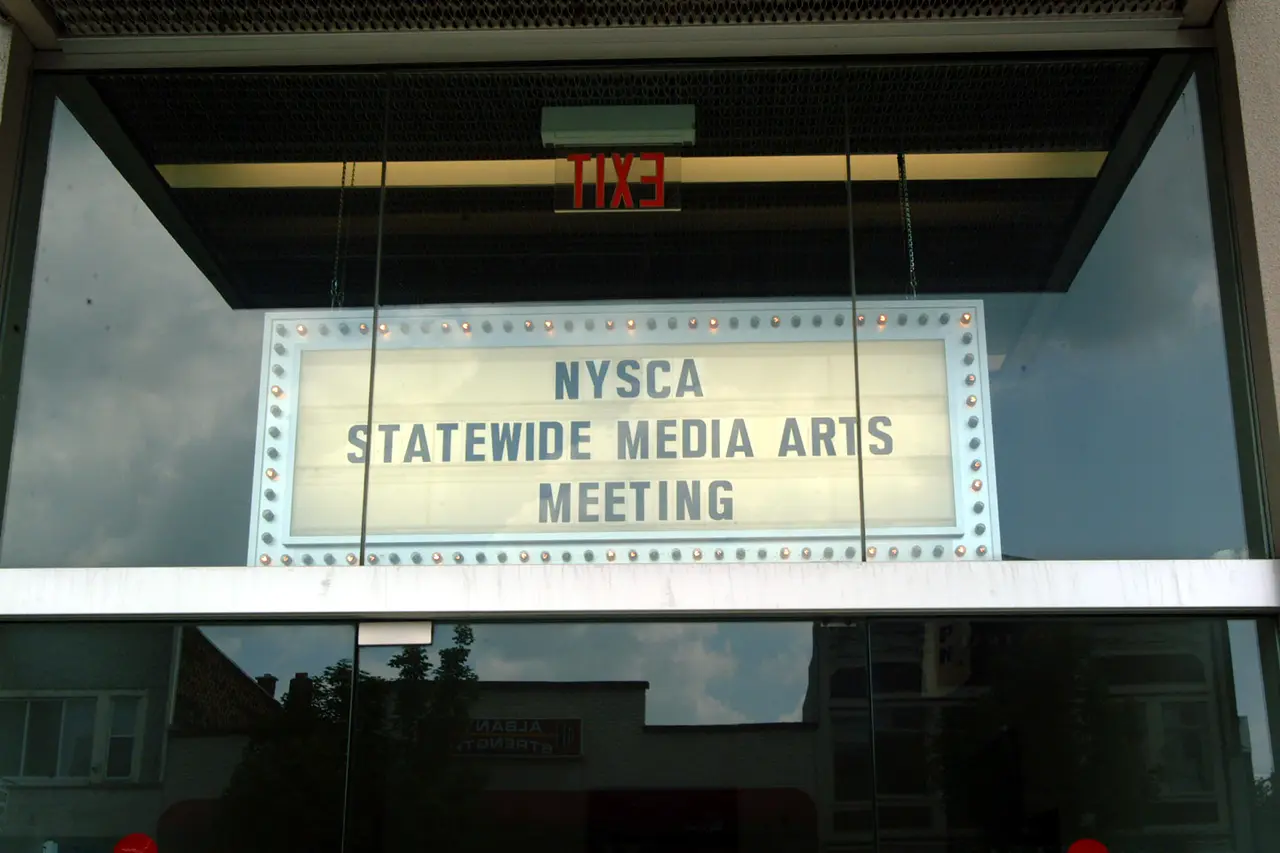
- A statewide media arts convening run with WAMC and NYSCA. No individual artists, just thirty organizations talking shop
- ETC fiscal sponsorship for projects by Mara Alper, Alan Berliner, Norman Cowie, Nic Economos, Megan Roberts and Ray Ghirardo, Leah Gilliam, Barbara Hammer, Amy Jenkins and Shawn Osnguard
- Finishing Funds grants for 2004, to Amy and Donna Bassin, Zoe Beloff, Dallas Brennan, Ghen Zando Dennis, Tirtza Even, Kathleen Foster, Roberto Guerra, Barbara Hammer, Lee Krist, Jeffrey Lerer, Cynthia Madansky, Darrin Martin, Mitch McCabe, Rohi Mirza, Richard Pell, John Roach, Sanjna Singh and Pia Sawhney, Samauel Topiary, Gabrielle Weiss and Jonathan Zalben
- In-kind support to preserve and remaster ten hours of ETC's 1970s tapes made on early analog and digital imaging tools
- Langlois Foundation and NYSCA money funds ETC's research into early artist-built video instruments, documenting the tools, their makers and the tapes made on them
- The ninth student residency workshop, taught by Pamela Susan Hawkins and Hank Rudolph
 bob03res.jpg.webp
 hightaping2.jpg.webp
 juddavidpeg.jpg.webp
 kjelldavidralph.jpg.webp
 termitaatetcw.jpg.webp
 torstennewyear.jpg.webp
 jeccakayarrivawebcropl.jpg.webp
 artmissiondigsal3.jpg.webp
 alfredprojectjoomeeralph.jpg.webp
 onsgardGhost1.jpg.webp
 Rain-Fall1.jpg.webp
 dashowff03flatviews.jpg.webp
 ff04raczynskabrew.jpg.webp
 spiveyff03angrysis.jpg.webp
 ff04austin.jpg.webp
 BassinDOllhouseTV3.jpg.webp
 Zalben1_group1.tif.webp
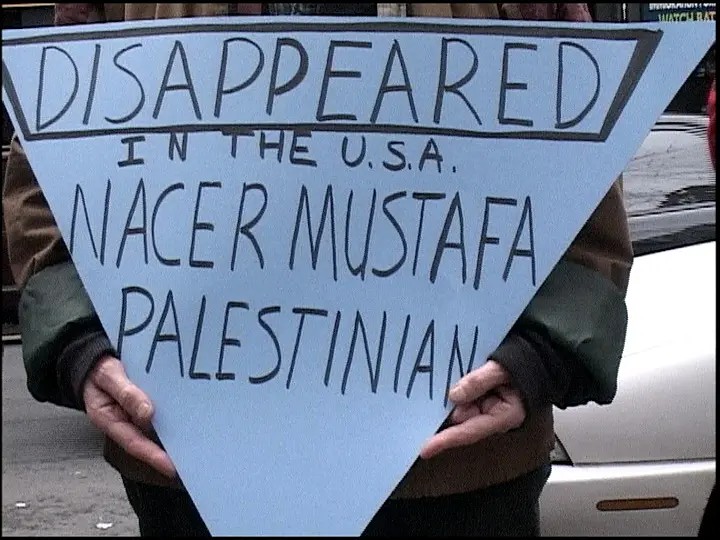 Fosterdisappeared.jpg.webp
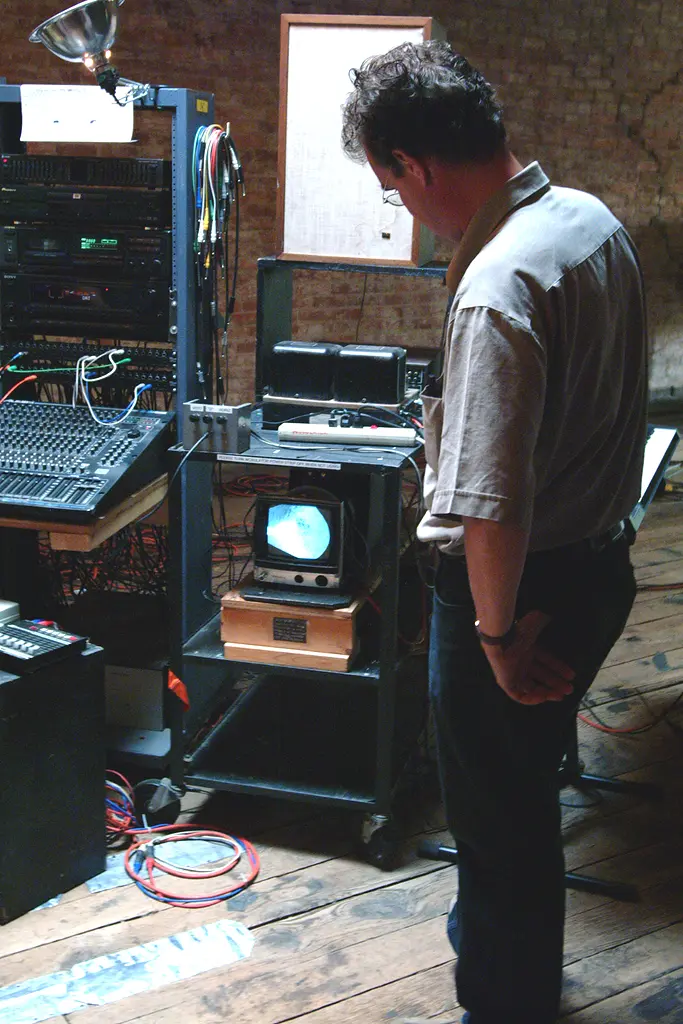 langloisjeanwobbulator.jpg.webp
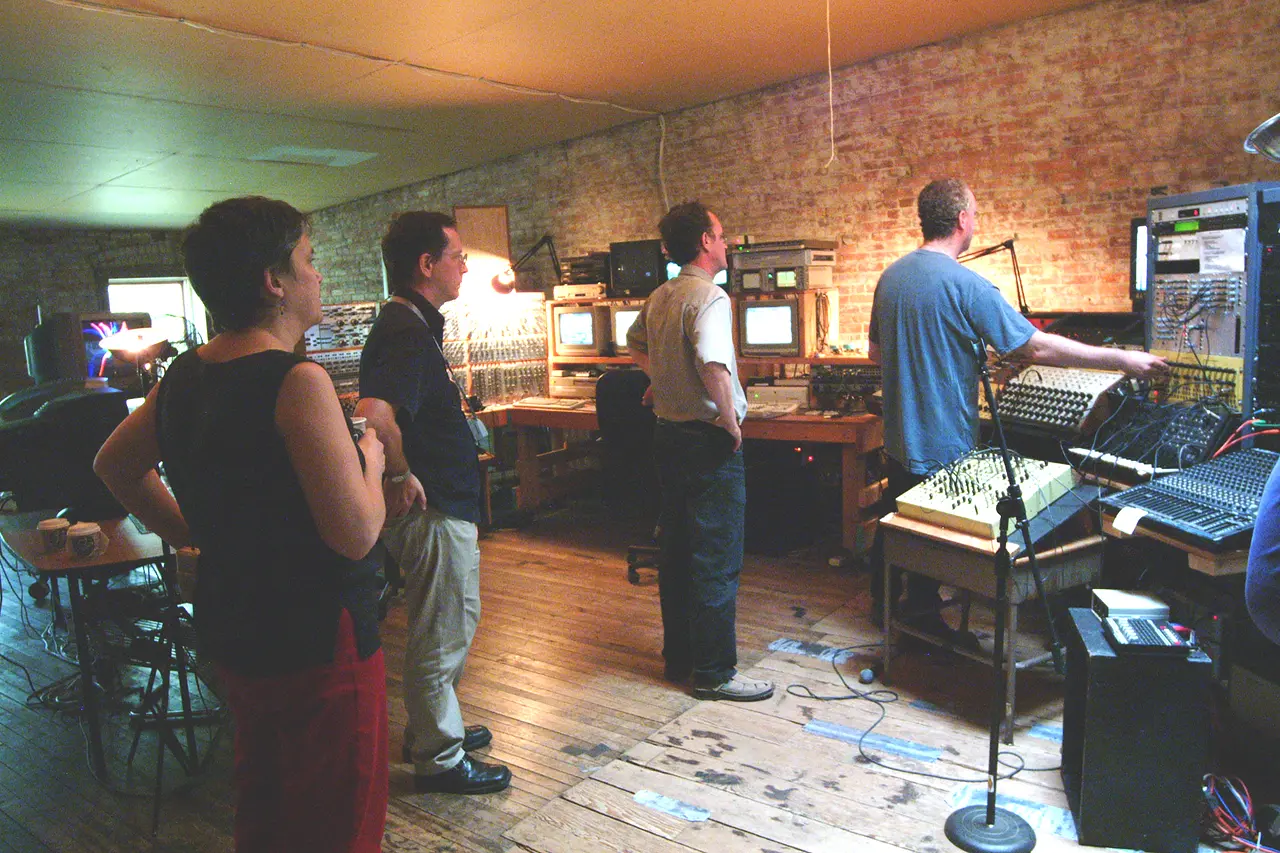 langloismonaalainjeanhank.jpg.webp
sources ›
The studio as instrument
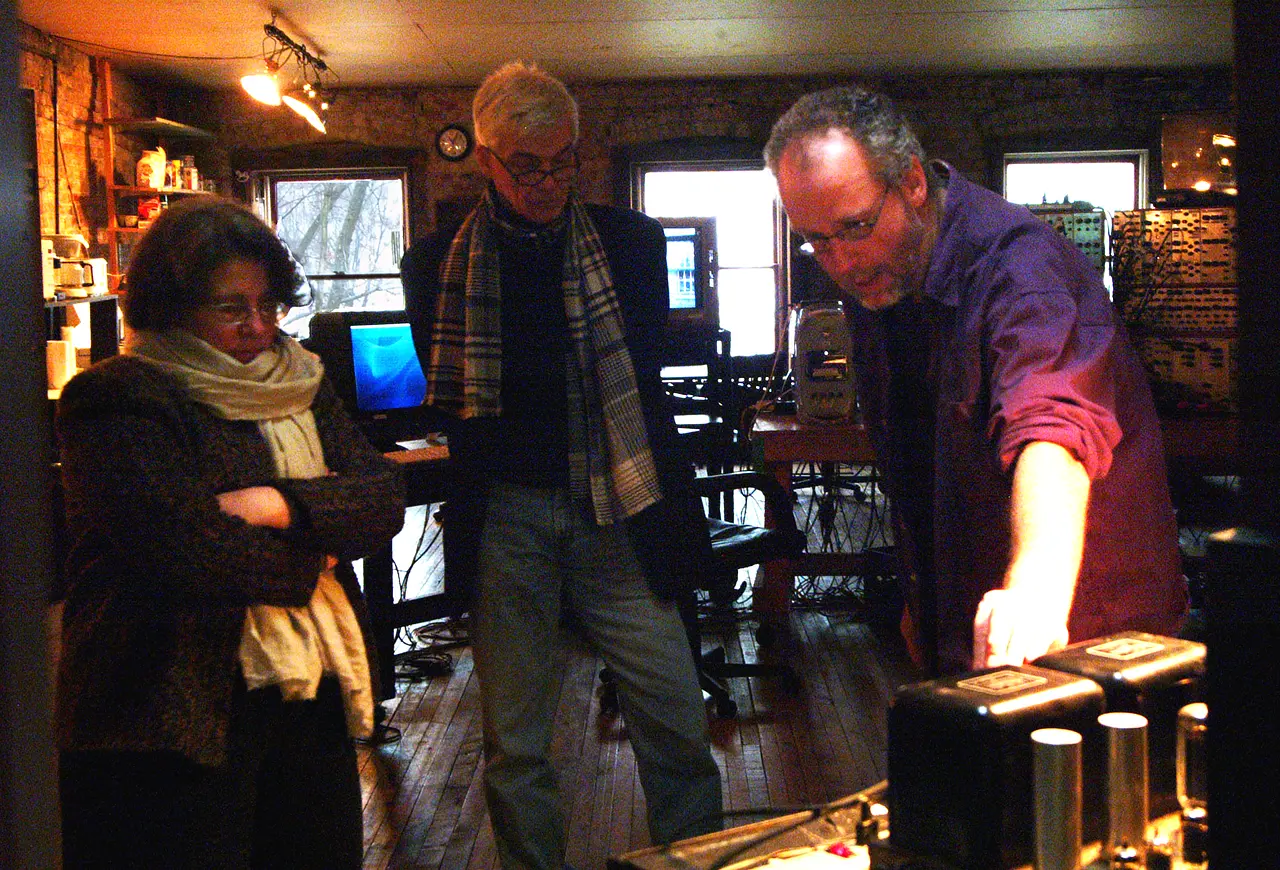
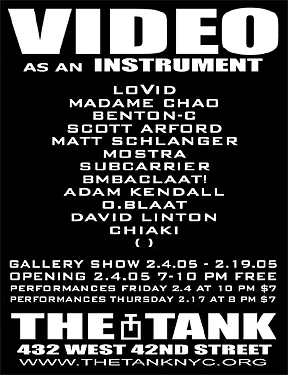
The studio now holds devices built by David Jones1, Dan Sandin2 and Nam June Paik3, vintage and new synthesizers, Max/MSP and Jitter, keyers, switchers and cameras, all on one patch bay. It is an archive of video-art tools an artist can play. The tenth International Summer Workshop runs.
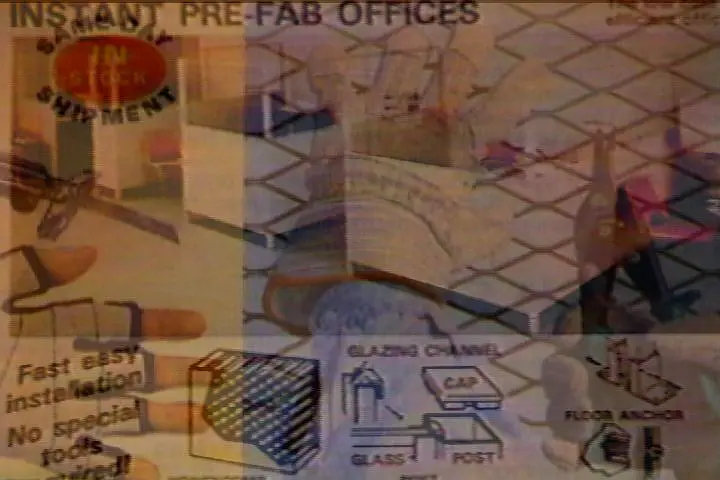
Center work shows at the New York Film Festival, the Venice Biennale, the Dallas Video Festival and Viper. NYSCA awards go to Irit Batsry, Abigail Child for By Desire, Norman Cowie, Jeffrey Lerer, Jim Supanick and Caspar Stracke; Greta Olafsdottir and Susan Muska get McCarthy support for America is Hard to Find. The Center digitizes interviews with Woody Vasulka4, Steve Rutt, Dan Sandin, Ralph Hocking5, David Jones and Walter Wright6.
 Kjell-Bjorgeengen-Grasp_lit.jpg.webp
 joereinselw.jpg
 etcluz2.jpg.webp
 hahnrec_play.jpg.webp
 darrinmartin_5monographinstereo.jpg.webp
 susansherwoodmichaelphillipshank05.jpg.webp
 HHORRRAUTICA2005CARD5.jpg.webp
 DigitalSalonII.jpg.webp
 artmissionrainfall5.jpg.webp
 videoasinstrumentshow.jpg.webp
 jenkinsbb-card.jpg.webp
 batsrylightblue1[1].jpg.webp
 supanickbeigestill.jpg.webp
 abigailchildff05.jpg.webp
 isw2005anniepammonica.jpg.webp
 etcgalentom.jpg.webp
 isw2005niagara.jpg.webp
 mitchmccabeHighwaycover.jpg.webp
 lovidkissblinkff05.jpg.webp
 ff05panelaarondarrin.jpg.webp
 engmemobileview14.jpg.webp
 vanandensmileff05.jpg.webp
 ma04dichterpark.jpg.webp
 ma04bottshigh.jpg.webp
 ma04zippayhelmersonpanel.jpg.webp
 ma04marquee.jpg.webp
sources ›
- [1] David Jones
- [2] Dan Sandin
- [3] Nam June Paik
- [4] Woody Vasulka
- [5] Ralph Hocking
- [6] Walter Wright
- [7] ETC History 2004-2005
At LACMA
Center work shows at the Los Angeles County Museum of Art1 and at festivals in Zurich and Basel, moving easily between American museums and the European circuit. The eleventh International Summer Workshop runs with the Institute for Electronic Arts2.
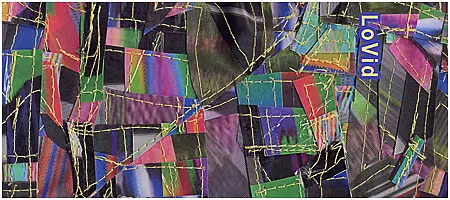
NYSCA awards go to Benton Bainbridge3 and Stephan Moore4 for Video Quilt, LoVid (Tali Hinkis5 and Kyle Lapidus6) for Cross Current Resonance Transducer, and Igor Vamos for Chilling Effects, on the prosecution of Critical Art Ensemble’s7 Steven Kurtz. Finishing Funds reach 28 projects, among them work by Jung Hee Choi, Marie Losier, Tara Mateik, Esther Robinson and Jason Varone.
 boderacsynskagolfcart.jpg.webp
 HahnLuminous_Point.jpg.webp
 skipandralphtable.jpg.webp
 sachsxychromosome.jpg.webp
 zoharkfir.jpg
 marisaolsonETCISW_4w.jpg.webp
 stephanmooreralphbenton.jpg.webp
 lovidiproject.jpg.webp
 vanandenrobot_postcard_sfw.jpg.webp
 ChoiRice2.jpg.webp
 lauriaHungryMother02.jpg.webp
 MarkHoslerposter.jpg.webp
 toyhappytvwalker.jpg.webp
 fairlightcvi_1173_topfull_3.jpg.webp
 etchasketch_1813box.jpg.webp
 paulrowleyexptv.jpg.webp
sources ›
Lessons from a Video Master
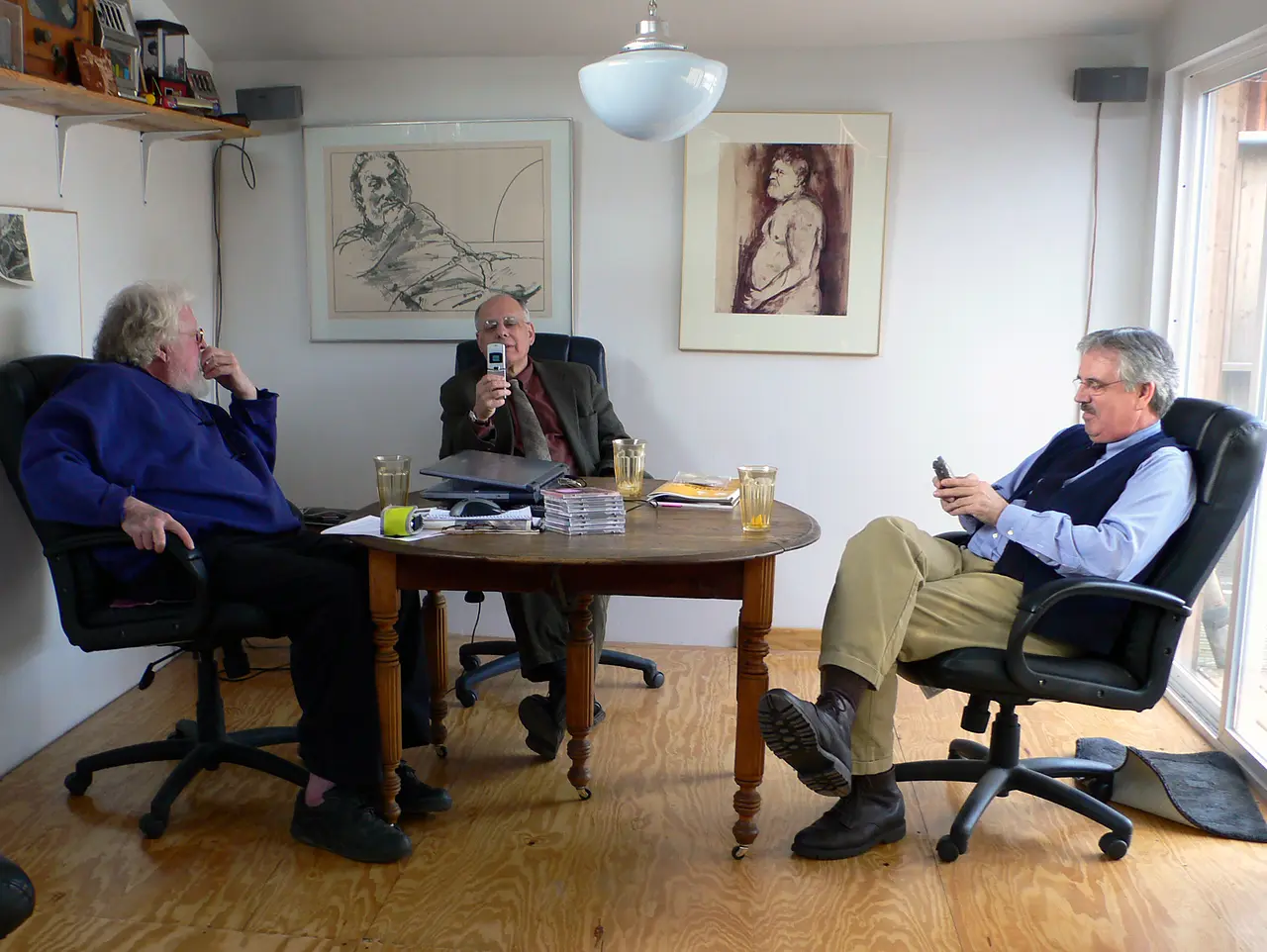
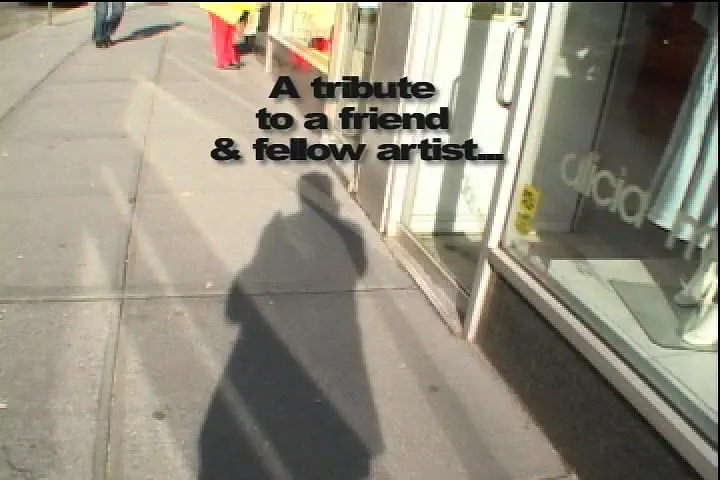
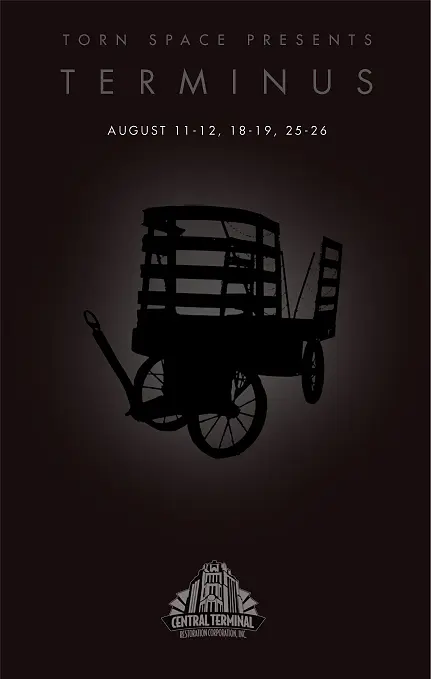
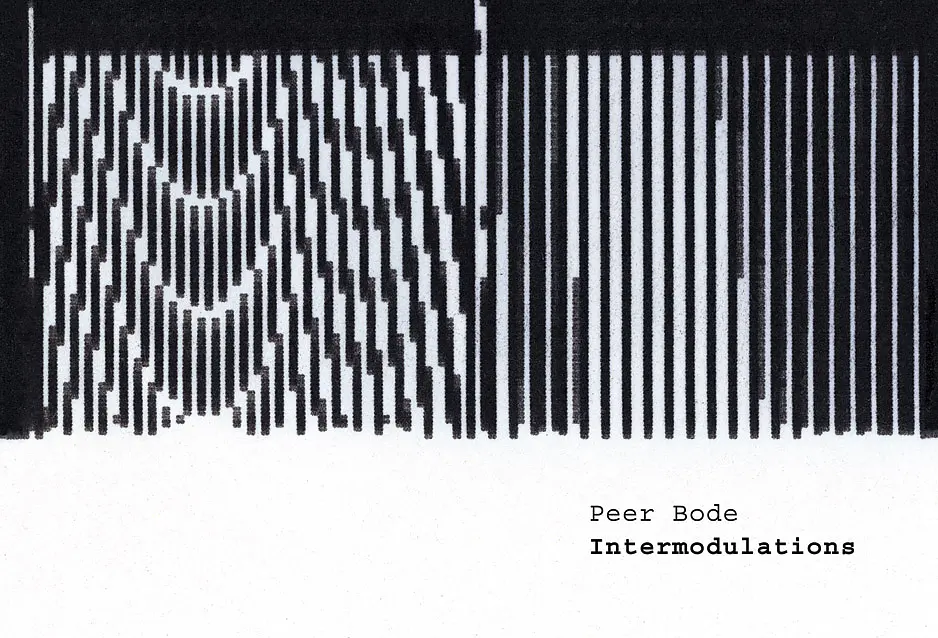
Skip Blumberg’s1 Lessons From a Video Master gathers the advice Nam June Paik2 passed to more than 65 artists. NYSCA awards also go to Peer Bode3 for History Electronic, Barbara Hammer4 for The Diving Women of Jeju-do, Aaron Miller for Terminus, Paul Rowley for Uisce Marbh, Luciana Sanz for Etcetera and Caspar Stracke for Architecture of Piracy.
Work shows at Eyebeam5, the Corcoran, the Museum of Modern Art, the Film Society of Lincoln Center and the Kunstmuseum Solothurn, and in the VideoEx6 (Zurich), Viper (Basel) and Jerusalem festivals. Finishing Funds back Zoe Beloff, Carrie Dashow, Mariam Ghani, Jason Livingston, Cat Mazza and Marina Zurkow, among others.
 baldinooutoffocuseverything2006.jpg.webp
 gallagher_somuchw.jpg
 kfirHomeRun_invite.jpg.webp
 woodmanspringsmixw.jpg.webp
 nuritnothingw.jpg
 eastmanphones.jpg.webp
 blumbergNJP tribute still .tif.webp
 terminus_eflyer.jpg.webp
 Zoe Beloff still 01.jpg.webp
 Dashowsetup.jpg.webp
 blipfestival_arcangel.jpg.webp
 Hooker99.jpg.webp
 bodePeerfront.jpg.webp
 bobandbillinowego.jpg.webp
sources ›
- [1] Skip Blumberg
- [2] Nam June Paik
- [3] Peer Bode
- [4] Barbara Hammer
- [5] Eyebeam
- [6] VideoEx
- [7] ETC History 2006-2007
Migrating Media
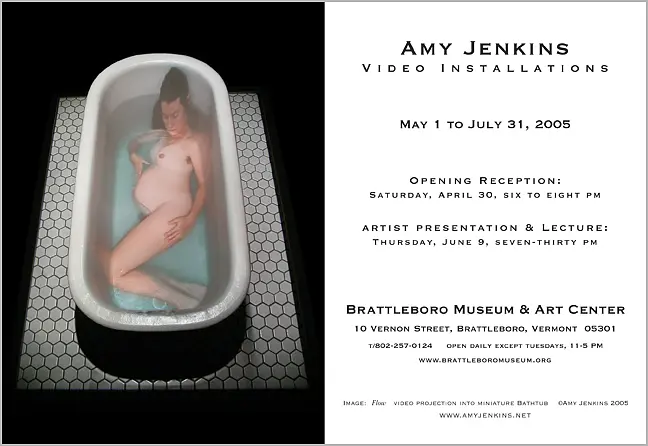
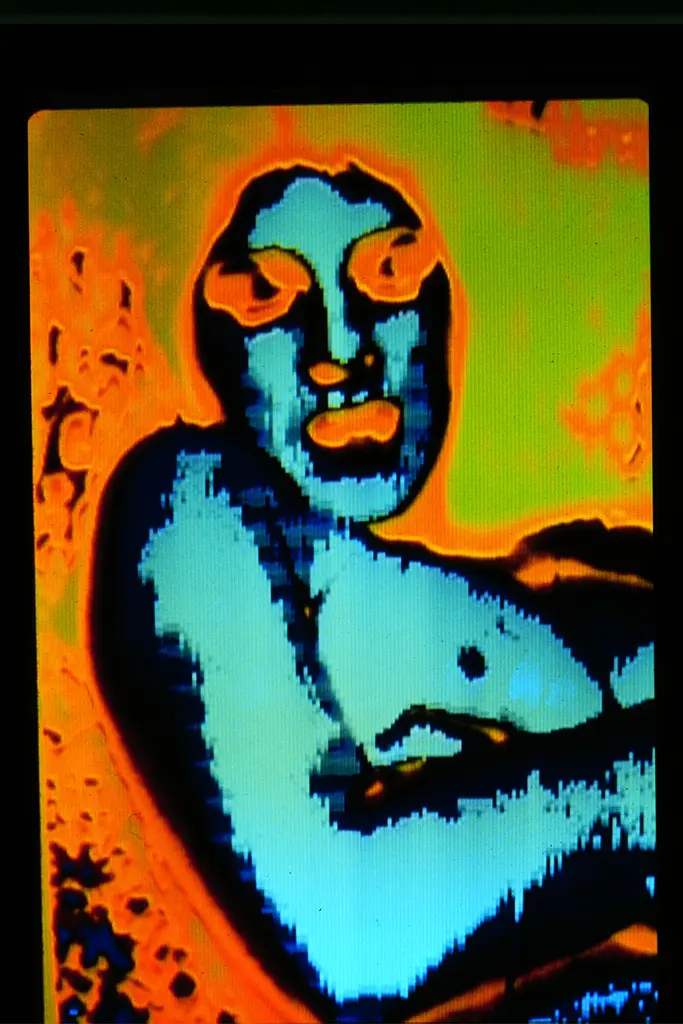
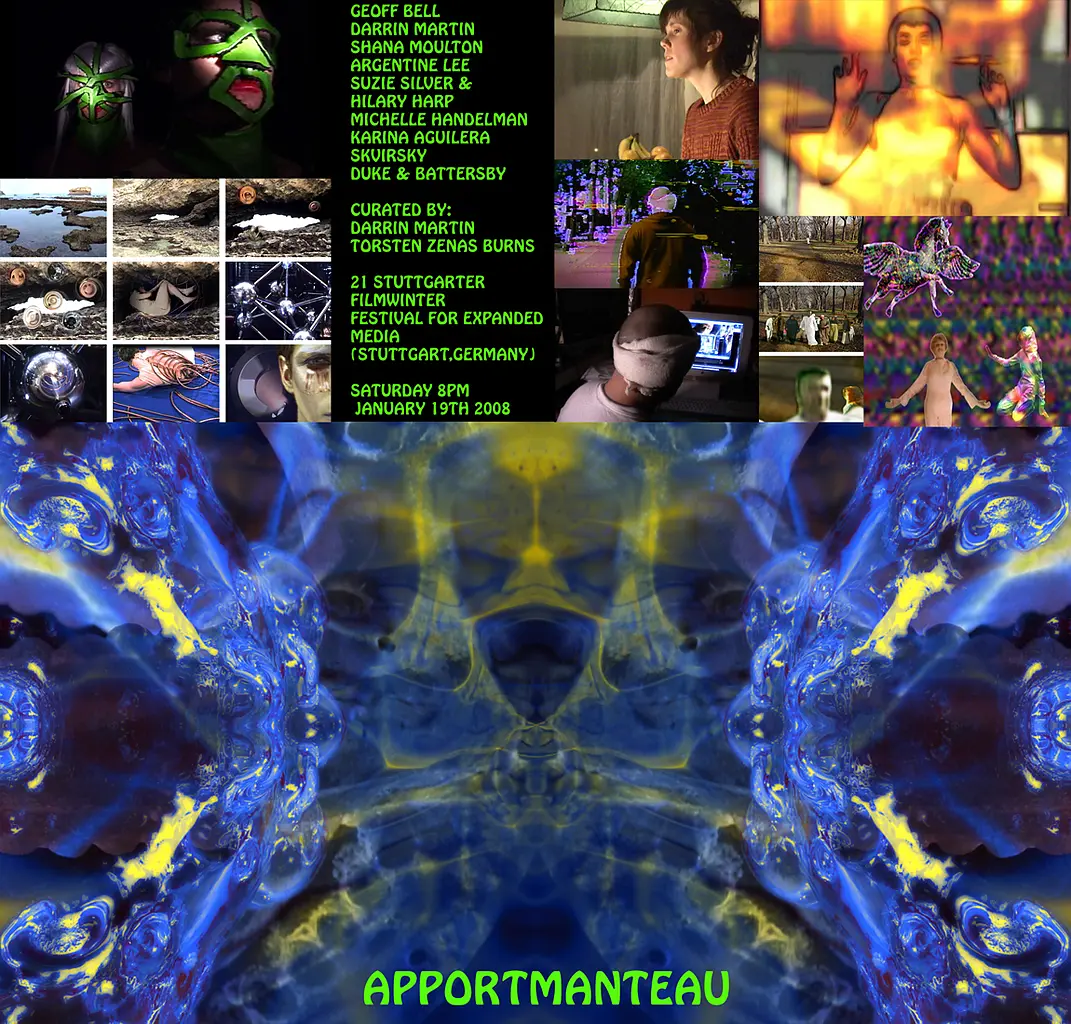
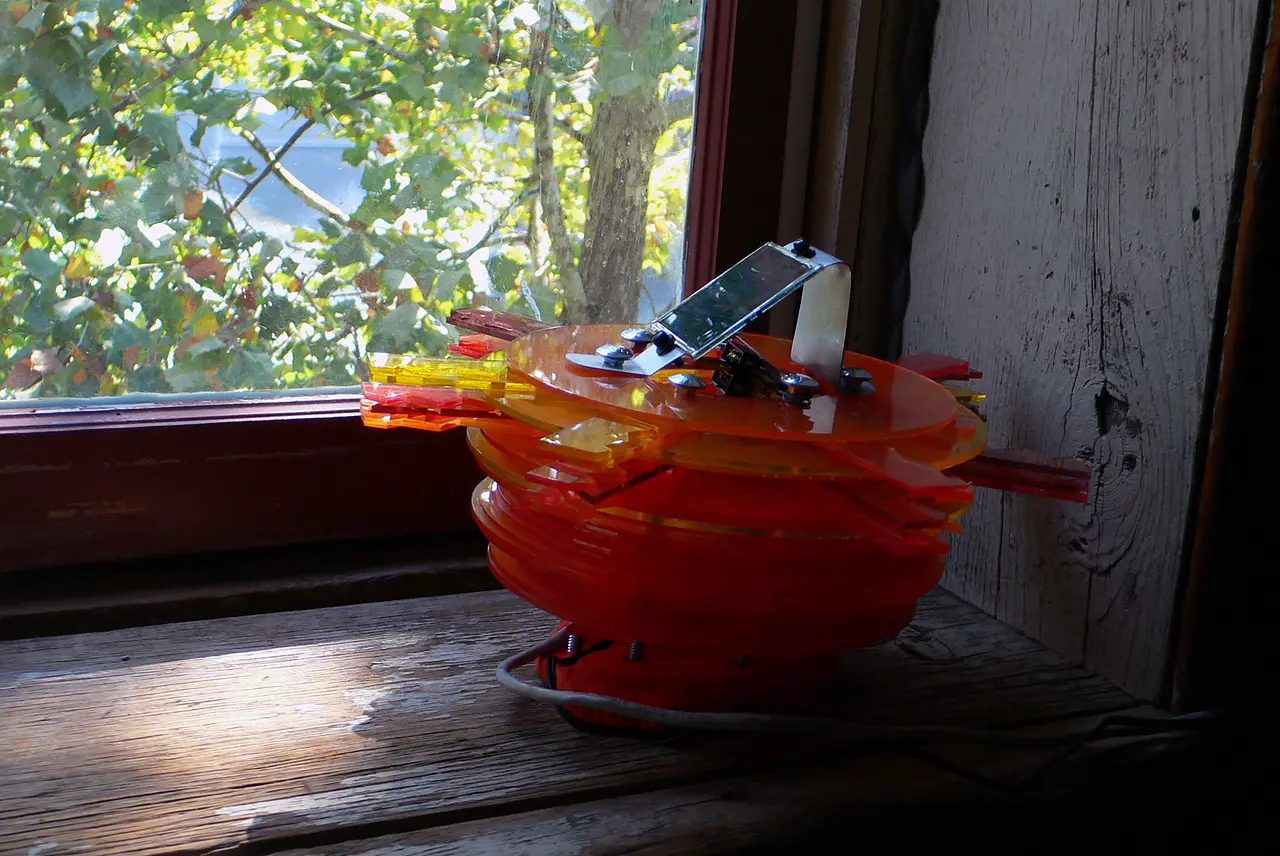
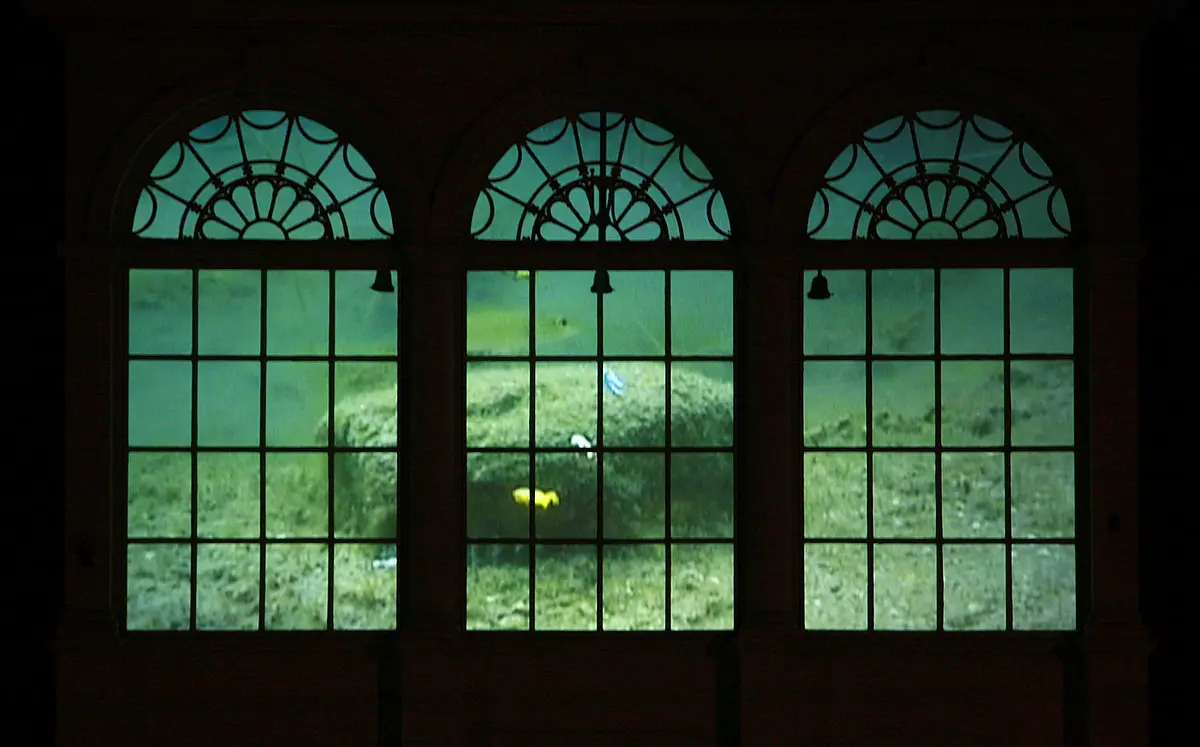
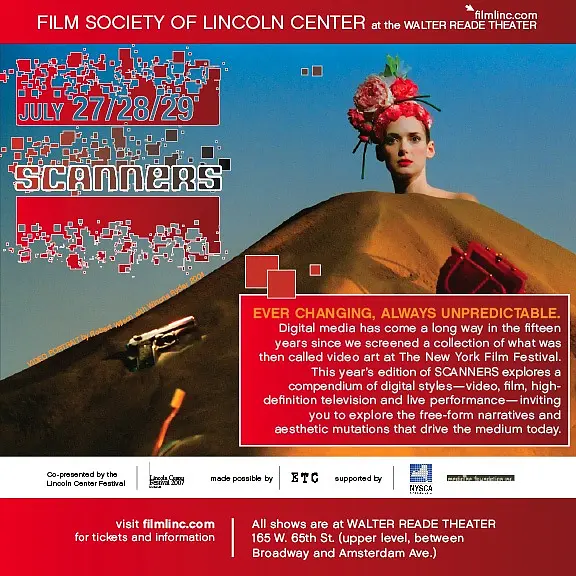
Ken Jacobs1 gets NYSCA support for The Alps and the Jews, a 3-D portrait of Allied strategy; awards also go to Vincent Grenier2, Amy Jenkins3, Kristine Marx, Brian Milbrand and Alan Sondheim. Work shows at Lincoln Center, the Museum of Modern Art4, the Chelsea Art Museum and CEPA, and in Beyond/In Western New York, Ars Electronica and the Stuttgart festival.
At the 2007 Association of Moving Image Archivists5 conference, Jim Lindner6 of Media Matters donates a SAMMA Solo, and the Center launches Migrating Media with Buffalo Media Resources and Hallwalls7 to migrate endangered upstate video collections.
 bobowegocomposite.jpg.webp
 hahn.jpg.webp
 gartelN_S.jpg.webp
 torsten_2.jpg.webp
 sunsmile_2.jpg.webp
 Jenkins-Rock_Window.jpg.webp
 GrenierChaisesTwoChai.jpg.webp
 losierconradwebetc.jpg
 Scanners.jpg.webp
 dumboentrance.jpg.webp
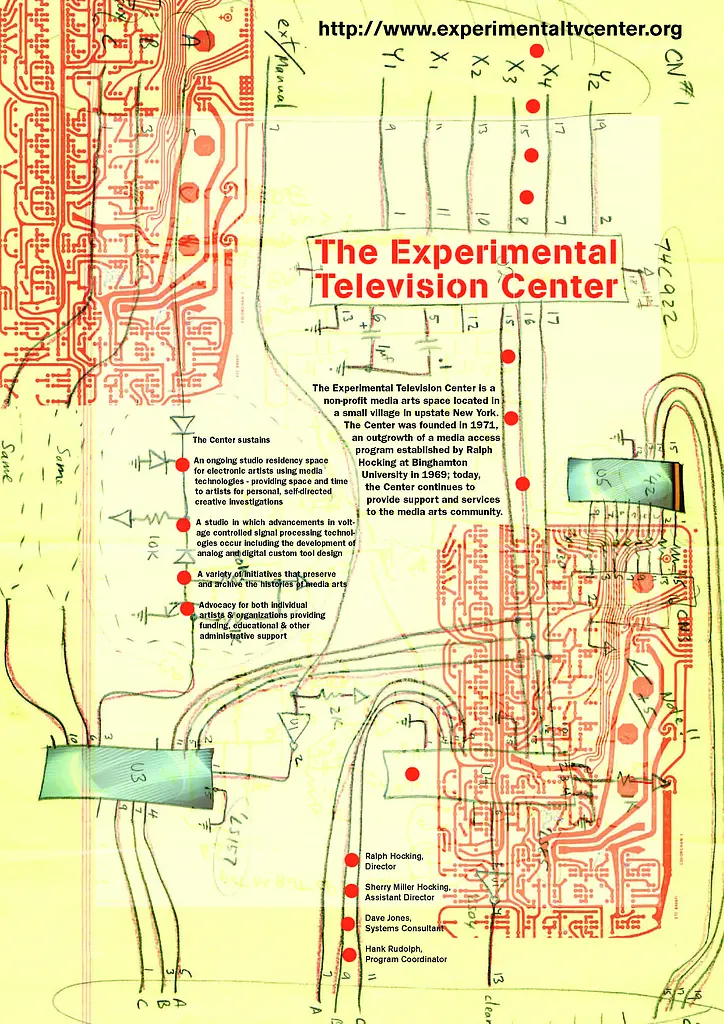 high_EXTVposter5.jpg.webp
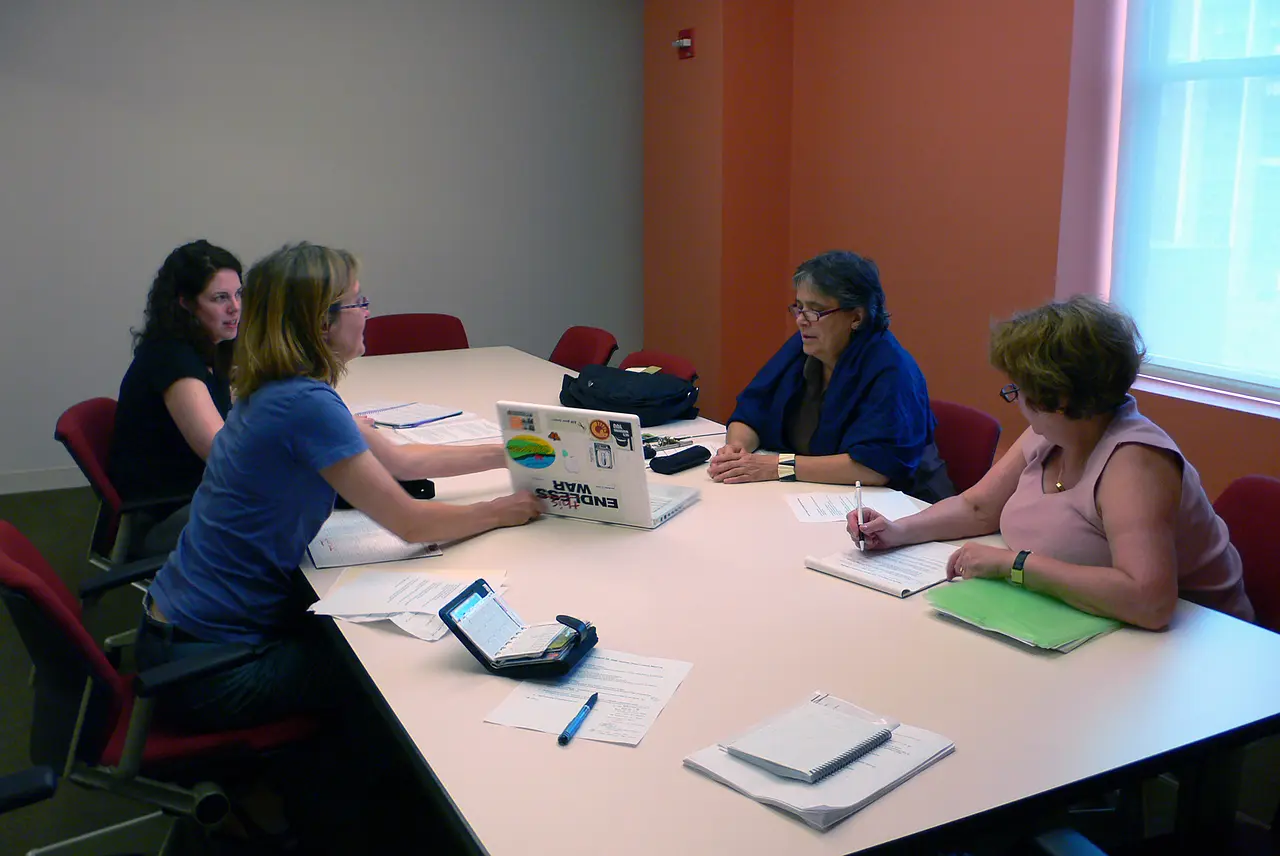 sammameetnyc.jpg.webp
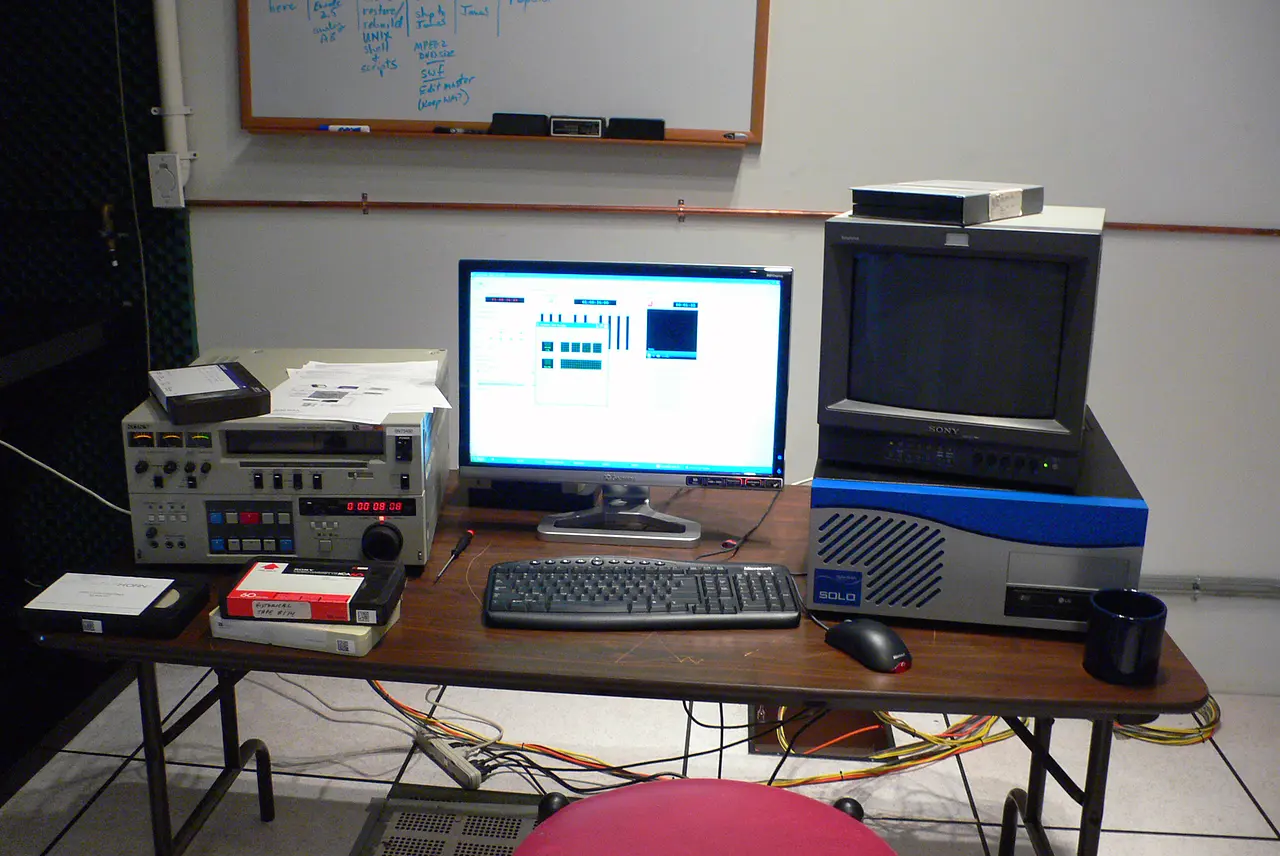 sammasolo_2.jpg.webp
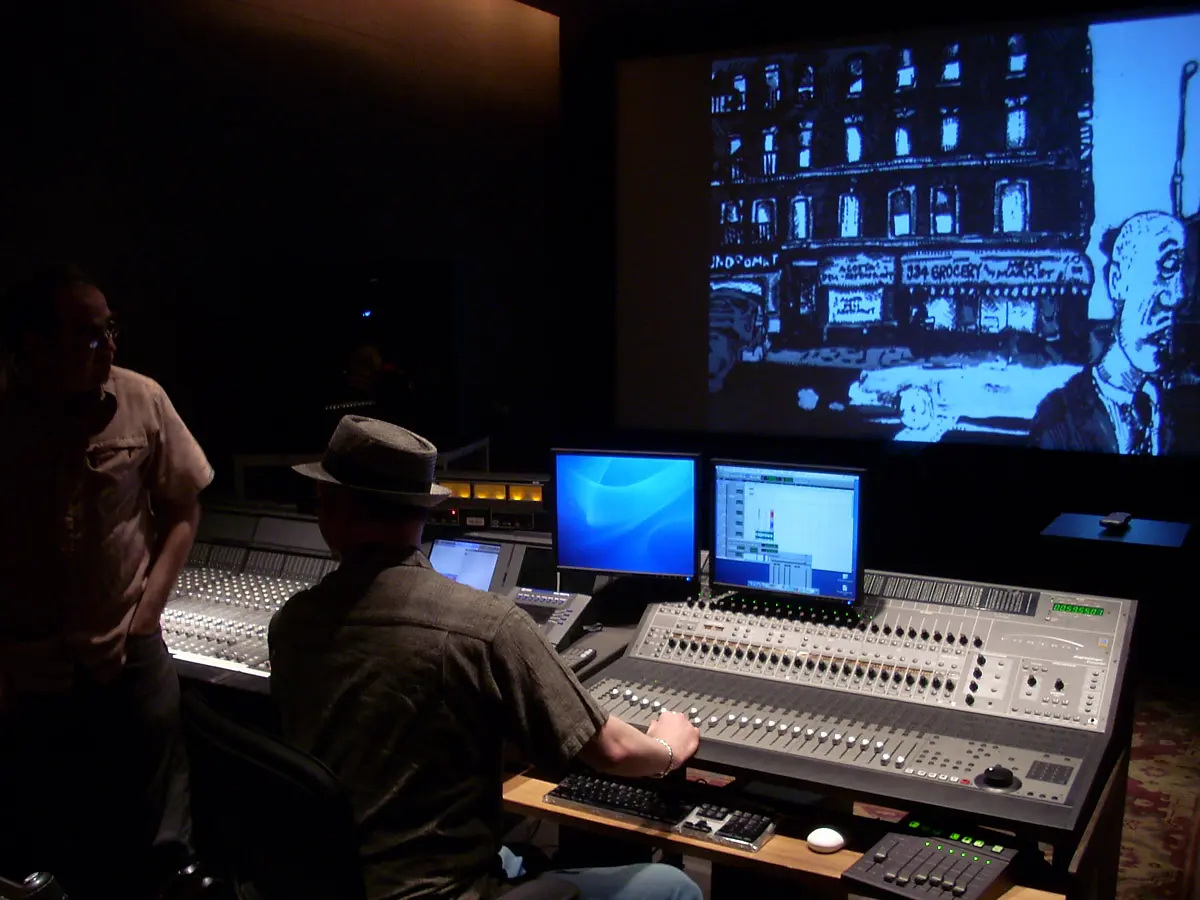 morganmillersoundmix3.jpg.webp
sources ›
Propitious stars
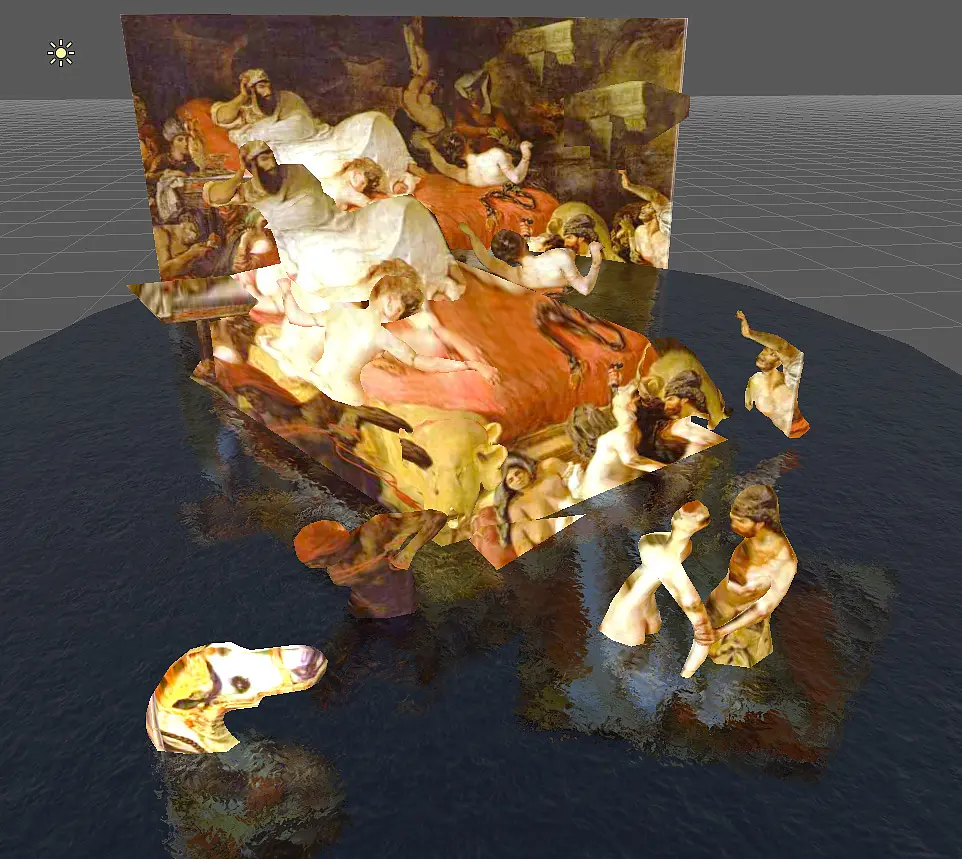
Over fifty residents from eleven states, the UK and Canada work in the studio. NYSCA awards go to Alex Hahn1 for Propitious Stars and the Master of the Staring Eyes, Skip Blumberg2 for a Paik sequel, Courtney Grim for Eerie Tales, Shawn Lawson for Our Sardanapalus, LoVid for Orbital Drop, Monteith McCollum for Path, Laura Parnes3 for County Down and Gretchen Skogerson for Parking Signs.
Work shows at SF MoMA4, Light Industry5, the Villa Croce in Genoa, Hallwalls and Eyebeam6, and in the MIX, European Media Art (Osnabruck) and Migrating Forms festivals. The New York State Media Arts Map7 launches at Location One. The Finishing Funds panel includes Renate Ferro and Tara Mateik.
 carolaheadweb.jpg.webp
 MateikStudio.jpg.webp
 hahninviteweb.jpg.webp
 mcpartlanwobimage.jpg.webp
 LawsonLoResPrototypingAngle2.jpg.webp
 hahnpropitiousweb.jpg.webp
 visual music marathon.jpg.webp
 Zoe-Beloff-still-3.jpg.webp
 sergelweb.jpg.webp
 dumbo08-PR.jpg.webp
 4_vbrooklyn_2008_posterpic.jpg.webpvisual music marathon.jpg.webp
 josefsammadisplay_smile.jpg.webp
 P1010712.jpg.webp
sources ›
Forty Years
The Center releases Experimental Television Center: 1969-20091, a nineteen hour, five-DVD set with a 130-page catalog. LUX2, the influential arts organization in London, UK, names it as one of 50 essential moving-image DVDs in publication.
Forty-seven residents from thirteen states and four countries work in the studio. NYSCA awards go to Benton Bainbridge3 for Brother Island, Alan Berliner4 for Arithmetic, Janet Biggs5 for Fade to White, Ken Jacobs6 for The Nervous System, Jason Livingston7 for Interstate, and Susan Muska and Greta Olafsdottir8 for Edie & Thea. Work shows at Light Industry, Hallwalls and Eyebeam, and in festivals from Toronto to Yogyakarta.
 dvd-anthology-featured-image.jpg
sources ›
A pause to reflect
Forty-nine residents work in the studio before the Center ends the Residency, the Grants, and the Sponsorship programs in summer 2011 to focus on history and preservation. NYSCA awards go to Jacqueline Goss1 for The Observers, Barbara Hammer2 for Maya Deren’s Sink (a Teddy at the Berlinale), and Monteith McCollum3 for The Good Game. Anthology Film Archives4 hosts a Tribute to ETC.
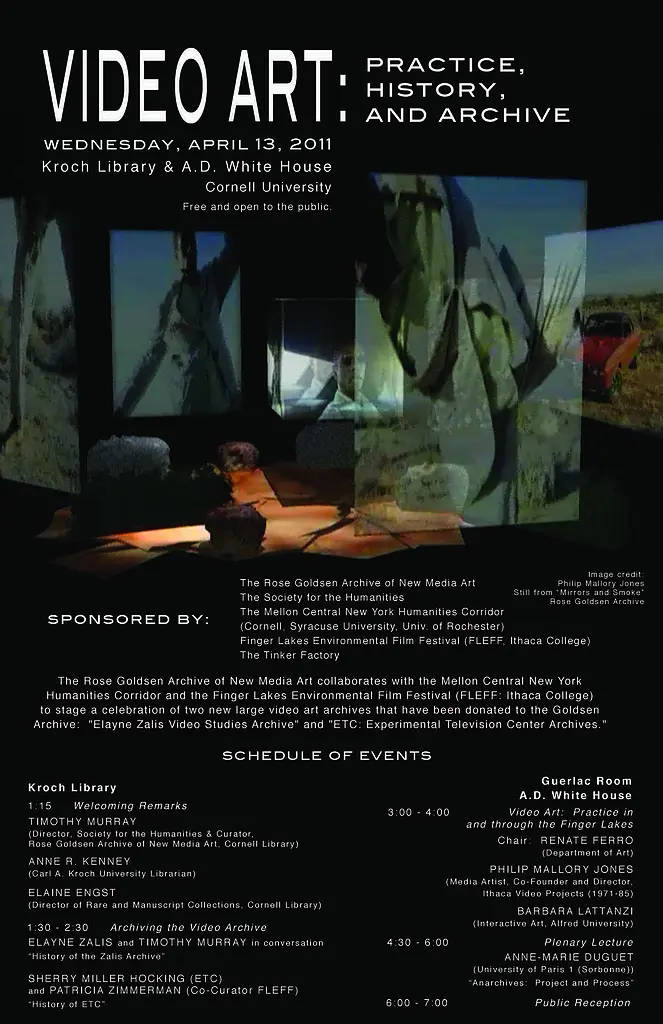
In April the Goldsen5 and FLEFF6 host Video Art: Practice, History, and Archive, with Renate Ferro, Sherry Miller Hocking7, Philip Mallory Jones, Barbara Lattanzi and Timothy Murray.
Then the move that ends the studio era: the videotape collection and the document archive are slated to go to the Rose Goldsen Archive of New Media Art at Cornell.
Two Tributes
Cornell1 stages Video Art: Practice, History, and Archive at Kroch Library and the A.D. White House. Sherry Miller Hocking2 and Patricia Zimmermann3 (FLEFF4) deliver "History of ETC."
Anthology Film Archives5 and The Standby Program6 co-present Tribute to the Experimental Television Center7 on July 15, featuring thirteen works by ETC alumni.
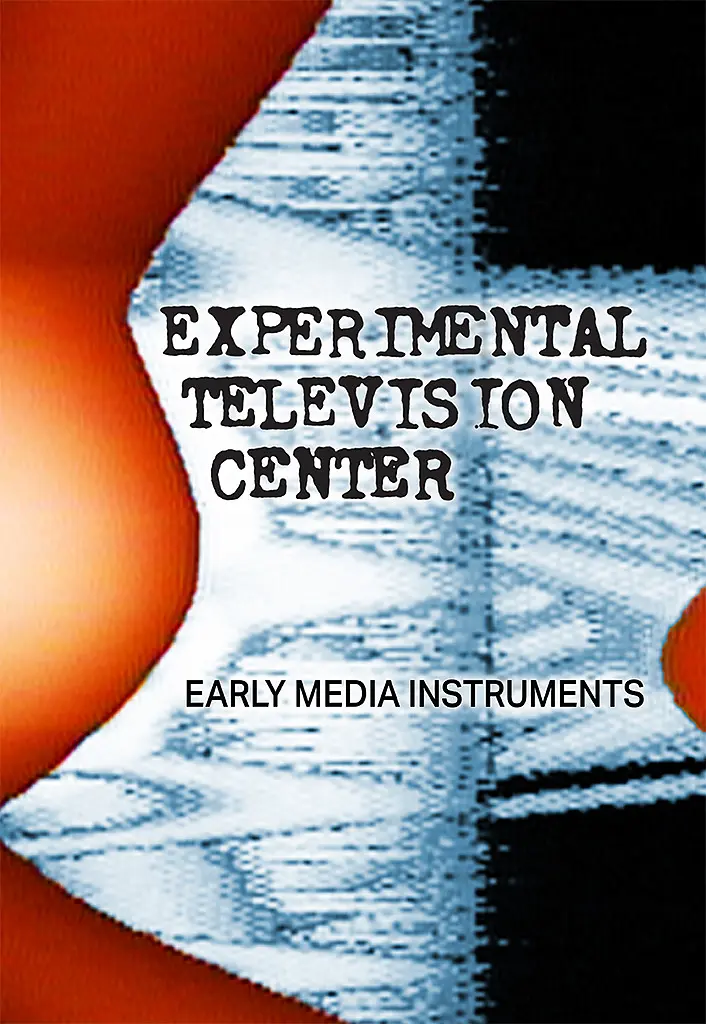
Early Media Instruments
The Center releases Early Media Instruments1, an eight-DVD set in which Dave Jones2, Hank Rudolph3 and Benton C Bainbridge4 demonstrate the real-time analog tools that defined the studio, most designed in the 1970s. One disc each for the Jones Colorizer5, Frame Buffer, Keyer and Sequencer, the Paik/Abe Video Synthesizer6, the Raster Manipulation Unit (the Wobbulator), the Rutt/Etra RE-4 and the Sandin Image Processor.
Documentation is by Carolyn Tennant, Pamela Susan Hawkins, Hank Rudolph, Mona Jimenez and Kathy High, with design and post by Matthew Underwood, Necole Zayatz and Dave Jones Design. The set is produced through the Video History Project7.
sources ›
A History, Etc.
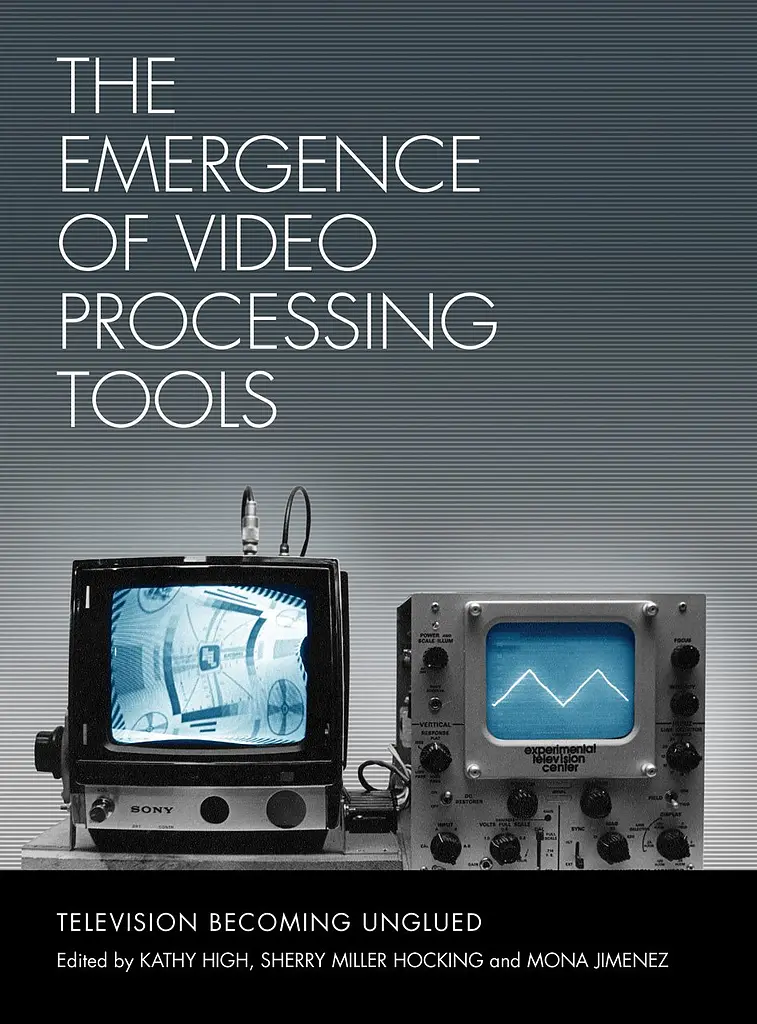
The book lands and the museums follow. The Emergence of Video Processing Tools: Television Becoming Unglued1, edited by Kathy High2, Sherry Miller Hocking3 and Mona Jimenez4, is out from Intellect; its New Museum launch5 (July 13, 2014) puts Dave Jones, LoVid’s Kyle Lapidus and Tali Hinkis, Rhizome’s Dragan Espenschied and Hank Rudolph in conversation, organized with Rhizome and the New Museum. IMAP marks the book and its Archiving the Arts6 resource with a June symposium at the Burchfield Penney in Buffalo.
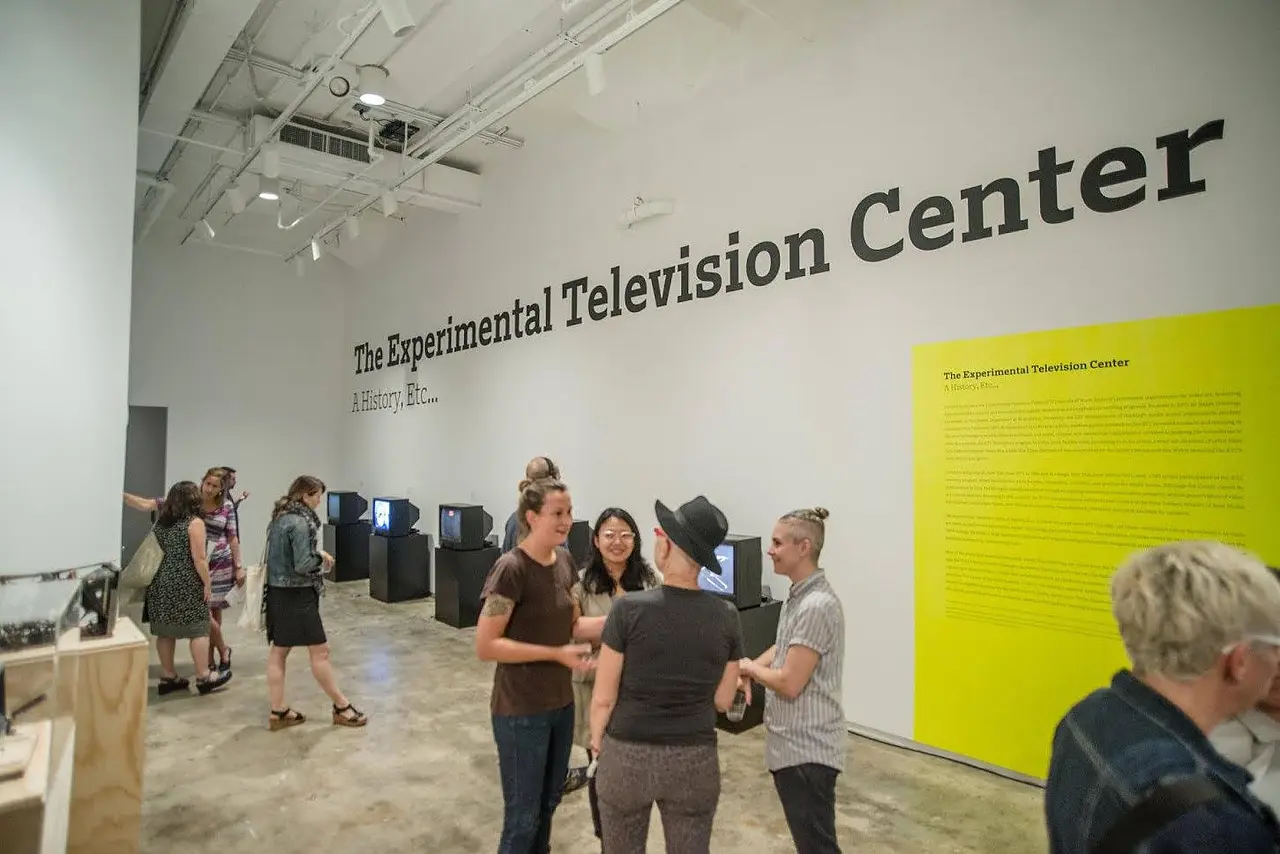
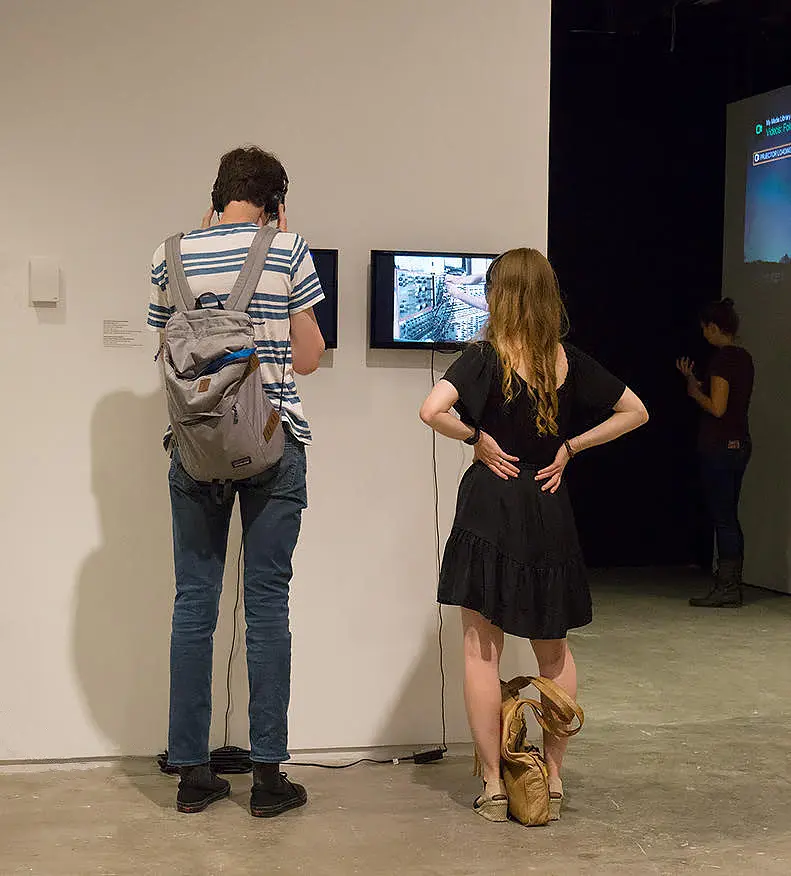
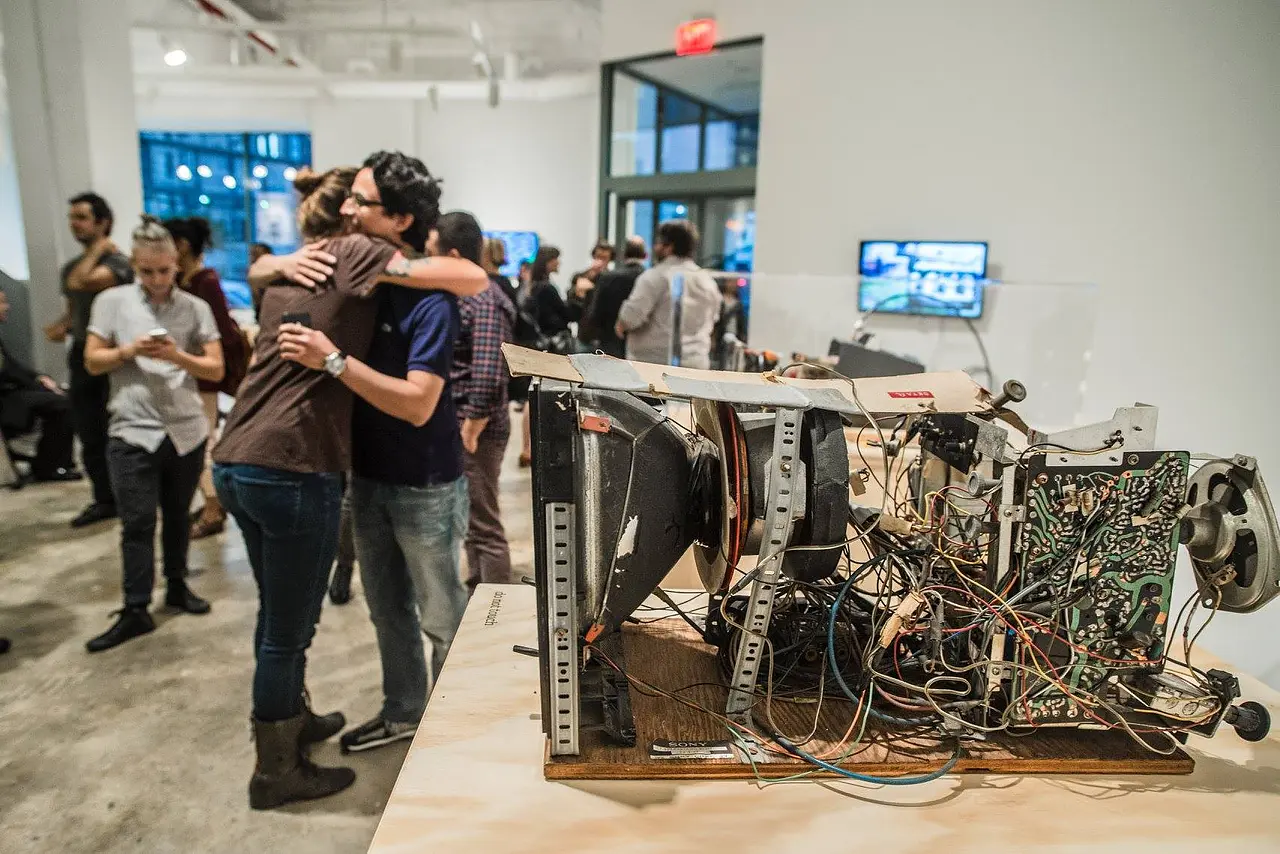
Then the first academic survey of the Center: The Experimental Television Center: A History, Etc.7 at the Hunter College Art Galleries (September to November 2015), curated by Sarah Watson with Timothy Murray and Sherry Miller Hocking. It spans the 1960s through the 2000s with original analog instruments and new tools by Dave Jones and by Jason and Debora Bernagozzi of Signal Culture8, and names the artists ETC built: Batsry, Bode, Buckner, Hammer, Hill, Kubota, Paik, the Vasulkas, Lynne Sachs, Charlotte Moorman, Arnie Zane and many more.
sources ›
Signal to Code
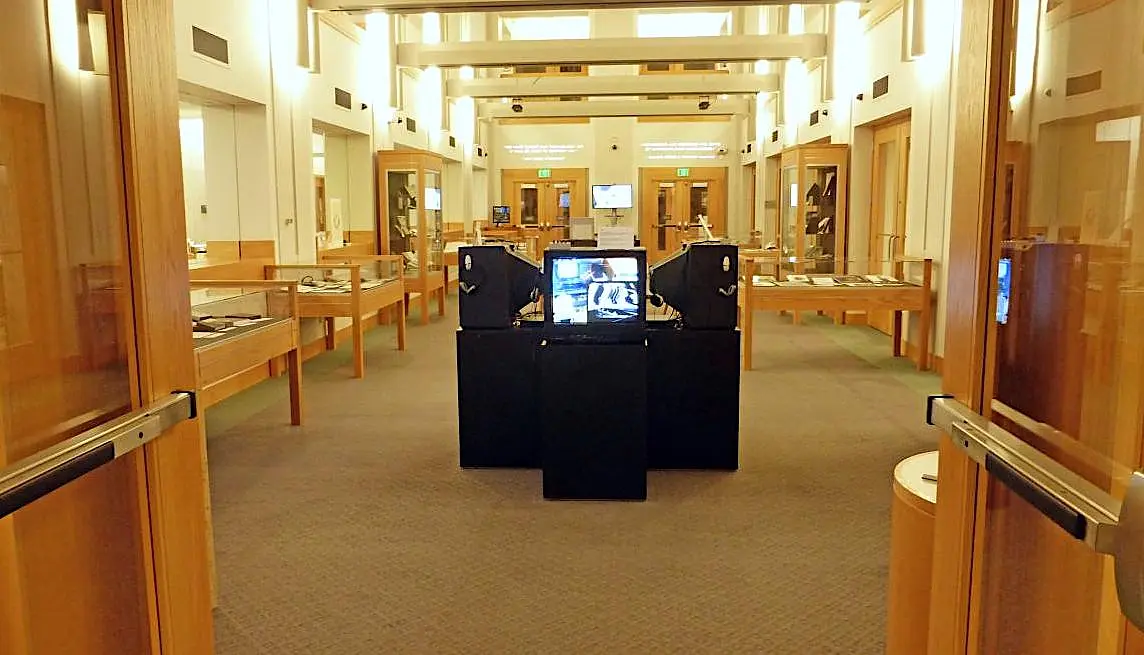
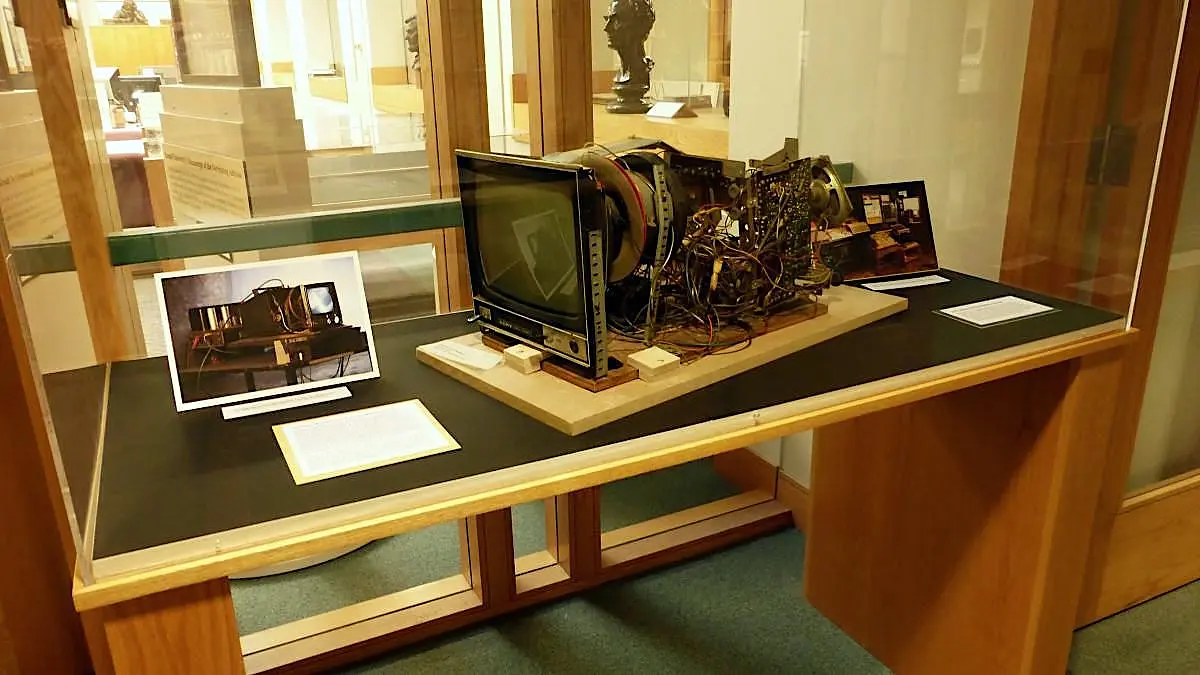
The Center’s work fills two Cornell shows drawn from the Rose Goldsen Archive1, now home to its tapes and ephemera. Signal to Code: 50 Years of Media Art2 runs at the Kroch Library (March to October 2016), more than sixty electronic and digital works across fifteen display stations, with the Paik/Abe Raster Manipulation Unit on view.
A companion screening at the Herbert F. Johnson Museum3 (September to December 2016) runs eleven works at once: Ralph Hocking’s4 Transparent Body #3, David Blair’s Wax, Gary Hill’s5 Earth Pulse, Barbara Hammer6 and Paula Levine’s Two Bad Daughters, Sara Hornbacher’s Writing Degree Z, Philip Mallory Jones’s First World Order, Rohesia Hamilton Metcalfe’s La Blanchisseuse, NNeng-M’s Tears, Lynne Sachs’s7 Window Work, Andrew Deutsch’s Magnetic North and Ann-Sargent Wooster’s Dialectics of Romance. The wall text credits the tools to Hocking, Paik, Abe, David Jones and Dan Sandin.
Fifty years, and a move
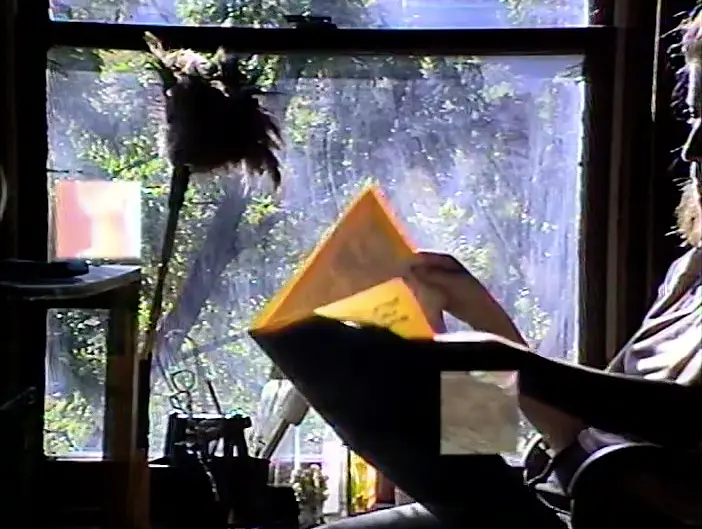
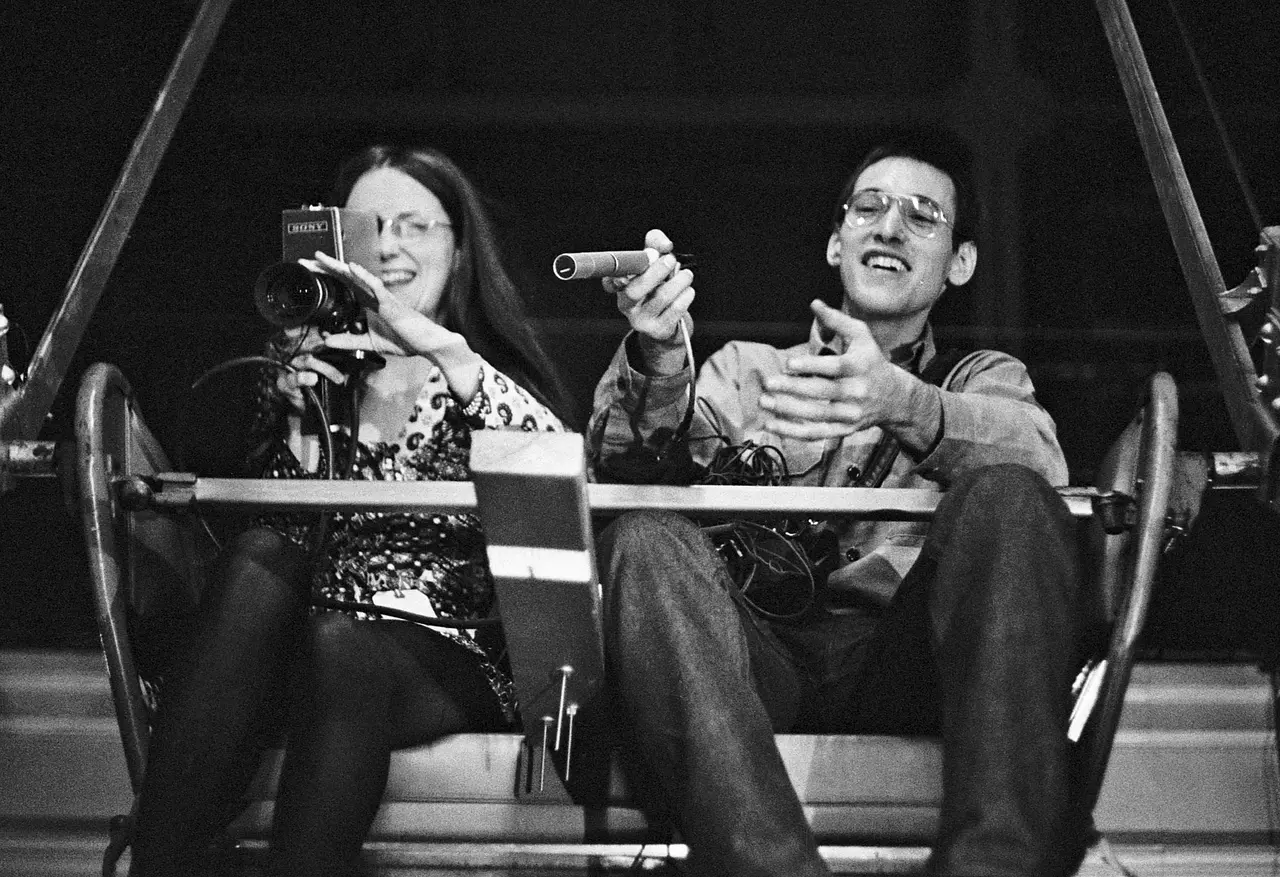
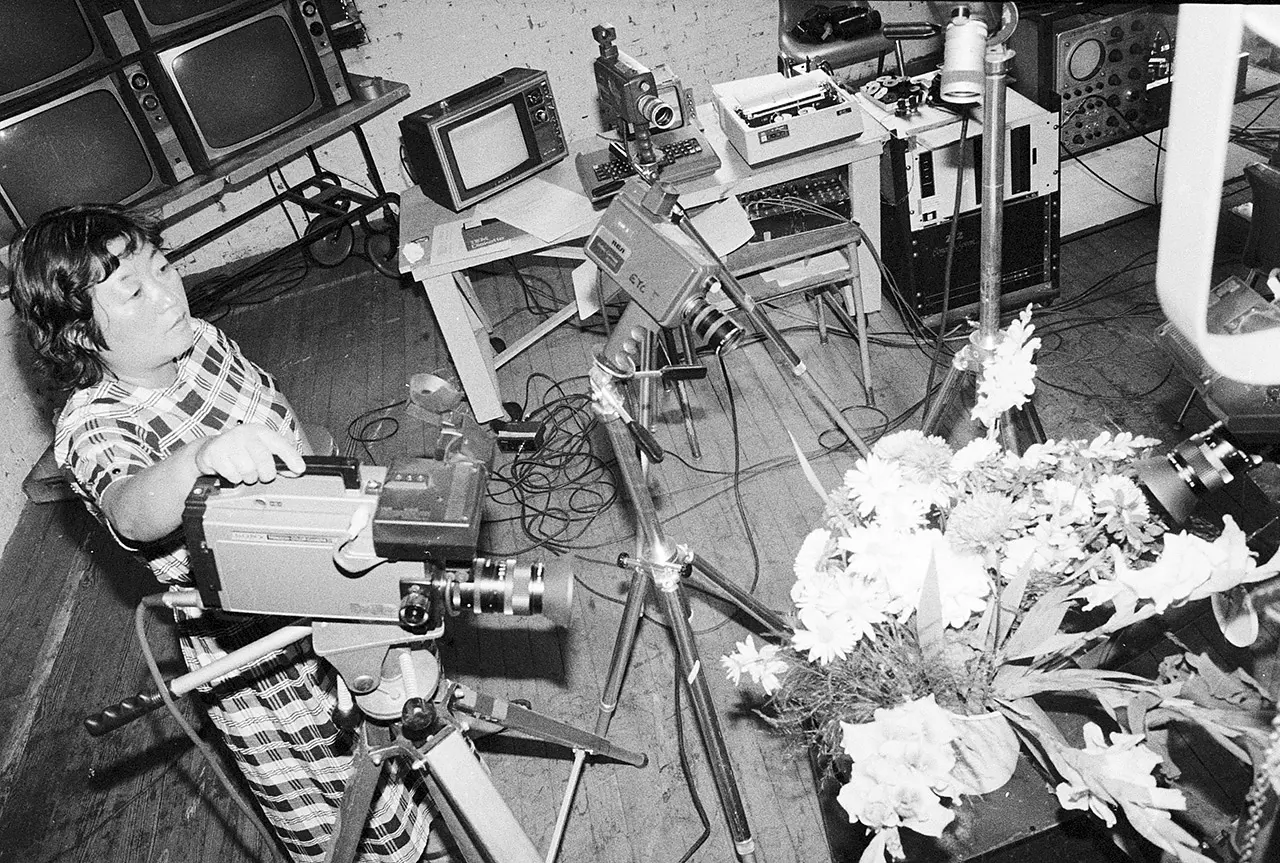
MoMA1 gives Shigeko Kubota2 her first US solo show in 25 years, Liquid Reality3, with ETC contributing; one wall photo is Peer Bode’s4 shot of Kubota at the Center in 1983.
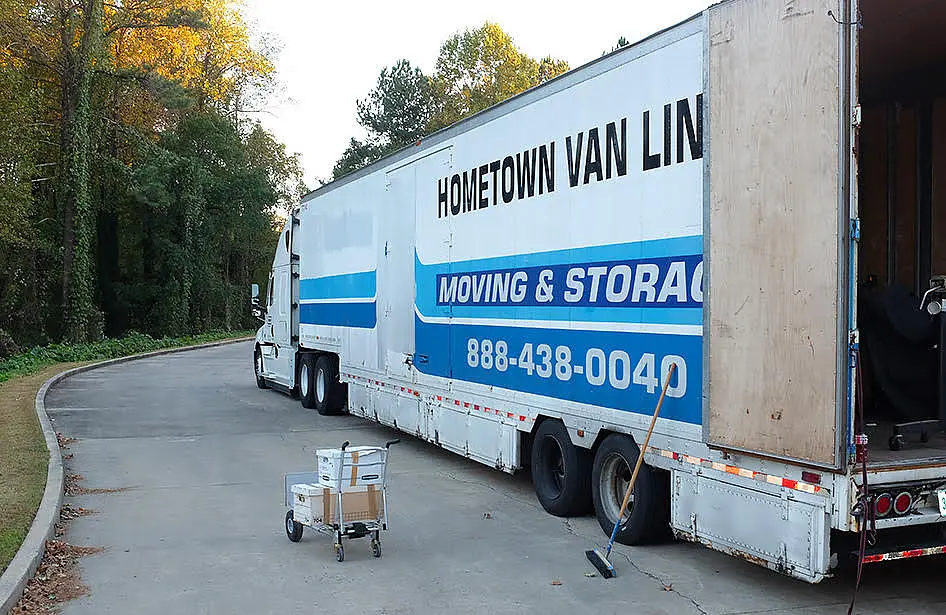
Then the turn. On the 50th anniversary, Sherry Hocking5 announces that she and Ralph6 have stepped back and ETC is moving to Atlanta under Erik Gavriluk7, who had been working with Ralph since 2019 on the history, the tapes, and the analog instruments. The studio and hundreds of tools are now in a large Atlanta space, restoration underway, plus new programs in attribution, rights recovery and distribution.
sources ›
- [1] Museum of Modern Art
- [2] Shigeko Kubota
- [3] Shigeko Kubota: Liquid Reality
- [4] Peer Bode
- [5] Sherry Miller Hocking
- [6] Ralph Hocking
- [7] Erik Gavriluk
- [8] ETC @ 50
Moon is the Oldest TV
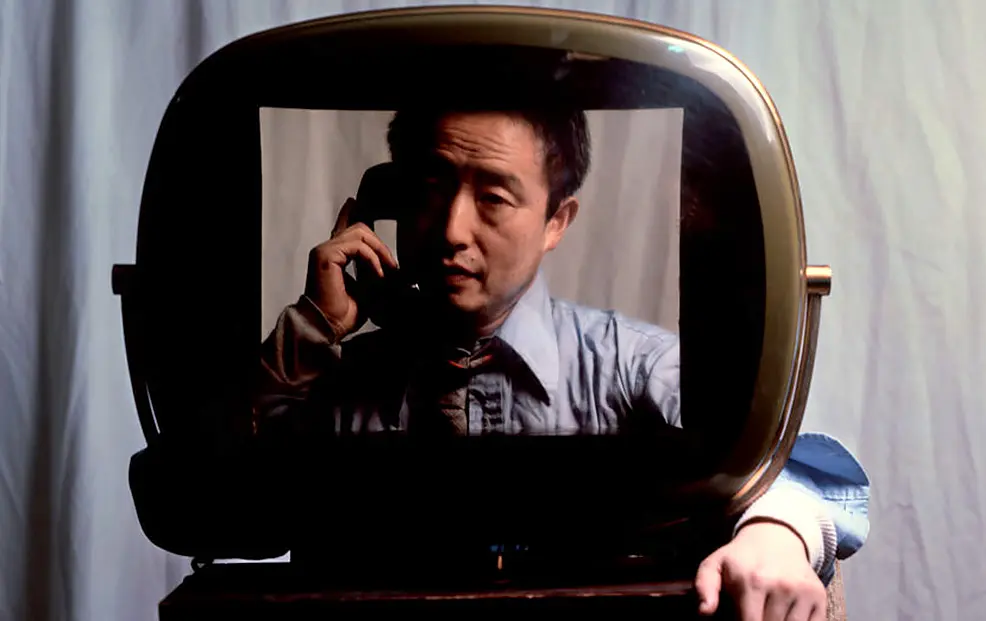
Two returns to the founders. Amanda Kim’s documentary Nam June Paik: Moon is the Oldest TV1 draws research and archival material from ETC, takes a Variety Critic’s Pick2, and reaches Amazon Prime, Apple TV and PBS American Masters.
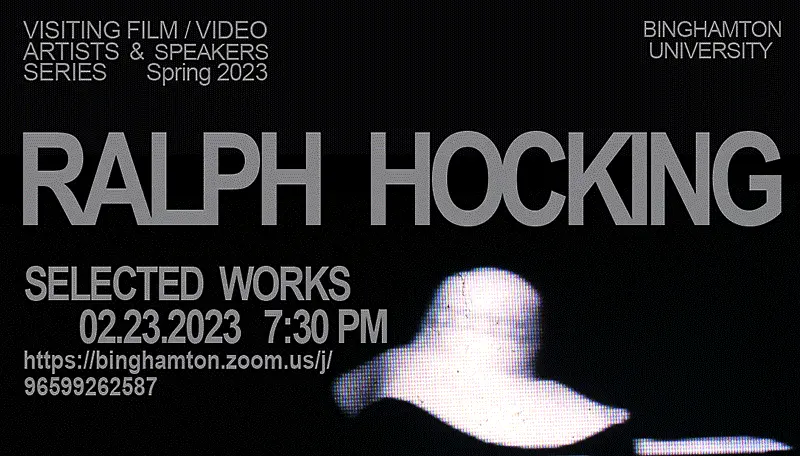
And Binghamton University3 honors Ralph Hocking4 with Selected Works5 (February 2023), a screening and a conversation with Peer Bode6 and Kathy High7, marking the man who started the whole thing as a campus media-access program in 1969.
Both at Once
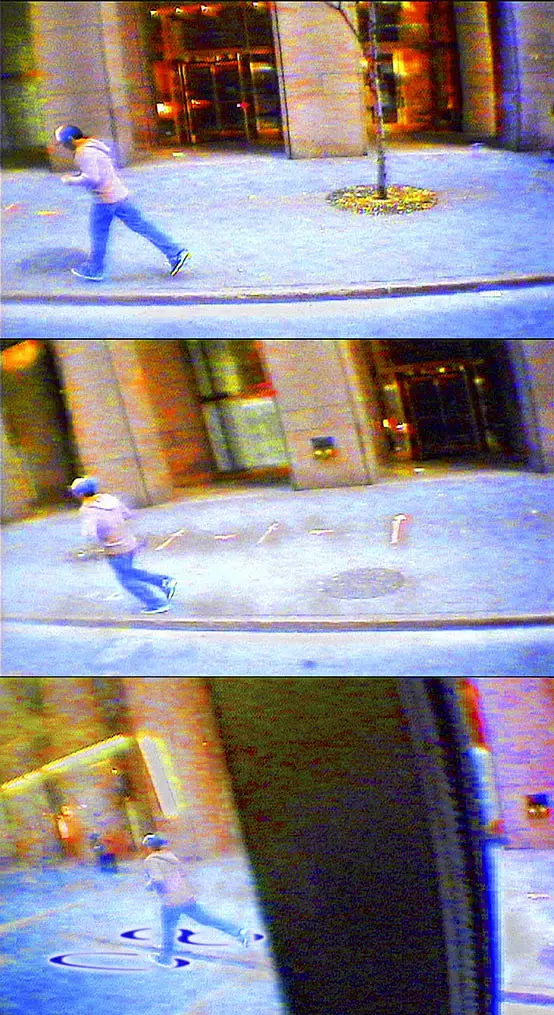
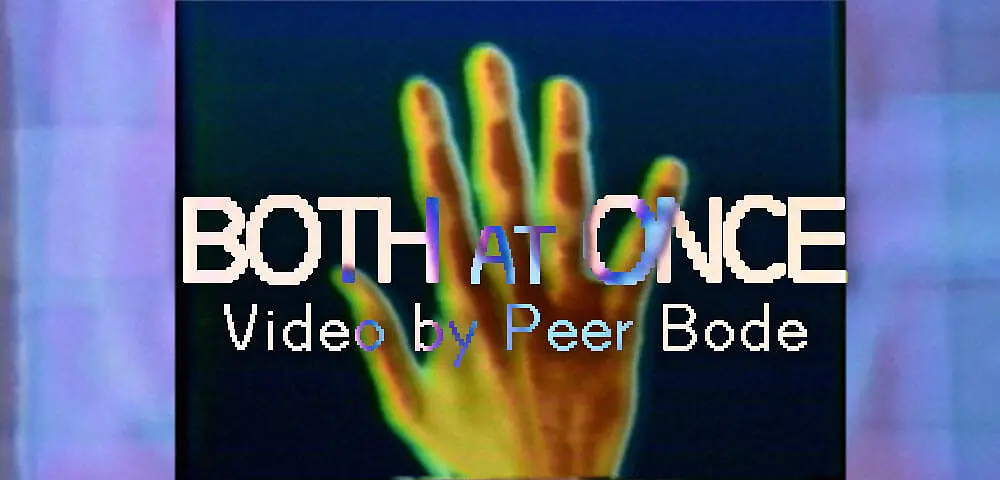
Spectacle Theater1 in Brooklyn screens Both at Once: Video by Peer Bode2 on February 22, co-presented with Visual Studies Workshop3 and moderated by VSW curator Tara Nelson. Six Process Tapes made at ETC between 1977 and 1983: Front Hand Back Hand, Cup Mix (2 Channels), Camel with Window Memory, Vibratory Sweep, Video Locomotion, and Music on Triggering Surfaces. Distribution works paired with recently digitized tapes from Bode's4 archive never before shown.
sources ›
Signal into Memory
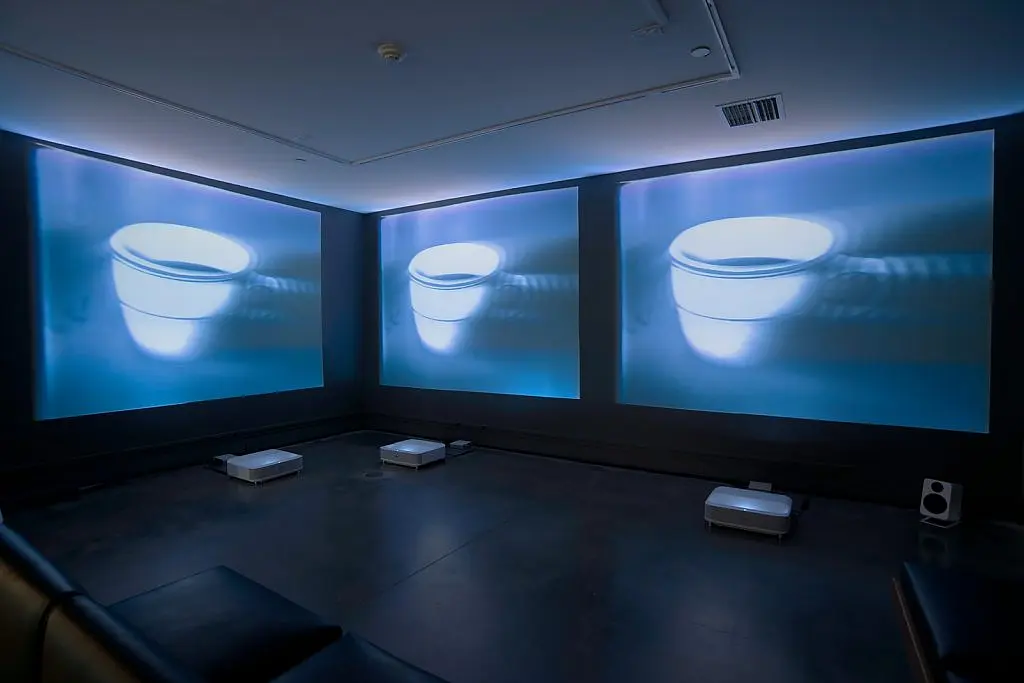
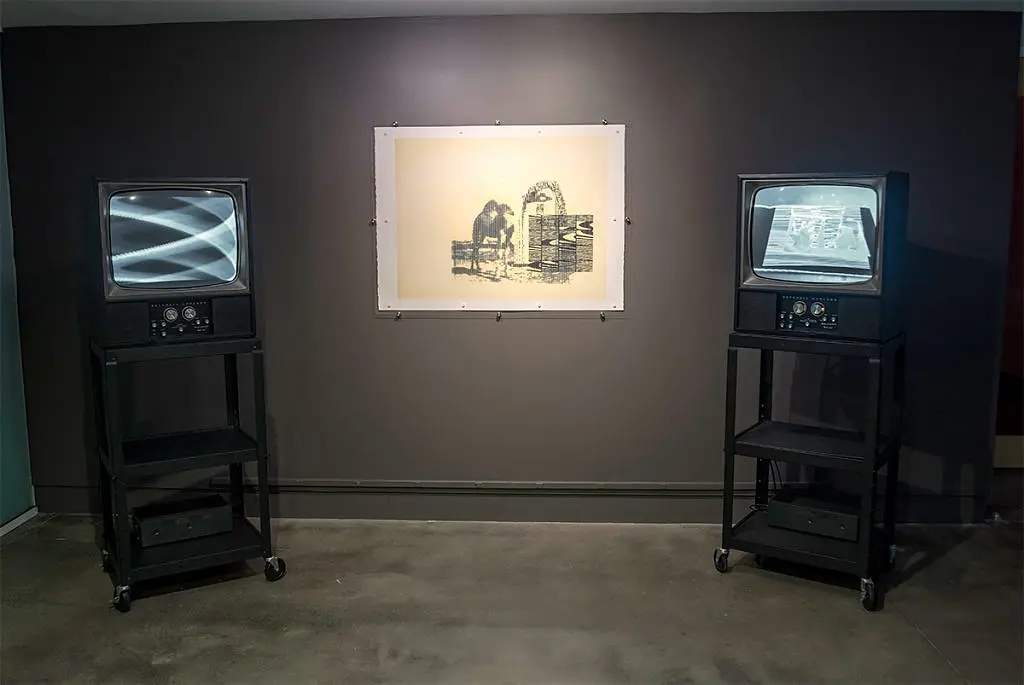
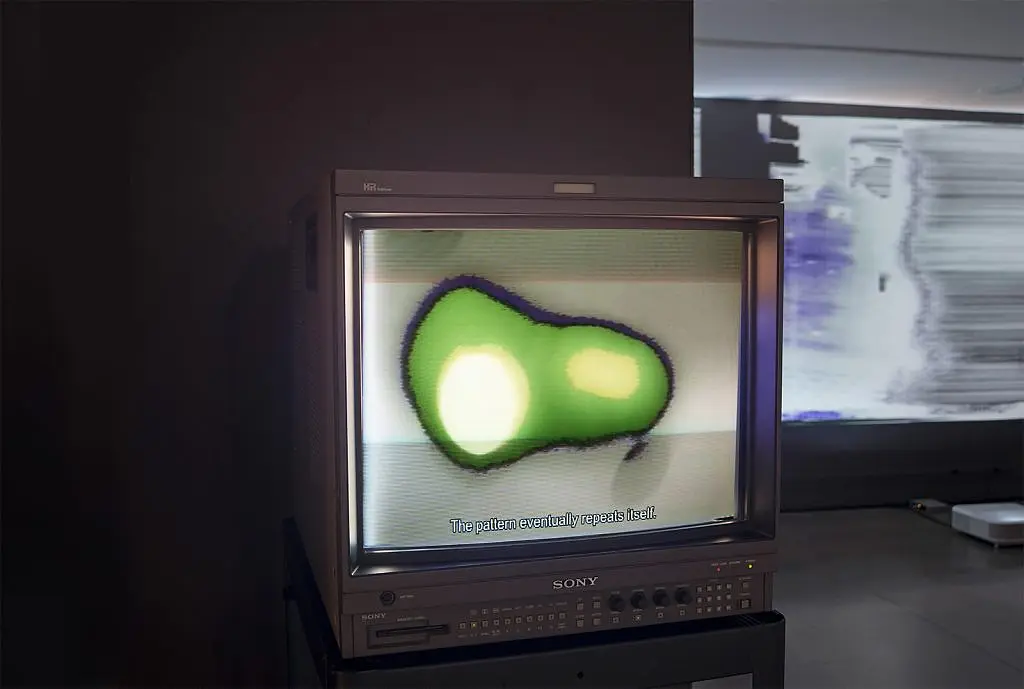
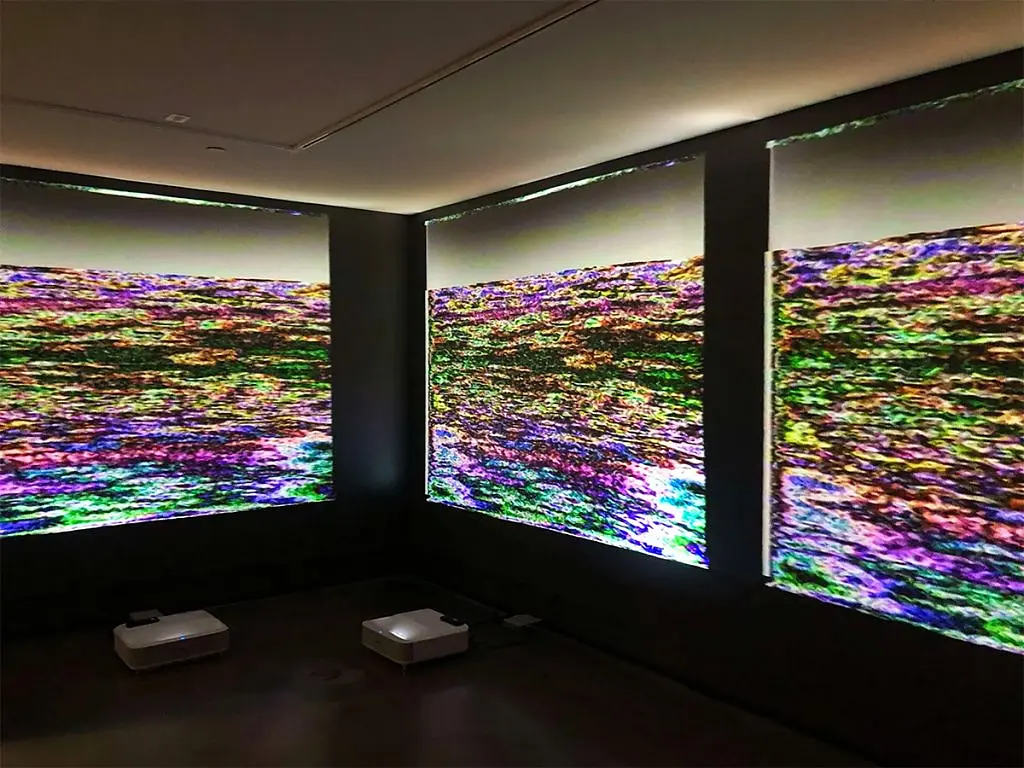
Peer Bode: Signal into Memory opens at Visual Studies Workshop1 in Rochester, February 6 to June 6, 2026. Curated by Tara Nelson and Nilson Carroll, it draws extensively from Bode's2 Process Tapes recorded at ETC between 1975 and 1983, alongside recently digitized work from his personal archive and prints from his video-as-material practice.
VSW Press3 releases Peer Bode: Open Fields on May 30: 178 pages of full-color illustrations from Bode's early-1970s ETC experiments in Binghamton and Owego, with an essay by Sherry Miller Hocking and transcripts of a conversation between Bode and Signal Culture co-founder Hank Rudolph.
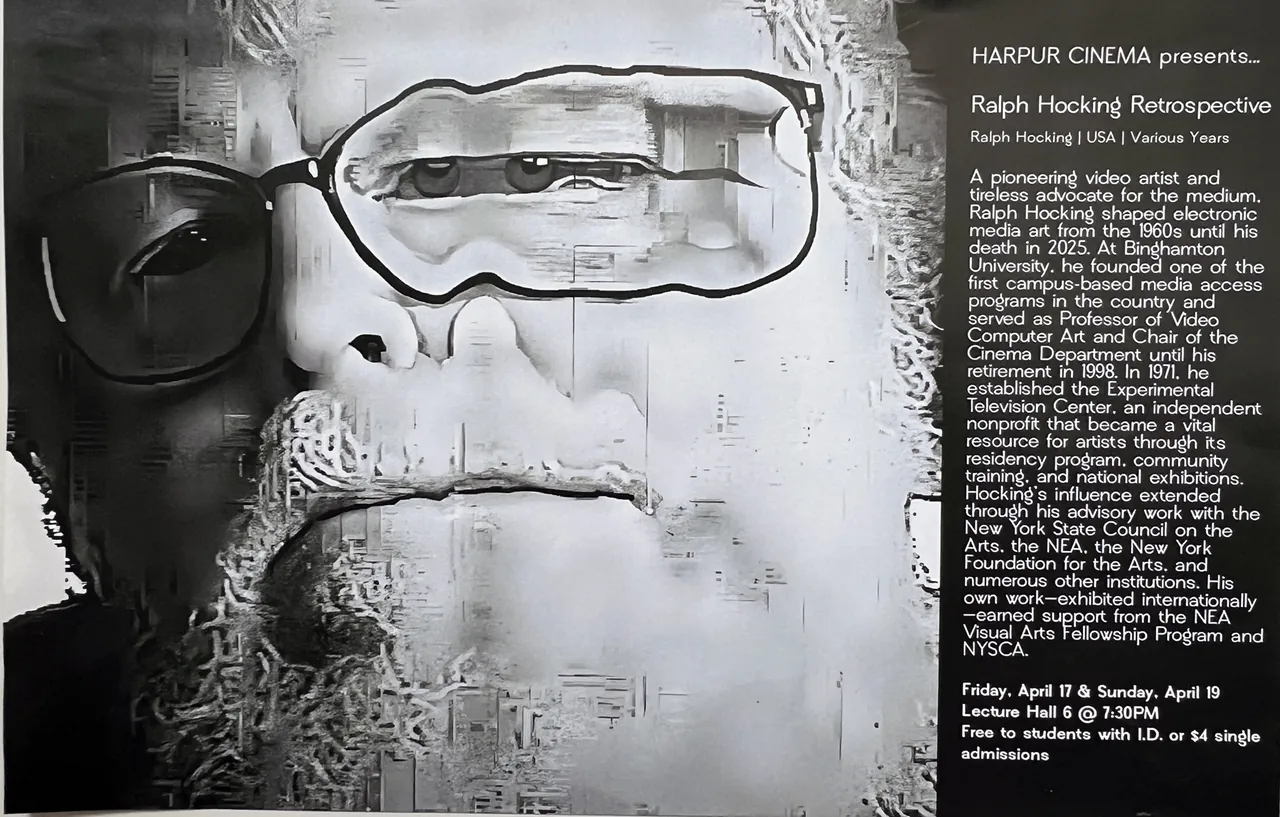
Back where it started: Binghamton University's4 Harpur Cinema5 holds a Ralph Hocking Retrospective6 in April. Angel St. Nunez's Bedford Stuyvesant Kids screens in Binghamton for the first time since 1970.
 00_pb_gallery_260309_DSC7559_NCedit-1024x683.jpg.webp
 00PeerBode_ExhibitionTVs2EDIT-1024x685.jpg.webp
 03PeerBode_ExhibitionDetail-1024x689.jpg.webp
 peer_bode_installation1-1024x768.jpg.webp
 RalphRetrospective_2026_poster.jpg.webp